‘There’s a queue!’: Moment hikers clash at top of Mount Snowdon as huge crowds wait in line to reach summit
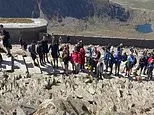
Videos filmed at the summit of Mount Snowdon (Yr Wyddfa) have captured arguments breaking out as record heatwave crowds queue to touch the metal plate marking the peak, Wales's highest at 1,085m (3,560ft). One clip, filmed by 27-year-old Marc Screeton from Manchester on 8 August, shows him bypassing a long line of waiting walkers to reach the top, prompting a woman in the queue to shout "there's a queue you know!" and call his actions "out of order"; he defended himself, saying he had not pushed past anyone and only stepped up once the way was clear.
Snowdon normally attracts around 600,000 visitors a year, but this month has seen unusually large crowds, with hundreds pictured queuing just below the summit. Reaction has been mixed: some hikers, like Lucy Taylor, argue queuing is necessary for safety given the numbers, while others, such as Tina Millard, insist "it's a mountain, not Alton Towers" and should remain open access. Eryri National Park Authority warden Alun Jones urged visitors to be considerate and not skip the queue, while wardens have also asked hikers to take litter home and guard against wildfire risk during the hot spell; social media reaction to footage of the crowds has been largely critical, with many saying the scenes have put them off visiting.
- Heatwave crowds cause queues and arguments atop Mount Snowdon's summit
- Hiker filmed skipping the queue sparks row with fellow walkers
- Park wardens urge patience, no littering, amid record visitor numbers
New here? Start with this
Snowdon, known in Welsh as Yr Wyddfa, is the highest mountain in Wales at 1,085m, and its summit has a well-known metal plate marking the top that walkers traditionally pose beside or touch. It sits within the Eryri National Park (formerly Snowdonia), an area managed by wardens who oversee visitor safety and conservation. The mountain usually draws around 600,000 visitors a year via several marked paths.
This August, an unusually hot spell has brought much larger crowds than normal, leading to long queues of walkers waiting near the top to reach the summit marker. This has led to some friction between hikers over queuing etiquette, captured on video and shared online, as well as wider concerns from park wardens about litter and wildfire risk during the heatwave.
The story matters because it touches on how popular outdoor spaces cope with growing visitor numbers, and raises questions about access, safety and etiquette on Britain's mountains. It has also prompted a wider debate about whether such crowding might discourage people from visiting in future.
Both sides, in good faith
The strongest fair case each way — we don't pick a winner.
The case for
Those supporting organized queuing argue that unprecedented crowds of hundreds create genuine safety risks on Snowdon's narrow summit, where unmanaged bottlenecks could lead to falls and injuries. They contend that temporary queuing during these exceptional conditions preserves everyone's experience and allows safe access that would otherwise be chaotic, making it a practical necessity rather than an unwanted imposition.
The case against
Those opposing queuing systems argue that mountains are public spaces that should remain freely accessible without artificial management systems resembling theme parks. They maintain that the answer to overcrowding is not imposed order but rather addressing visitor numbers through other means or accepting that popular natural spaces are sometimes busy as an inherent part of open access, which they value above curated experience.