NASA’s Venus missions regain momentum ahead of planned 2030s launches
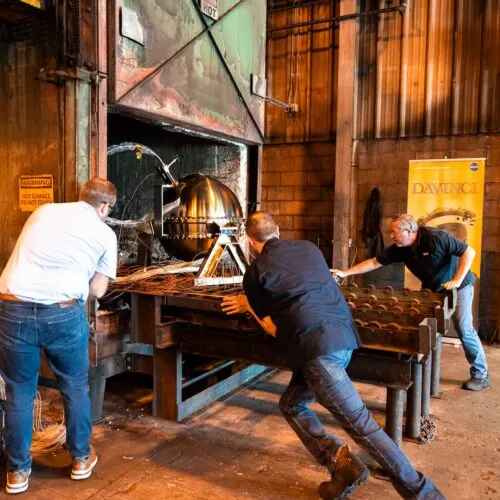
NASA’s DAVINCI and VERITAS missions are back on track after budget cuts threatened or delayed the projects. Their planned launches in the early 2030s would renew US exploration of Venus after a decades-long gap, helping scientists investigate how a planet similar in size to Earth became so hostile.
DAVINCI is now scheduled to launch in December 2030, a year earlier than previously planned, and will send a probe through the atmosphere to return the first direct surface images since 1982. VERITAS is due to launch in November 2032 and map the surface by radar; Europe’s Envision orbiter is also planned for 2032. A privately funded Rocket Lab probe could begin the renewed effort as soon as late 2027, searching Venus’s clouds for organic material.
- NASA’s two Venus missions are back on track.
- DAVINCI is scheduled to launch in December 2030.
- VERITAS will map Venus by radar from orbit.
New here? Start with this
Venus is the second planet from the Sun and close to Earth in size, but its surface is hot enough to melt lead and its thick atmosphere is mostly carbon dioxide. Scientists study it to understand how two similar-sized planets developed such different conditions.
NASA is the United States’ space agency. Its DAVINCI mission is designed to send a probe down through Venus’s atmosphere, while VERITAS would use radar from orbit to map the planet’s surface; Europe’s Envision mission is also planned to study Venus from orbit.
The missions would help scientists investigate Venus’s atmosphere, surface and geological history. They follow a long gap in US exploration of the planet, whose surface has not been directly photographed since 1982.
Americas Space Technology World
Read the full article at the source →
Originally published by Ars Technica as “Things are finally looking up for NASA’s first missions to Venus in a generation”.