Trump says China ‘spies’ on US after report ties Chinese imagery to Iran strike
Developed over time first seen 2 months ago
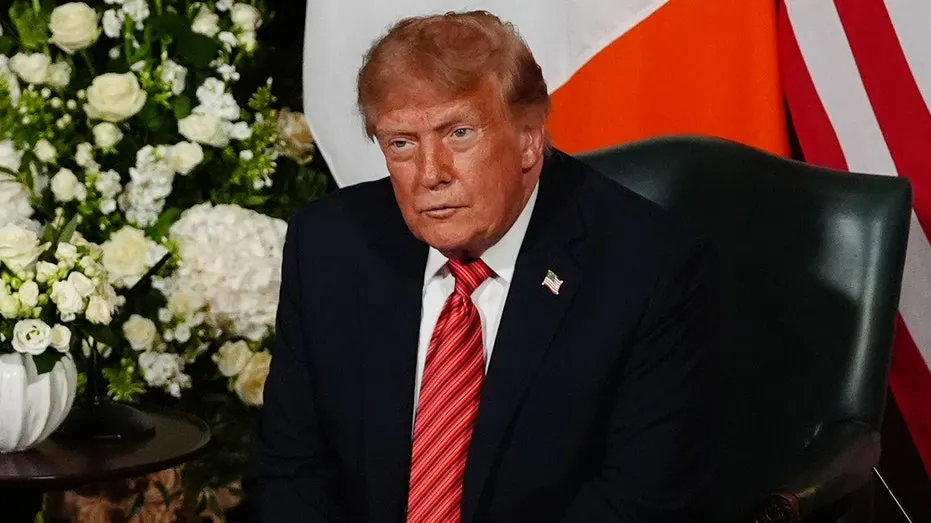
President Donald Trump said on Sunday that China "spies on us" just as "we spy on them," responding to a Wall Street Journal report alleging Chinese entities supplied Iran with satellite imagery ahead of a deadly missile strike on US forces. The remarks, made to reporters aboard Air Force One, come days before Chinese President Xi Jinping is due to visit Washington, and suggest Trump is playing down the espionage allegations rather than treating them as a diplomatic flashpoint.
The Journal reported that US officials linked high-resolution satellite imagery of Jordan's Muwaffaq Salti Air Base, allegedly provided by Chinese entities, to Iran's 17 July missile attack, which killed three American troops. Officials described it as the clearest evidence yet that Chinese support for Iran had deadly consequences for US forces, though they stopped short of naming the entities involved or accusing Beijing of direct involvement. Trump said Xi had "behaved reasonably well" and that the two nations "behave reasonably well" towards each other, ahead of Xi's scheduled 24 September summit with Trump. The White House did not immediately respond to a request for comment.
- Sources
- 2
- Outlets
- 1
- Left · Centre · Right
- 0 · 0 · 2
In short
- Trump downplays report of Chinese satellite imagery aiding deadly Iran strike
- Attack on Jordan base in July killed three US troops
- Comments come ahead of Xi Jinping's 24 September Washington visit
How this story developed
- 2 months ago President Donald Trump said on Sunday that China "spies on us" just as "we spy on them," responding to a Wall Street Journal report alleging Chinese entities supplied Iran with satellite imagery ahead of a deadly missile strike on US forces.
Full account
President Donald Trump said on Sunday that China spies on the United States just as Washington spies on Beijing, responding to reporters aboard Air Force One who asked him about a Wall Street Journal report alleging that Chinese entities had supplied Iran with satellite imagery ahead of a deadly missile strike on American forces earlier this year. Trump appeared unconcerned by the allegations, remarking that Beijing's conduct mirrored Washington's own intelligence-gathering practices.
According to the Wall Street Journal report cited by Trump's questioners, Chinese entities allegedly provided Iran with high-resolution satellite imagery of Muwaffaq Salti Air Base in Jordan in the run-up to Tehran's missile attack on 17 July, which killed three American service members. US officials were reported to have described the imagery as the clearest evidence yet that assistance from Chinese entities to Iran during the broader conflict had carried fatal consequences for US forces.
Pressed on whether he intended to confront Chinese President Xi Jinping over the matter during the Chinese leader's forthcoming visit to Washington, Trump played down the prospect of a serious rift, saying Xi had "behaved reasonably well" and that the United States had likewise conducted itself reasonably. He reiterated that espionage was a two-way street, telling reporters that when people say China spies on America, his response is that the US spies on China too, and that Beijing was essentially doing what Washington does.
The report stopped short of naming the Chinese entities said to be involved or of accusing the Chinese government directly of involvement in the strike, and the White House did not immediately respond to a request for comment. Xi is due to travel to Washington on 24 September for a summit with Trump, a visit that is likely to keep the wider question of Chinese-Iranian ties, and Beijing's role in the region, in focus even as Trump has sought to characterise the relationship with Xi in cordial terms.
Where outlets differ
From the full account, which is AI-written from the sources:
Both supplied sources originate from Fox News: the first is a standard news article with Trump's quotes and WSJ report details, while the second is merely a Fox News First newsletter digest that lists the story as a top headline without adding independent reporting or additional facts.
Because no separate outlet's account was provided, there is no substantive difference in emphasis to compare beyond format — the newsletter entry offers no additional detail, quotes, or context beyond the original article's headline.
Steelman: both sides, in good faith
The strongest fair case each way — we don't pick a winner.
The case for
Trump’s measured response could be seen as prudent diplomacy: the report attributes imagery to Chinese entities but does not identify them or establish that Beijing directed their actions. With a summit approaching, avoiding an immediate public confrontation may preserve room to seek clarification and manage a serious security concern through direct talks.
The case against
The reported imagery link to a strike that killed three US troops could justify treating the matter as a grave security issue, even without proof of direct orders from Beijing. Equating alleged Chinese activity with US spying risks appearing to minimise the deaths and may weaken deterrence if it signals that support benefiting an adversary carries little diplomatic cost.
Explained simply
The US and China are major powers that monitor each other’s military and security activities. China also has economic and political ties with Iran, while the US has forces and bases in the Middle East.
Jordan’s Muwaffaq Salti Air Base is used by US forces. A missile strike there on 17 July killed three American troops; the reported Chinese imagery could matter because detailed views of a military base may help an attacker plan.
The key questions are who supplied the imagery and whether it was connected to the strike. The report cites US officials but does not name the Chinese entities or accuse China’s government of direct involvement, making the issue relevant to relations between Washington and Beijing.
Coverage · 2 sources
Bias meters
From 2 rated sources.
Americas Asia Government Middle East Politics Space Technology World