Trump secures record-breaking oil deal with Venezuela to double US reserves and slash gas prices
Developed over time first seen 2 months ago
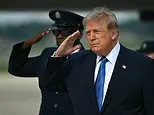
Donald Trump said the United States had reached an agreement with Venezuela giving it effective control over more than 65 billion barrels of proven oil reserves, which he described as the largest oil deal in history. He said the arrangement would expand US supply and lower petrol prices, though the article does not provide independent verification of those claims or the full terms.
According to an unnamed US official, a new private company would receive 100-year development rights for 17 Venezuelan oil fields, with the US holding a 55% effective output share and rights to buy oil at cost. Venezuela’s interim government said the deal could attract $100 billion in investment and generate more than $209 billion in taxes, while US officials linked it to efforts to restore Venezuelan oil infrastructure and address pressure over fuel prices.
- Trump claims Venezuela deal secures access to 65 billion barrels of oil.
- Terms reportedly include 100-year development rights and a US output share.
- Investment and petrol-price benefits remain claims rather than independently verified outcomes.
New here? Start with this
Venezuela has some of the world’s largest proven oil reserves, but much of its crude is heavy and costly to extract and refine. Its oil industry has declined sharply over recent decades because of underinvestment, poor infrastructure, sanctions and political instability.
Nicolás Maduro led Venezuela for years amid disputed elections and international criticism of his government. Delcy Rodríguez has been a senior figure in that administration, while US policy towards Venezuela has often combined sanctions with limited licences for foreign oil companies.
Access to Venezuelan oil would not itself transfer ownership of those reserves to the United States; production depends on Venezuelan law, investment and operating agreements. More supply can affect petrol prices, but prices also depend on global oil markets, refining capacity, transport costs and demand.
Both sides, in good faith
The strongest fair case each way — we don't pick a winner.
The case for
Supporters would argue that opening Venezuelan reserves to US investment could expand reliable supply, ease fuel costs and reduce vulnerability to disruptions elsewhere. They may also see private capital, jobs and oil-sector reconstruction as a practical route towards stabilising Venezuela’s economy and giving its interim authorities incentives to maintain constructive relations with the United States. In this view, commercially grounded engagement can serve both energy security and regional recovery.
The case against
Critics would argue that claims about doubling US reserves or sharply lowering petrol prices are premature without verified terms, production plans and evidence that Venezuelan infrastructure can deliver at the promised scale. They may warn that a deal negotiated after a change of government could lack durable legitimacy, expose investors to political and legal risk, and entrench dependence on fossil fuels. In this view, energy policy should prioritise transparent agreements, Venezuelan sovereignty and longer-term clean-energy resilience.
Full account
President Donald Trump says the United States has agreed a deal with Venezuela covering more than 65 billion barrels of proven oil reserves. He described it as the largest oil agreement ever made and said it would more than double US reserves, expand supply and reduce petrol prices. The agreement’s terms, legal basis and precise commercial structure have not been made public, so those claims cannot yet be independently assessed.
Trump said Secretary of State Marco Rubio and Defence Secretary Pete Hegseth reached the arrangement with Venezuela’s interim president, Delcy Rodríguez, alongside private-sector partners. He said it would require no US taxpayer funding. Rubio characterised the agreement as beneficial to both countries, saying it could attract almost $100bn in private investment, create well-paid jobs and aid Venezuela’s economic reconstruction.
The announcement follows the US military operation in January in which Nicolás Maduro and his wife, Cilia Flores, were seized. Trump subsequently said Washington would oversee Venezuela’s oil sales during a transition, and has repeatedly argued that US firms should regain access to assets nationalised under former president Hugo Chávez. Rodríguez previously held the petroleum portfolio under Maduro.
Venezuela is estimated to hold about 303 billion barrels of proven crude reserves, the largest total in the world, although output has declined sharply since the late 1990s. Trump’s announcement also comes amid domestic pressure over fuel costs. Any effect on prices would depend on investment, production capacity, infrastructure, sanctions arrangements and how quickly Venezuelan crude could reach the market.
Where outlets differ
The first report places greater emphasis on Trump’s description of the agreement as a geopolitical and economic response to high petrol prices, the Iran war and a reduced US strategic petroleum reserve. The second focuses more closely on the lack of released deal details, Venezuela’s overall reserve estimate, its long-running production decline and Trump’s earlier call for US oil companies to invest at least $100bn.
Source 1 describes Maduro’s removal as a ‘deposition’ during ‘Operation Absolute Resolve’ and identifies the private partners as including American oil firms, attributing that detail to Axios. Source 2 describes a US-authorised military operation and does not identify the businesses involved. Both report Trump’s and Rubio’s claims, rather than independently verifying the deal’s projected benefits.