Tyler Robinson to face trial in Charlie Kirk assassination as judge keeps death penalty on table
Developed over time first seen 2 months ago
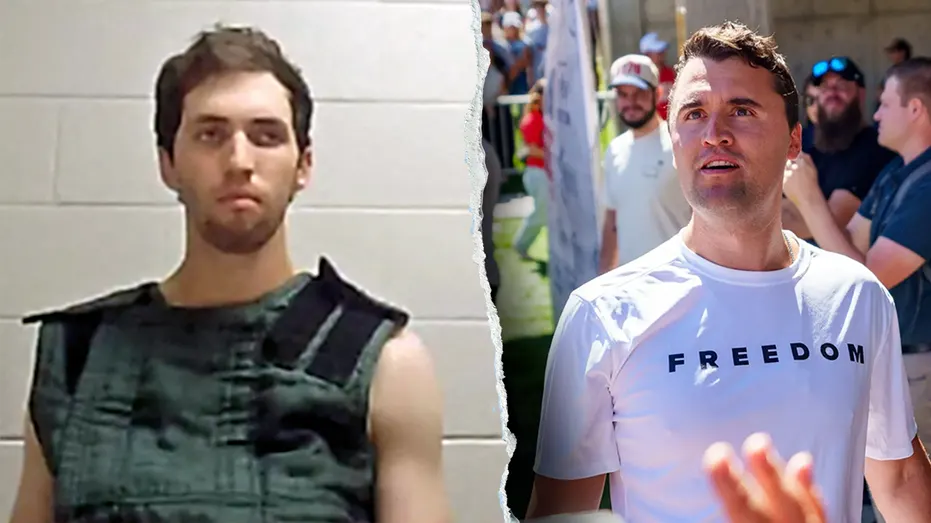
A Utah judge has ruled that Tyler Robinson, accused of assassinating conservative activist Charlie Kirk, will stand trial on all seven charges against him, and that prosecutors may continue pursuing the death penalty. Judge Tony Graf found sufficient evidence to support a victim-targeting allegation underpinning the capital sentencing enhancement, stressing that the preliminary hearing standard was only whether enough evidence existed to proceed, not proof beyond reasonable doubt. Robinson pleaded not guilty to all charges immediately after the ruling, moving the case a significant step closer to trial. The same hearing also resolved a separate dispute over cameras in court, with Graf again rejecting a defence request to bar them despite concerns about intense publicity and reported online betting on the case's outcome.
The seven charges are aggravated murder, felony discharge of a firearm causing serious bodily injury, two counts of obstruction of justice, two counts of witness tampering, and committing a violent offence in the presence of a child, ranging from first-degree felonies down to a Class A misdemeanour. Kirk, 31, was shot dead on 10 September 2025 while addressing a Turning Point USA event at Utah Valley University in Orem; prosecutors allege Robinson fired the fatal shot from an elevated position overlooking the crowd. An attorney for Kirk's family urged the court to press ahead to trial without delay, while the defence had raised concerns about the case's publicity, setting the stage for the case to proceed towards a capital trial.
- Robinson to stand trial on all seven charges over Kirk's killing.
- Judge Graf ruled death penalty pursuit can continue.
- Robinson pleaded not guilty; cameras remain allowed in court.
New here? Start with this
Tyler Robinson is the man charged with shooting dead Charlie Kirk, a prominent conservative activist, at a Turning Point USA event in Utah on 10 September 2025. Robinson, 31 at the time of Kirk's death, faces seven charges including aggravated murder, and prosecutors are seeking the death penalty, arguing an aggravating circumstance around how the victim was targeted.
A preliminary hearing exists to check there is enough evidence for a case to go to trial, a much lower bar than proving guilt. A Utah judge, Tony Graf, has now decided there is enough evidence on all counts, including the element needed to keep the death penalty as a possible sentence, though this does not mean guilt has been established.
The case has drawn heavy public attention given Kirk's prominence in conservative politics, and questions have arisen around courtroom cameras and publicity. The ruling moves the case toward trial, where prosecutors will need to prove the charges, including any aggravating factors, to the full criminal standard.
Both sides, in good faith
The strongest fair case each way — we don't pick a winner.
The case for
Those who support the judge's rulings would argue that he applied exactly the correct legal standard, requiring only enough evidence to proceed rather than proof beyond reasonable doubt, and that it is right to let a jury, not a preliminary hearing, decide guilt and any aggravating circumstances. They would say open, camera-recorded proceedings serve the public's legitimate interest in a case of this magnitude, that Kirk's family deserve a prompt and visible path to trial, and that keeping capital punishment available preserves prosecutorial discretion appropriate to the seriousness of an alleged assassination of a public figure.
The case against
Those more cautious about the process would argue that the case is still at an early, low-bar evidentiary stage, and that combining that with continued death-penalty exposure and unrestricted courtroom cameras risks compounding intense pretrial publicity, including reported betting on the outcome, in ways that could taint the jury pool and prejudice Robinson's right to a fair trial. They would say that because a death sentence is irreversible, extra caution is warranted before such consequential elements remain on the table, and that limiting camera access, at least for now, would better protect the defendant's rights without foreclosing full public scrutiny once the trial concludes.
Full account
Tyler Robinson, the 23-year-old accused of shooting dead conservative activist Charlie Kirk, is to stand trial after a Utah judge ruled that prosecutors had produced sufficient evidence to proceed on all seven charges he faces. Judge Tony Graf handed down the decision on Tuesday following a lengthy preliminary hearing, after which Robinson entered not guilty pleas to every count. Crucially, Graf also allowed prosecutors to continue pursuing the death penalty, finding that the state had shown probable cause for the aggravating, victim-targeting allegation needed to keep capital punishment on the table.
Explaining his reasoning, Graf said that, viewed in the light most favourable to the prosecution, the evidence was enough at this early stage to support a reasonable belief that Robinson was the person who shot and killed Kirk, satisfying the threshold on both identity and the homicide itself. He stressed that a preliminary hearing requires only enough evidence to justify a trial, not proof beyond reasonable doubt, and that the question of whether prosecutors can ultimately establish the aggravating circumstance for a capital case would be tested later at trial. All seven charges were bound over: aggravated murder and felony discharge of a firearm causing serious bodily injury, both first-degree felonies; two counts of obstruction of justice and two of witness tampering; and a charge of committing a violent offence in the presence of a child.
The hearing drew Kirk's family to the courtroom, with his parents, Robert and Kathryn, arriving arm in arm, and his widow, Erika Kirk, seated nearby, at one point burying her face in her hands as the judge weighed whether still images from the shooting should be shown. The family later issued a statement describing the ruling, coming almost a year after Kirk's death, as an important step towards justice, while acknowledging the lasting toll of his killing on their children. A central point of contention was whether Robinson, who allegedly fired a single shot that struck Kirk in the neck during a Turning Point USA event at Utah Valley University, had endangered the wider crowd of more than 3,000 people, which prosecutors say is necessary to justify the death penalty, or whether, as his defence argued, he had targeted Kirk specifically without putting bystanders at risk.
Separately, Graf again rejected a defence bid to have television cameras removed from the courtroom, a request Robinson's lawyers had linked to concerns about intense media attention, including reports of online betting markets tied to the case's outcome; cameras will remain, subject to restrictions previously set by the court. With the charges now bound over and pleas entered, attention turns to how the case will proceed toward trial, with the possibility of execution remaining a live issue to be argued in full at that later stage.
Where outlets differ
Source 1 concentrates on the legal mechanics of the ruling — the specific wording of Judge Graf's findings, the full breakdown of all seven charges and their felony classifications, and a separate dispute over cameras in the courtroom — with comparatively little on courtroom atmosphere.
Source 2 foregrounds the human and courtroom drama, describing the presence and reactions of Kirk's parents and widow Erika Kirk, quoting the family's statement in full, and giving more detail on the competing arguments over whether the shooting endangered the crowd (used to justify the death penalty) versus targeted Kirk alone.
Only Source 2 specifies Kirk's age (31), that he was a father of two, and that the shooting occurred nearly a year before this ruling; Source 1 does not include these background details in the excerpt provided.
Only Source 1 details the camera-in-courtroom dispute, including the defence's objection linked to alleged online gambling on the case's outcome.