Waymo doubles spending on lobbying in robotaxi battle with Uber
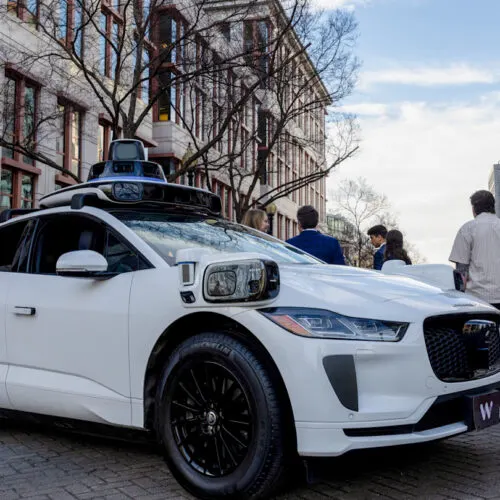
Waymo has sharply increased its lobbying spending as it seeks to persuade US regulators to clear a faster path for fully autonomous robotaxi services, deepening its rivalry with Uber over the future of ride-hailing. Waymo wants an accelerated rollout of driverless commercial services, while Uber favours a staggered approach in which robotaxis operate alongside human drivers, a divergence that analysts say is hastening the breakdown of their partnership in cities such as Austin and Atlanta.
The Alphabet-owned firm spent over $1 million lobbying the federal government between April and June, more than double the previous year and close to Uber's own outlay, while outspending rivals such as Amazon's Zoox and Tesla. Over the first half of 2026 its lobbying spend rose 93 percent to just over $2 million, including a new contract with law firm Greenberg Traurig, and it has outspent both Uber and Zoox in Washington, DC. In New York state it has spent more than half a million dollars, over double Uber's figure, and reportedly offered a $20 million fund for drivers affected by the technology, while Uber has committed over $10 billion to AV investments and is pushing New Jersey rules requiring human drivers for at least 85 percent of rides during a proposed pilot scheme.
- Waymo more than doubled US lobbying spend to over $2 million in H1 2026
- Waymo wants fast driverless rollout; Uber prefers a hybrid human-AV model
- Rivalry is straining their partnership in cities like Austin and Atlanta
New here? Start with this
Robotaxis are vehicles that use automated driving technology to carry passengers without a human driver at the wheel. Waymo, which is owned by Google’s parent company Alphabet, operates robotaxi services in some US cities and is seeking rules that would let it expand driverless commercial rides more quickly.
Uber, the ride-hailing company, is also investing in autonomous vehicles, but favours introducing them alongside human-driven cars. The companies have worked together in some cities, including Austin and Atlanta, but their different approaches are putting that partnership under strain.
The debate matters because regulators decide where and how driverless cars can carry paying passengers. Their rules could shape how quickly robotaxis become part of everyday transport, and what role human drivers and existing ride-hailing services have.
Both sides, in good faith
The strongest fair case each way — we don't pick a winner.
The case for
The strongest case for accelerated deployment rests on safety and efficiency grounds. Autonomous vehicles have demonstrated superior safety records to human drivers in controlled environments; delaying deployment keeps statistically more dangerous human-driven vehicles on roads longer, representing a genuine public safety cost. The economic and social benefits—lower costs, improved accessibility for the elderly and disabled, reduced congestion through optimised routing—are substantial and measurable; a staggered approach defers these benefits indefinitely whilst protecting less-advanced competitors from market competition.
The case against
The case for cautious rollout emphasises irreducible uncertainties in autonomous systems, which lack sufficient real-world operational data across diverse conditions and edge cases; premature full deployment risks catastrophic failures that could trigger public backlash and industry-harming regulation. Beyond safety, the human costs warrant consideration: sudden autonomy would displace millions of workers with insufficient transition time, and a phased approach respects both trust-building and the precautionary principle appropriate to public transportation. Responsible innovation permits human judgment where the technology remains uncertain.