We don’t serve pies, but we do like a Pi
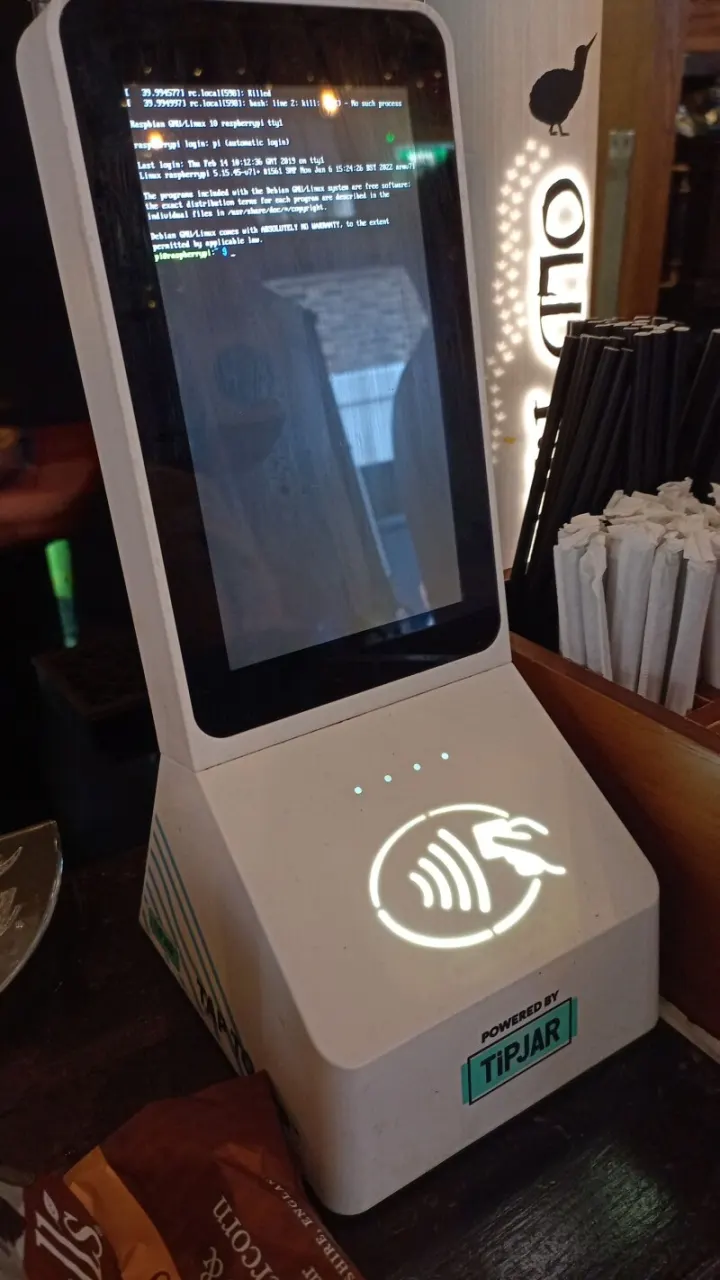
A London pub’s electronic tipping device was found displaying the desktop of the Raspberry Pi computer powering it, apparently after a software failure exposed its underlying operating system. The incident matters chiefly as an example of a customer-facing payment system failing visibly, while also drawing attention to the growing use of card-based tipping machines in UK hospitality.
The screen showed Raspbian GNU/Linux with an automatic login as “pi” and the generic hostname “raspberrypi”, suggesting a default-style Raspberry Pi setup. The hardware appeared to be from TiPJAR, a company providing digital tipping systems; the article notes that the device could likely be restored by an IT professional, while questioning whether such systems should ever substitute for proper staff pay.
In short
- Pub tipping machine exposed its Raspberry Pi desktop after a malfunction.
- Screen showed “pi” login and generic Raspberry Pi hostname.
- Digital tipping is becoming more common in UK pubs.
Steelman: both sides, in good faith
The strongest fair case each way — we don't pick a winner.
The case for
Card-based tipping machines are a practical response to cashless commerce and competitive labour markets where base wages face pressure. Customers increasingly expect digital payment options, and these devices allow staff to earn supplementary income. The machines reflect how contemporary UK hospitality genuinely operates.
The case against
Widespread tipping machines risk institutionalising inadequate base wages by shifting compensation responsibility from employers to customers and staff. These systems normalise a model where worker income depends on tips rather than robust employer investment. The approach places unfair burden on customers whilst undermining labour standards that should require employers to pay living wages.
Explained simply
Raspberry Pi is a small, low-cost computer often used to run dedicated devices. Raspbian, now called Raspberry Pi OS, is the software it runs; seeing its desktop on a pub’s tipping machine suggests the device’s normal payment interface had stopped working.
TiPJAR supplies digital tipping systems used in hospitality venues, where customers can add a tip by card. These machines are part of a wider shift away from cash tips, and the incident raises questions about how reliably customer-facing payment equipment is set up and maintained.
Tips can supplement the income of pub and restaurant staff, but they are separate from wages paid by employers. How much workers rely on tips is part of the broader debate about pay in hospitality.