What can scientists learn from a stray SpaceX rocket hitting the Moon?
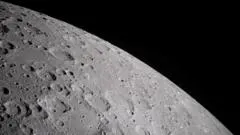
A discarded upper stage from a SpaceX Falcon 9 rocket is believed to have struck the Moon near the Einstein crater on Wednesday, creating an accidental impact that scientists are treating as a valuable research opportunity. Because researchers already know the object's exact size, speed and point of impact, the collision effectively becomes a controlled experiment that could help planetary geologists refine models of cratering, debris dispersal and lunar seismic activity, with practical implications for designing safer landers and future Moon bases.
The empty stage, roughly the size of a five-storey building and weighing at least 4,000kg, launched from Florida in January last year after delivering two lunar landers into space. It drifted for around 18 months before gravitational nudges from the Earth, Moon and Sun sent it on a collision course, striking at about 5,400mph (8,700km/h) at 07:35 BST. The impact flash was too brief and faint to be seen even by telescopes, though it may have thrown up a dust plume up to 100km wide; Nasa's Lunar Reconnaissance Orbiter is expected to photograph the site in the coming days, while full analysis could take weeks.
- Spent SpaceX rocket stage hit the Moon near the Einstein crater
- Impact acts as a rare controlled experiment for planetary scientists
- Findings could improve safety of future lunar landers and bases