Who’s to blame for the toxic smog choking South East Asia?
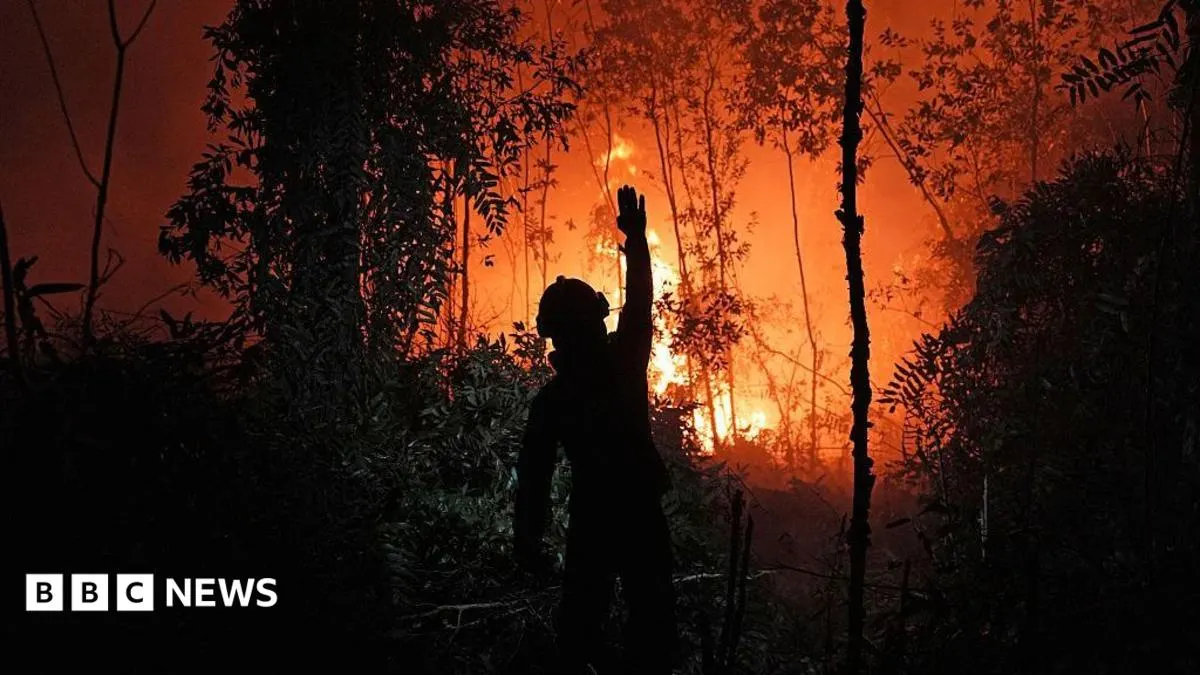
Indonesia is facing its worst wildfire season in a decade, with hazardous smog affecting millions and spreading to Singapore and Malaysia. The fires have intensified during an unusually strong El Niño, while anger is growing over suspected commercial land-clearing by fire and the authorities’ difficulty in stopping it.
Nusantara Atlas recorded 1,043,377 wildfire hotspots, affecting about 900,000 hectares in Indonesia. Greenpeace identified land linked to businesses based in Singapore and Malaysia among areas with haze source points; the companies named denied using fire to clear land or said fires began outside their concessions. Indonesia has suspended the licences of 26 companies and is investigating others, while past efforts by Singapore to pursue foreign firms under its haze law caused tensions with Jakarta.
- Indonesia’s worst wildfire season in a decade is driving hazardous regional haze.
- More than one million hotspots have been recorded across the country.
- Authorities have suspended 26 companies’ licences amid investigations.
New here? Start with this
Indonesia’s dry season fires often burn on peatland, where fires can smoulder underground and be difficult to put out. A strong El Niño can bring hotter, drier conditions, increasing the risk that fires spread and smoke builds up.
Some fires are linked to land being cleared for farming and plantations, though companies named in reports have disputed responsibility. Smoke, known as haze, can cross borders and affect health and daily life in Indonesia, Singapore and Malaysia.
Indonesia is responsible for enforcing its laws and managing land within its borders, while neighbouring countries can be affected by the resulting pollution. Efforts to hold businesses accountable across borders have also raised questions about national authority and cooperation.
Both sides, in good faith
The strongest fair case each way — we don't pick a winner.
The case for
Commercial land-clearing deserves close scrutiny because fires linked to agricultural expansion can cause severe harm across borders, and the reported haze source points include land linked to businesses based in Singapore and Malaysia. Those who stress corporate responsibility argue that companies benefiting from land use should prevent and disclose fires in their supply chains, while Indonesian enforcement and cross-border legal action can help deter damaging practices.
The case against
The companies named deny using fire to clear land or say fires began outside their concessions, so hotspot records and links to land do not by themselves establish who started a blaze or acted unlawfully. Those who caution against assigning blame point to the unusually strong El Niño and Indonesia’s difficulty containing widespread fires; they also argue that Singapore’s pursuit of foreign firms risks diplomatic tensions if responsibility has not been firmly established.