Why Brexit could end up being Kemi Badenoch’s arrow in the eye
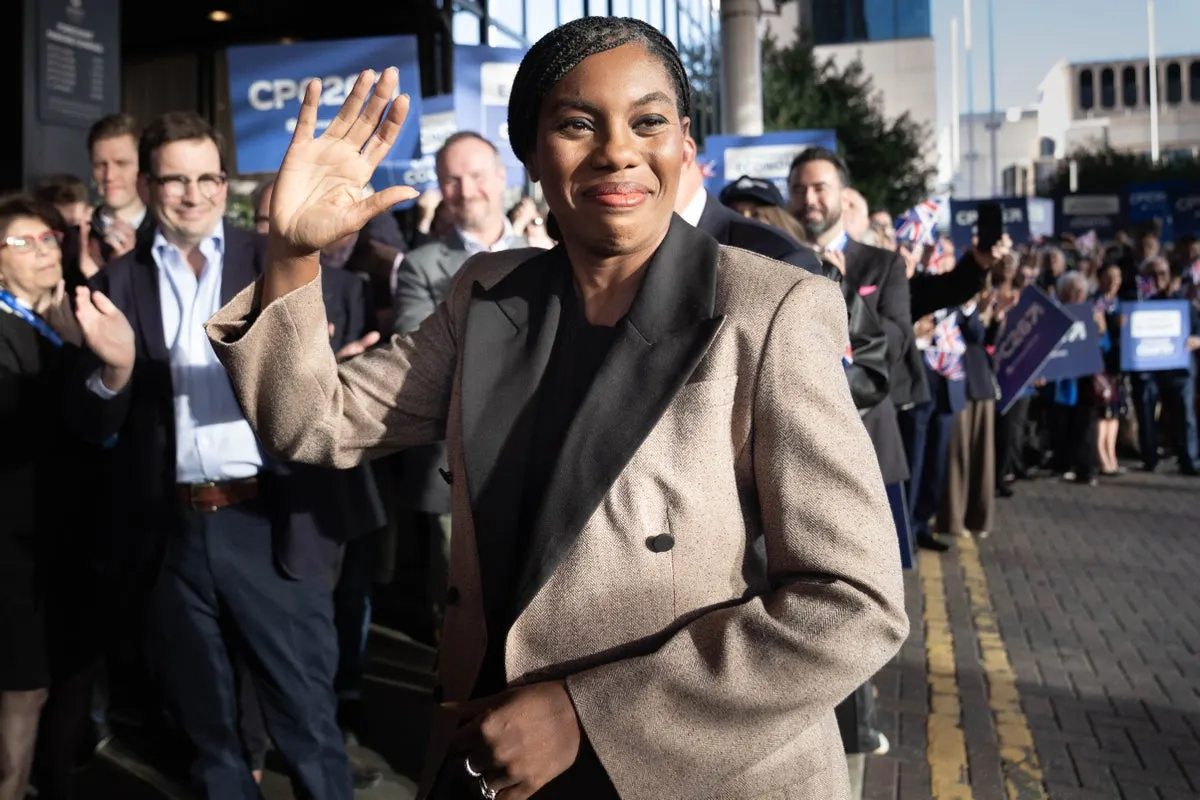
The Conservative Party’s decision to depict Kemi Badenoch as Harold Godwinson in a Bayeux Tapestry-style display risks drawing an awkward parallel with the defeated king, argues the article. It uses the 1066 story to illustrate the party’s political bind: facing Reform UK on the right while also competing with Labour and the Liberal Democrats elsewhere.
Despite Badenoch’s personal standing and Reform’s fall in support, the Conservatives have made little apparent progress in the polls. Recent polling puts them at 17 to 22 per cent, compared with 14 to 20 per cent a year earlier; the article says that change is within the margin of error and leaves the party more than five points below its level when Badenoch became leader in 2024. Senior Conservatives James Cleverly and Joy Morrissey urge the party to stay focused on voters’ concerns and present credible alternatives.
- The Tories’ tapestry imagery invites an unflattering 1066 comparison.
- They remain squeezed by Reform, Labour and the Liberal Democrats.
- Recent polling suggests little clear progress under Badenoch.
New here? Start with this
Kemi Badenoch became Conservative Party leader in 2024, tasked with rebuilding the party after it lost power. The Conservatives are attempting to restore public confidence and present themselves as a credible alternative to the Labour government.
The party faces electoral pressure from multiple directions. Reform UK competes for right-wing voters, whilst Labour and the Liberal Democrats appeal to voters elsewhere. Recent polling shows Conservative support at around 17 to 22 per cent, with little improvement since Badenoch took over as leader.
Harold Godwinson was an Anglo-Saxon king whose image appears in the Bayeux Tapestry, a medieval textile depicting the Norman conquest of England in 1066. Understanding this historical context helps explain contemporary political commentary about medieval imagery and what unintended symbolic meanings such references might carry.
Both sides, in good faith
The strongest fair case each way — we don't pick a winner.
The case for
The Conservative Party under Badenoch represents a necessary reset following Labour's election victory. The Bayeux Tapestry imagery draws on Britain's rich historical heritage to symbolise strong, decisive leadership during a transformative moment. Whilst polling remains challenging, the party has stabilised and prevented further collapse, and Badenoch's personal qualities offer genuine hope for recovery. With disciplined focus on economic competence and credible policy alternatives, the Conservatives can rebuild trust with voters dissatisfied with the current government.
The case against
The Bayeux Tapestry symbolism backfires badly—Harold Godwinson was decisively defeated, making it an unfortunate metaphor for a struggling party. More fundamentally, the Conservatives face an intractable strategic dilemma: they cannot simultaneously appease Reform UK voters on the right whilst remaining competitive for centrist voters elsewhere. Badenoch's personal popularity has translated into negligible polling gains, suggesting that personality alone cannot overcome the party's lack of coherent economic vision or clear answers to voters' immediate concerns.