Why this ancient cable still connects to modern TVs with a simple adapter
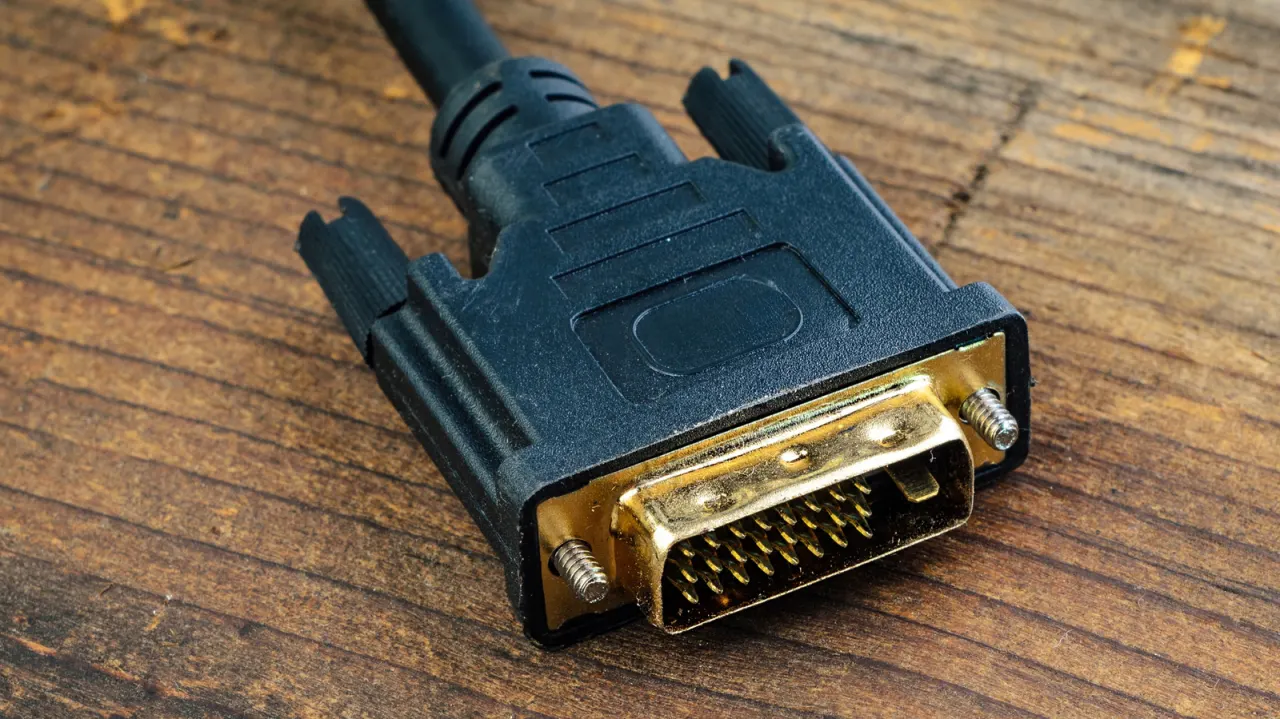
DVI cables, an industry standard from the late 1990s, can still be connected to modern TVs and displays using inexpensive HDMI adapters. This is possible because DVI-D (Digital) and DVI-I (Integrated) share the same underlying digital video protocol as HDMI, meaning the adapter simply reroutes the pins without requiring complex conversion or power.
DVI ports were ubiquitous on devices like Apple's Cinema Display from 1999 but have been largely replaced by HDMI and DisplayPort. However, DVI remains in use on older PC setups, office projectors and retail kiosk displays. The standard has significant limitations compared to newer formats: Dual Link DVI maxes out at 2,560 x 1,600 resolution at 60Hz, it lacks audio support, and the chunky connector hampers cable management.
- DVI adapters work with HDMI using a simple pin rerouter, no conversion needed
- DVI standards maxed out at 2,560 x 1,600 resolution without audio support
- Modern HDMI and DisplayPort offer superior bandwidth and future-proof features
New here? Start with this
DVI is a video cable standard that became widespread in the late 1990s and early 2000s, appearing on computers and displays including Apple's Cinema Display. It was eventually superseded by HDMI and other modern standards, but millions of devices worldwide still use DVI connections. The fact that old DVI cables can work with today's televisions and monitors using a simple, cheap adapter is useful for anyone still using older equipment.
The reason this works is that DVI and HDMI both carry the same type of digital video signal, so an adapter simply reroutes it from one connector type to the other without needing to convert it. This only works with certain digital varieties of DVI, which happen to be the most common types, and doesn't require any additional power or complex circuitry.
DVI cables remain in use in older office environments, on legacy computer setups, and in retail displays and projectors. Although DVI has significant limitations compared to modern standards—including lower maximum resolutions and refresh rates, no audio support, and a bulkier connector—the ability to use these older cables with current equipment helps people extend the life of existing hardware.