Culture news and discussion on TalkFuse.
Why was Taiwan’s president evacuated in the middle of the night?
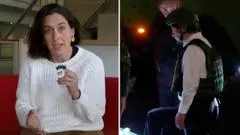
Taiwan's president, William Lai, took part in an overnight emergency evacuation drill as part of the island's annual Han Kuang military exercises, prompting questions about the reasoning behind moving the head of state in the middle of the night. The exercises, running from 5 to 14 August, are designed to test Taiwan's readiness for a range of security threats, including the possibility of a Chinese invasion, and this year's drills have placed particular emphasis on ensuring continuity of government and command in a crisis scenario.
The BBC's Katy Watson explains that the evacuation formed part of wider preparations simulating how Taiwan's leadership would respond if the island came under attack, reflecting persistent tensions with Beijing, which claims Taiwan as its own territory. The Han Kuang exercises are held annually and are widely viewed as a key indicator of Taiwan's defence posture amid ongoing concerns over Chinese military pressure in the region.
In short
- Taiwan's president joined a night-time evacuation drill during military exercises.
- Han Kuang exercises run 5–14 August, testing invasion readiness.
- Drills reflect ongoing tension between Taiwan and China.
Steelman: both sides, in good faith
The strongest fair case each way — we don't pick a winner.
The case for
Taiwan faces documented military threats from an increasingly assertive China and must ensure its government can function and respond during any crisis. Regular, transparent evacuation and continuity-of-government drills are standard practice for threatened democracies worldwide, demonstrating defensive readiness and commitment to sovereignty. These exercises are essential to identify vulnerabilities, improve response capabilities, and reassure allies of Taiwan's preparedness. Failing to conduct such drills would be strategically reckless.
The case against
Whilst Taiwan's need for military preparedness is legitimate, publicly emphasising evacuation drills and crisis scenarios may be unnecessarily escalatory and counterproductive to reducing cross-strait tensions. Such high-profile exercises can frame conflict as inevitable rather than preventable through dialogue, potentially creating a self-fulfilling prophecy that increases the very military tensions they aim to guard against. Resources devoted to simulating territorial loss might be better deployed toward confidence-building measures and diplomatic solutions. Constant preparation for worst-case scenarios can paradoxically heighten the security dilemma rather than resolve it.
Explained simply
Taiwan governs itself, but China claims the island as part of its territory and has not ruled out using force to bring it under its control. This has led Taiwan to prepare for the possibility of a military crisis.
The Han Kuang exercises are Taiwan’s annual military drills, designed to practise responses to threats, including an attack. They involve preparations for keeping government and military command operating if normal communications or facilities are disrupted.
The president is central to those command arrangements, so plans for moving the head of state are part of wider continuity preparations. The drills also show how Taiwan is adapting its defence planning amid continuing tensions with Beijing.
Art Culture Fitness Government Health Politics World