Workers remove signage from British consulate in Jerusalem after Israel ordered it to close after Labour announced West Bank sanctions
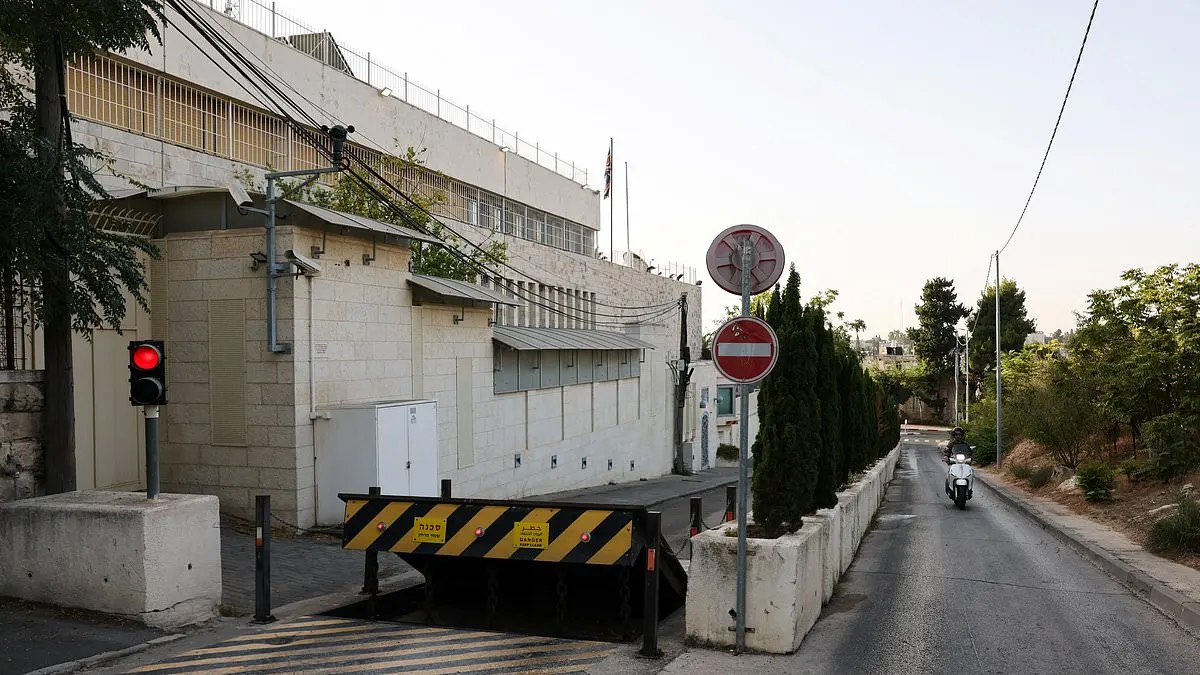
The British consulate in East Jerusalem has had its signage removed and will cease operating as a consulate today after Israel ordered its closure. This is in retaliation for the UK government's decision in September to ban trade with illegal West Bank settlements and other measures the Israeli government views as hostile, including recognition of Palestinian statehood. The diplomatic row marks a significant deterioration in UK-Israel relations.
The UK says it has not accepted Israel's legal right to close the 200-year-old consulate and insists it will continue operations as the "UK Mission, Jerusalem" with reduced staff. However, an Israeli diplomatic source confirmed the facility will no longer function as a consulate, with diplomatic staff cut from 27 to just seven, and consular services ending. The UK has temporarily withdrawn staff and families "to ensure their safety", though it says the mission remains operational and will continue supporting Palestinian communities and pursuing a two-state solution.
- British consulate in Jerusalem ordered closed by Israel over UK's West Bank sanctions
- Diplomatic staff cut from 27 to seven; UK disputes Israel's right to force closure
- Diplomatic crisis reflects broader tensions over Palestinian statehood and settlements
New here? Start with this
The British consulate in East Jerusalem has served as Britain's official diplomatic presence in Palestinian territories for two centuries, handling consular services and supporting relations between Britain and the Palestinians. It represents an important institutional link in a region marked by deep political conflict.
Israel has ordered the facility to close in retaliation for the UK's recent decision to ban trade with Israeli settlements in the West Bank—territory Israel controls but which the UK and most countries regard as occupied, with the settlements considered illegal under international law. The Israeli government views these measures as hostile.
This marks a serious deterioration in UK-Israel relations, as the two nations fundamentally disagree over Israeli settlements in occupied territory. The consulate's closure removes an important diplomatic presence and affects the UK's ability to support Palestinian communities.
Both sides, in good faith
The strongest fair case each way — we don't pick a winner.
The case for
Israel argues it has the sovereign right to determine which foreign missions operate on its territory and under what conditions. From this perspective, the UK's September decision to impose sanctions on West Bank settlements and recognise Palestinian statehood represents hostile interference in Israeli affairs that directly contradicts Israel's own sovereignty and legitimacy. Israel contends that nations must face consequences when they adopt policies perceived as fundamentally opposed to another nation's interests and existence.
The case against
The UK and its supporters argue that nations have the sovereign right to set their own trade policy and recognise states as they deem appropriate under international law, particularly regarding what they view as illegal settlements under established legal frameworks. They contend that diplomatic missions enjoy special protected status under international custom and law, and that unilaterally closing a 200-year-old consulate violates fundamental norms of diplomatic conduct regardless of political disagreements. From this view, policy disputes should not result in the breach of diplomatic protocols that underpin international stability.