Topic

Science

Science encompasses the diverse methods and discoveries through which we understand the natural world and develop new technologies. From fundamental research into living cells and ancient organisms to innovations in artificial intelligence and environmental management, scientific endeavours span disciplines as varied as palaeontology, atmospheric physics, and biomedical engineering. These advances often emerge from collaborative efforts between universities, tech companies, and research institutions seeking to push the boundaries of what's possible.

About this topic

The impact of scientific progress touches nearly every aspect of contemporary life. Whether through discoveries that help us manage environmental challenges more effectively, breakthroughs that unlock new computational possibilities, or research that deepens our understanding of planetary history, science shapes how we solve problems and build the future. Readers follow this topic to stay informed about emerging technologies, environmental solutions, and the cutting-edge research that will influence society in the years ahead.

3,365 stories Follow All news
Last 7 days 270 stories
0

The EPA is quietly killing its web archive

  • EPA plans to retire its web archive on 31 December 2026.
  • The collection holds tens of thousands of documents dating to the 1990s.
  • Researchers warn that closure could remove records unavailable elsewhere.

The US Environmental Protection Agency plans to shut down its online web archive on 31 December 2026, potentially removing tens of thousands of environmental documents from public access. Researchers and advocates say the archive supports democratic oversight and preserves records of past policies that may not exist elsewhere.…


Grist0
0

Women may have a biological edge over men when tasting bourbon, experts say

  • Smell plays a major role in tasting bourbon.
  • Women may have greater average sensitivity to aromas.
  • Practice can make anyone a skilled taster.

Some experts say women may have an average biological advantage when tasting bourbon, partly because evidence suggests they can be more sensitive to smells. This matters because much of bourbon’s character is detected through aroma, including notes that shape its complexity and finish. A 2014 study found women…

0

TIM GRAHAM: Three-to-one negative coverage tells the story of network bias

  • A study found a three-to-one gap in negative network coverage.
  • The article argues the coverage favours Democrats.
  • The figures cited come from the Media Research Center.

The article argues that major US broadcast networks give Republicans more negative coverage than Democrats, and says this imbalance undermines their claim to political neutrality. It cites a Media Research Center analysis of evening news coverage in 2026, while presenting the findings as evidence of bias. The analysis…

Fox News0
0

Spooky New Infostealer Malware Uses AI to ‘Autodox’ Victims

  • Volta uses AI to analyse data stolen from infected devices.
  • It builds victim profiles from accounts, purchases and online sessions.
  • Talos has not established whether it has been used in the wild.

Cisco Talos researchers have identified Volta-Autodoxer, an infostealer that sends information gathered from infected devices to large language models for analysis. The AI is prompted to profile victims, assess their likely value and organise evidence, helping attackers prioritise targets; Talos says it has not tracked whether the malware…

Wired0
0

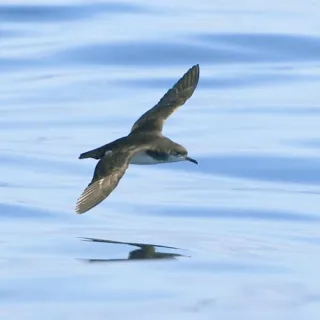
Seabirds racing home over the ocean can get jet-lagged

  • Manx shearwaters’ internal clocks drift during long flights.
  • The drift can skew their Sun-based compass.
  • Researchers analysed 3,688 trips by 1,045 birds.

A study of Manx shearwaters suggests the seabirds can become jet-lagged while flying home from feeding grounds, throwing off their ability to navigate by the Sun. The finding shows that an internal clock drifting out of sync with local time can affect wild animals’ natural navigation. Researchers analysed…

Ars Technica0
0

The FDA wants to pull its approval of a drug. It’s not so easy.

  • FDA seeks to withdraw Tavneos over trial data and safety concerns.
  • Amgen says the treatment should remain available.
  • The drug’s US future remains undecided.

The US Food and Drug Administration is seeking to withdraw Tavneos, a treatment for a rare form of vasculitis, after concluding that the pivotal trial may have involved manipulated data and that the drug lacks substantial evidence of effectiveness. The dispute matters because patients and some doctors regard…

Ars Technica0
0

“Too gruesome”: the 1986 horror remake that Vincent Price felt went too far

  • Cronenberg’s 1986 The Fly remake made the transformation slow and horrific.
  • Vincent Price praised Goldblum’s gesture but found the gore excessive.
  • The remake reframed the story around ageing and physical decline.

David Cronenberg’s 1986 remake of The Fly turned the original’s teleportation experiment into a drawn-out story of bodily and psychological deterioration. The article calls it one of horror’s strongest remakes, arguing that its new focus on ageing and physical decline gave the creature feature added meaning amid the…

Far Out0
0

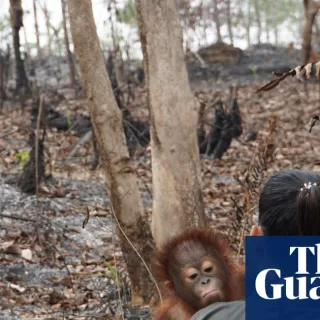
‘Bunch of baloney’: calls grow for Cop summit reforms as countries on track to fail nature targets

  • Cop17 ended with most nature targets off track.
  • The UK is set to meet just three of 23 targets.
  • Critics say summit rules need reform to deliver action.

Critics are calling for major reforms to UN biodiversity summits after Cop17 ended with countries still off track on nearly all their nature targets. They say the consensus-based process can let individual governments block progress, while repeated promises have yet to halt the destruction of the natural world.…

The Guardian0
0

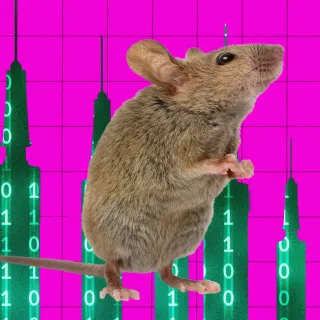
An AI Agent Injected Drugs Into a Live Mouse’s Brain

  • An AI agent controlled a gene therapy injection into a mouse’s brain.
  • Human safeguards included plan approval and an emergency stop.
  • A coordinate glitch required a separate AI agent to fix the setup.

An AI agent controlled key parts of a brain injection procedure on a live mouse, including choosing a gene therapy and operating the injector. The experiment offers an early example of AI taking an active role in laboratory research, where it could learn from practical conditions that are…

Wired0
0

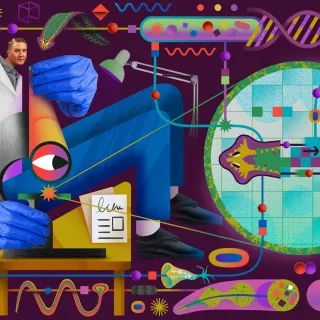
Are Memories Transferable? Meet the Scientists Replicating an Infamous Study to Find Out

  • Harvard researchers are revisiting claims that worms can learn.
  • Earlier studies said memories transferred through cannibalism.
  • Modern attempts have not reproduced the reported learning.

Harvard neuroscientist Sam Gershman’s lab is trying to reproduce 1960s experiments that appeared to show planarian flatworms could be trained and pass memories to other worms through cannibalism. The work matters because confirming those claims could offer clues about memory beyond the brain, while repeated failures raise questions…

Wired0