2026 Volkswagen Jetta Sport: The cheap car isn’t completely extinct yet
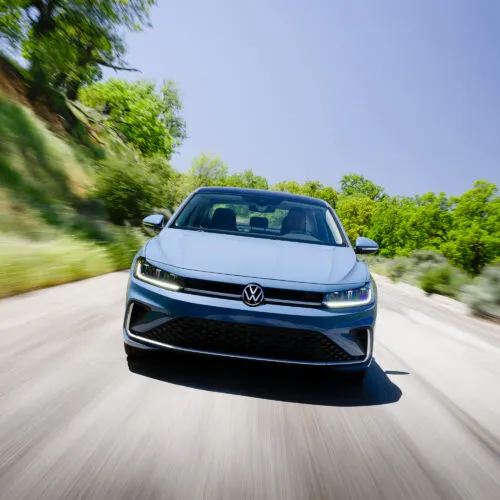
Ars Technica's Jonathan Gitlin reviews the 2026 Volkswagen Jetta Sport, a mid-range trim of VW's compact saloon that stops short of the sportier GLI model. His first impressions were poor: collected after a long-haul flight in hot, rainy rush-hour traffic, the car's single, uncalibrated throttle map made smooth driving difficult, and an incessant, incorrect alert warned him about winter tyres the car did not actually have.
Power comes from the same 1.5-litre turbocharged four-cylinder engine fitted across the Jetta range, running a modified Miller cycle with an unusually high 11.5:1 compression ratio for a turbo engine, producing 158 hp and 184 lb-ft of torque sent to the front wheels via an eight-speed automatic gearbox. The throttle response was jerky at low revs before delivering a sudden surge of torque past 2,500 rpm, though switching the gearbox to "S" mode helped, at the cost of fuel economy. After a frustrating week, the reviewer's opinion began to shift on a Saturday drive with lighter traffic and twistier roads, suggesting the car performs better under different conditions than his initial commute allowed.
In short
- VW's Jetta Sport trim disappointed on first drive amid traffic and heat.
- 1.5L turbo engine (158 hp) has jerky, hard-to-modulate throttle response.
- Reviewer's opinion improved on a later drive on quieter, twistier roads.
Explained simply
The Volkswagen Jetta is a compact saloon, a type of car with a separate boot, sold in several versions. The Sport sits between the regular models and the GLI, which is the range’s more performance-focused version; it uses a 1.5-litre turbocharged engine and an automatic gearbox to drive the front wheels.
The Jetta competes in a shrinking market for affordable new cars, as buyers and manufacturers increasingly favour larger vehicles such as SUVs. How a car feels can also depend on the conditions in which it is driven, so reviews based on different journeys may give different impressions of the same model.