Google now allows you to add your favorite new sources to Search
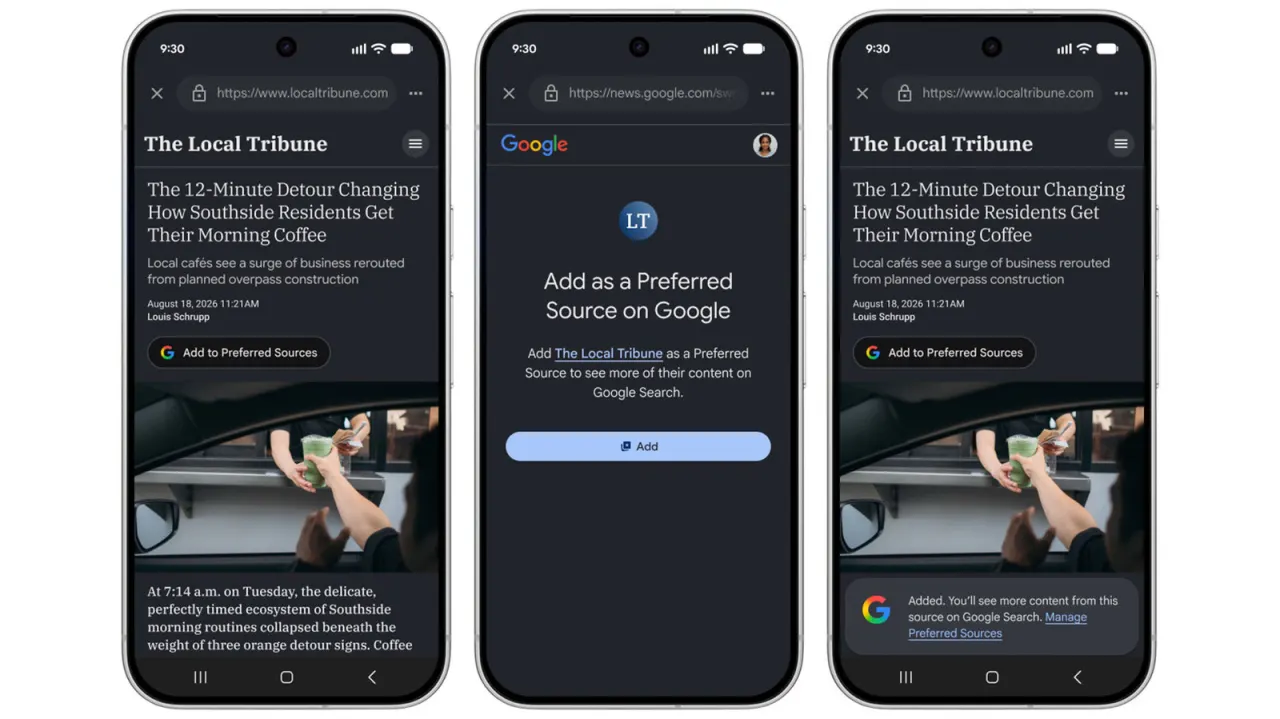
Google has introduced a "Preferred Sources" button that publishers can add to their websites, letting readers mark a site as favoured so it appears more often in Google Search results, including Top Stories, AI Overviews and AI Mode. The move formalises a practice some publishers, including Engadget, had already adopted independently, and comes as referral traffic from Google declines due to AI-driven search features, prompting speculation that it is partly an attempt to placate publishers amid regulatory pressure.
The announcement follows scrutiny from the UK's Competition and Markets Authority, after which Google said in June it would let websites opt out of AI-generated search results. Alongside the new button, Google is rolling out a Discover feed update that lets users curate content by chatting with its Gemini assistant, starting on mobile via a three-dot icon on stories, with the feed adjusting and remembering requests. Google is also making its News app audio briefings on Android more customisable, allowing users to pick specific topics with clearer source attribution and links to full articles; all these features may take a few days to appear.
- Google adds a "Preferred Sources" button to boost chosen publishers in Search
- Discover feed will let users curate content via Gemini chatbot
- Android News app audio briefings become more customisable by topic
New here? Start with this
Google Search is a service that finds and ranks webpages, while Top Stories highlights news coverage and Discover offers a personalised feed of articles. Google has also added AI features that generate summaries and answers from online sources, changing how people encounter news.
News publishers depend on visitors finding their articles through search and other online services, which can bring readers and advertising income. Google controls a major route to news online, so changes to how its services display or recommend articles can affect publishers as well as readers.
Both sides, in good faith
The strongest fair case each way — we don't pick a winner.
The case for
This represents a practical and user-respecting response to legitimate publisher concerns about AI-driven search reducing referral traffic. By giving readers control over source preferences and publishers tools to reach engaged audiences, Google acknowledges the tension between innovation and industry sustainability. The feature demonstrates a willingness to adapt search products in response to concerns about fairness.
The case against
Whilst appearing conciliatory, this change addresses symptoms rather than underlying structural issues. Publishers remain dependent on Google's algorithm for discovery, and a preference button cannot offset the fundamental shift in how AI summaries answer questions without requiring users to visit full articles. Critics argue this is a public relations gesture designed to satisfy regulators without substantive changes to Google's dominant position in search.