Beyond China’s humanoid robots, a quieter machine revolution is unfolding
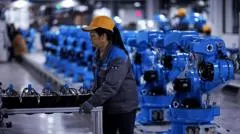
China is rapidly expanding industrial automation, with more than two million robots now working in its factories—more than any other country—while simultaneously training a new generation of workers to operate alongside them. This forms part of President Xi Jinping's $20bn (£14.7bn) strategy to position China at the forefront of technological innovation and in direct competition with the US, raising unanswered questions about the impact on China's human workforce in a country where information is tightly controlled.
The BBC visited vocational schools such as the Hangzhou Technician Institute, where students learn to programme industrial robots and develop robotic medical equipment, and factories such as CRP Technology in Chengdu, where human workers assemble robotic arms alongside engineers developing prototypes designed to build other robots. China already manufactures more than half of the world's industrial robots, and the coverage follows the country's hosting of the second World Humanoid Games, where robots competed in events including boxing and sprinting.
In short
- China now has over two million factory robots, more than any nation
- Xi Jinping's $20bn plan aims to lead global robotics and AI
- Vocational schools are training workers to operate alongside robots
Steelman: both sides, in good faith
The strongest fair case each way — we don't pick a winner.
The case for
Industrial automation is essential for economic competitiveness in a global economy, and China's strategic investment demonstrates clear-eyed recognition of this reality. The simultaneous training of a new generation of technicians shows thoughtful planning to ensure workers benefit from, rather than are harmed by, technological advancement. Automation removes workers from dangerous, repetitive tasks whilst creating higher-skilled, better-paid jobs in programming, maintenance, and engineering—a net positive for workers' wellbeing and the broader economy.
The case against
Rapid automation typically displaces workers faster than retraining programmes can realistically accommodate them, particularly affecting older workers and those without access to quality vocational schools. Whilst some workers transition to skilled positions, many face unemployment or underemployment in lower-wage work, intensifying inequality. In China's controlled information environment, the true scale of worker displacement and hardship remains opaque, making it impossible to verify whether vulnerable workers are genuinely being supported or left behind by this technological push.
Explained simply
Industrial robots are machines used to carry out tasks such as assembling products in factories. China has more than two million working in its factories and makes over half of the world’s supply. The country is also training students to programme and maintain them.
President Xi Jinping’s government is investing in technology as China competes with the United States for influence in advanced industries. Schools such as the Hangzhou Technician Institute teach students to work with robots, while companies including CRP Technology build robotic equipment. The expansion could change the work people do in factories, but its effects on workers are difficult to assess in a country where information is tightly controlled.
Asia Celebrity Entertainment World