Volkswagen board approves plan to cut another 50,000 jobs
Developed over time first seen 2 months ago
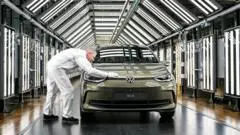
Volkswagen's board has approved a plan to cut a further 50,000 jobs, bringing total planned reductions to 100,000 roles by 2030 in what chief executive Oliver Blume called the biggest restructuring in the firm's nearly nine-decade history. The move, first signalled by Blume in July and building on 50,000 cuts announced in March, comes as the German carmaker battles falling profits, weaker sales in China and the US, and fierce competition from Chinese rivals such as BYD. Shares in Volkswagen rose around 7% in Frankfurt on the day of the announcement, and IG Metall union president Christianne Benner said the company had "fought hard for good solutions" to address a "crisis situation".
Alongside the job losses, which include management positions, Volkswagen said it would halve its range of models and cut production complexity by 75% by 2035, focusing output on its "most compelling vehicles" to lower costs. The group, which employed more than 660,000 people worldwide as of 2025 across brands including Audi, Porsche, Skoda, Seat, Bentley and Lamborghini, is also reviewing the future of four German plants — Emden, Zwickau, Hanover and Neckarsulm — where production capacity exceeds demand, saying alternative uses for the sites are being assessed.
- VW to cut 100,000 jobs total by 2030 after new 50,000-role reduction
- Cuts respond to falling profits amid Chinese and US competition
- VW to halve its model range and review four German plants
New here? Start with this
Volkswagen is Germany's largest carmaker and one of the biggest in the world, owning brands such as Audi, Porsche, Skoda, Seat, Bentley and Lamborghini. It employs more than 660,000 people globally and has long been central to the German economy, so decisions about its size and structure carry weight far beyond the company itself.
The firm has been struggling with falling profits, softer demand in key markets like China and the United States, and growing pressure from lower-cost Chinese electric car makers such as BYD. Oliver Blume, Volkswagen's chief executive, has been pushing a restructuring drive to cut costs, and the company's workforce and strategy decisions are shaped jointly by management, its supervisory board and powerful labour unions such as IG Metall.
Job cuts at Volkswagen are especially sensitive because German law gives workers and unions a strong formal role in company decision-making, and the firm's factories are major employers in the regions where they operate. Any large reduction in jobs or production therefore has knock-on effects for local economies, suppliers and the wider debate about the future of Germany's car industry.
Both sides, in good faith
The strongest fair case each way — we don't pick a winner.
The case for
Advocates of the plan argue that Volkswagen faces a genuine structural crisis: falling profits, weakening demand in China and the US, and fast-moving Chinese rivals such as BYD that undercut it on cost and electric technology. From this view, carrying an oversized, complex model range and surplus manufacturing capacity built for a different era is unsustainable, and delaying painful restructuring would only risk a slower, more chaotic decline that could ultimately threaten far more jobs. Simplifying the model line-up and right-sizing plants and management, they contend, is a necessary act of stewardship to preserve a leaner, competitive Volkswagen for the long term, and the involvement of union figures in shaping the deal suggests an attempt to manage decline responsibly rather than recklessly.
The case against
Critics, including many within the workforce and its union representatives, argue that cutting 100,000 jobs by 2030 imposes an enormous human cost on employees and the communities built around plants like Emden, Zwickau, Hanover and Neckarsulm, many of whom have given decades of loyalty to the company. They contend that management strategy and prior investment decisions bear significant responsibility for the current crisis, and that workers should not be made to shoulder the heaviest burden of correcting those mistakes through job losses and plant uncertainty. From this perspective, there is also concern that such deep cuts could hollow out engineering expertise and morale precisely when Volkswagen needs skilled people to compete, and that alternative paths – such as slower attrition, shorter hours, or greater state and shareholder support – deserved fuller consideration before resorting to cuts of this scale.
Full account
Volkswagen's supervisory board has approved a further round of job cuts amounting to 50,000 positions, bringing the total number of roles the group intends to shed by 2030 to 100,000 as part of a wide-ranging restructuring drive. The reduction builds on an announcement made in March, when the company first set out plans to cut 50,000 jobs by the end of the decade. The commitments apply across the entire Volkswagen group, which encompasses the VW, Audi, Porsche, Skoda, Seat, Bentley and Lamborghini brands.
Chief executive Oliver Blume characterised the decision as a clear demonstration of the company's commitment to its employees, having indicated back in July that additional cuts were under consideration. Volkswagen said a substantial overhaul of its global staffing levels was required to protect its competitiveness in the face of shifting demand and rapid technological change, and made clear that management positions would not be exempt from the cuts. The group also announced plans to halve the number of models it produces by 2035 and to cut the complexity of its overall range by roughly three-quarters, concentrating output on its strongest-selling vehicles in order to reduce costs. Separately, the company said it was reviewing the future of four plants — in Emden, Zwickau, Hanover and Neckarsulm — where production capacity currently exceeds demand, and that alternative uses for the sites were being examined.
The scale of the cuts makes this the largest restructuring in Volkswagen's near nine-decade history, affecting a global workforce that stood at more than 660,000 people as of last year. Christiane Benner, president of the German industrial union IG Metall and deputy chair of Volkswagen's supervisory board, said the company had worked hard to reach workable solutions to what she called a crisis situation facing the business. The restructuring follows a marked fall in profits, driven chiefly by declining sales in China — historically one of Volkswagen's most important markets — as well as weaker sales in the United States, partly attributed to tariffs on car imports introduced under the Trump administration.
Volkswagen's difficulties reflect broader pressures facing established carmakers, particularly intensifying competition from Chinese manufacturers such as BYD, which have expanded quickly by pairing new technology with lower production costs and have made significant inroads in markets including the UK, the European Union and South East Asia. The announcement adds to wider unease about the condition of Germany's car industry, traditionally a pillar of the national economy, as long-established manufacturers work to adapt to electrification and a more competitive global market.
Where outlets differ
Only one of the two supplied source texts actually relates to this story; the second is an unrelated live business-news briefing covering Bank of England interest rate speculation and the upcoming US non-farm payrolls report, with no mention of Volkswagen, so it offered nothing to compare or corroborate against the Volkswagen report.
As only a single substantive account of the Volkswagen job cuts was provided, it was not possible to identify genuine differences in emphasis between multiple outlets' coverage of this specific story.