FCC Chairman Brendan Carr Accuses James Talarico Of Running A “Hoax” With Jimmy Kimmel Sit Down; YouTube Interview Nears 7 Million Views
Developed over time first seen 2 months ago
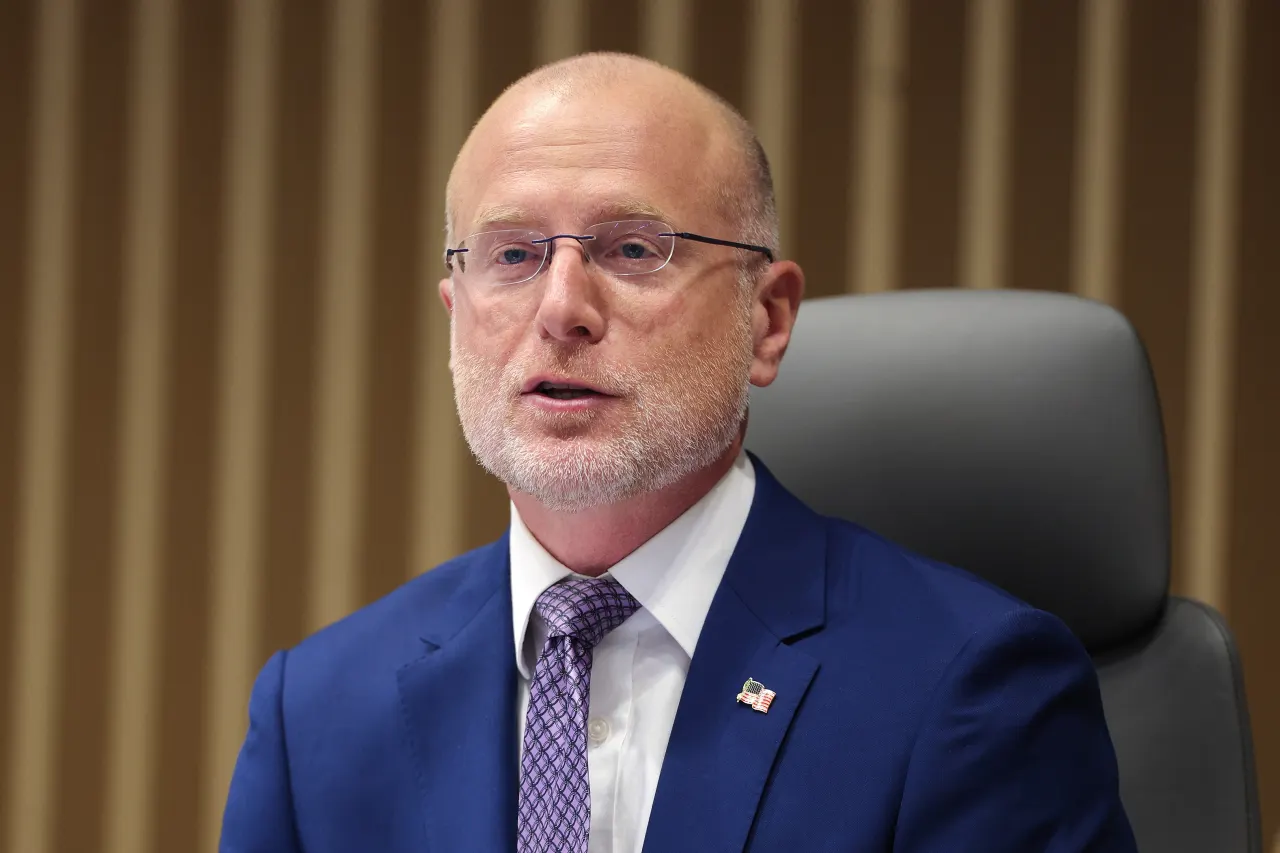
FCC Chairman Brendan Carr has publicly accused Texas Senate candidate James Talarico of running a "hoax" with his interview on Jimmy Kimmel's show, which aired only on YouTube rather than being broadcast on ABC because of the FCC's tightened enforcement of the equal time rule. In a Saturday evening post on X, Carr claimed Talarico was repeating a stunt he pulled with Stephen Colbert earlier in the year purely to generate "clicks and donations", accompanying his remarks with a mocking meme, while defending the rule as intended to promote "more speech, not less". The episode capped weeks of tension between the Trump-appointed regulator and late-night broadcasters, after the FCC issued guidance in January suggesting talk shows may not be exempt from equal time requirements and launched an investigation into ABC's The View over an earlier Talarico appearance.
The Kimmel interview had reached 6.8 million YouTube views by Saturday evening, closing in on 7 million, while a similar Colbert interview with Talarico in February had drawn 9.6 million views, in both cases far exceeding the shows' normal broadcast audiences. Talarico has described the situation as government censorship and "cancel culture", while Kimmel said the FCC was effectively dictating his show's editorial decisions. The White House disputed that any threat had been made against Kimmel, and Carr argued the equal time statute simply requires broadcasters to offer comparable airtime rather than barring any candidate interviews, citing Senator Ted Cruz's appearance on ESPN's College GameDay as a separate case the rule does not cover.
- Sources
- 2
- Outlets
- 2
- Left · Centre · Right
- 0 · 0 · 0
In short
- Carr accused Talarico of staging a "hoax" over his YouTube-only Kimmel interview
- Interview neared 7 million YouTube views amid FCC equal time dispute
- Talarico calls it censorship; White House denies any threat was made to Kimmel
How this story developed
- 1 month ago FCC Chairman Brendan Carr has publicly accused Texas Senate candidate James Talarico of running a "hoax" over his interview with Jimmy Kimmel, which was posted to YouTube rather than broadcast on ABC because of the FCC's tightened enforcement of the equal time rule.
- 1 month ago FCC Chairman Brendan Carr has publicly accused Texas Senate candidate James Talarico of running a "hoax" with his interview on Jimmy Kimmel's show, which aired only on YouTube rather than being broadcast on ABC because of the FCC's tightened enforcement of the equal time rule.
- 2 months ago FCC Chairman Brendan Carr has accused Texas Senate candidate James Talarico of staging a "hoax" over his interview with late-night host Jimmy Kimmel, which was posted to YouTube rather than broadcast on ABC due to regulatory concerns over the FCC's equal time rule.
Full account
The chairman of the US Federal Communications Commission, Brendan Carr, has accused James Talarico, the Texas Democrat seeking a US Senate seat, of stage-managing a "hoax" to boost publicity and campaign donations after the candidate appeared in a Jimmy Kimmel interview that was released only on YouTube rather than broadcast on ABC. Writing on X on Saturday evening, Carr claimed Talarico was repeating a tactic he had allegedly used earlier in the year with Stephen Colbert, suggesting the candidate was relying on audiences misunderstanding broadcasting law or following partisan lines uncritically. Carr accompanied his remarks with a mocking illustration depicting Kimmel carrying Talarico before engineering his own downfall, a jab both outlets read as an attempt to portray the pairing as a self-created stunt. Talarico's campaign had not responded to requests for comment by the time of reporting.
At issue is the FCC's equal-time provision, which obliges broadcast stations to offer rival candidates matching airtime once one is given a platform, though news programmes and bona fide interview formats have traditionally been treated as exempt. That long-standing assumption was thrown into doubt in January when Carr's FCC issued guidance suggesting daytime and late-night talk shows might not automatically qualify for the exemption, a shift critics have characterised as a targeted move against hosts seen as unfriendly to the president. Carr has argued that many such programmes function as de facto partisan platforms and, because they operate on publicly licensed airwaves, ought to be bound by rules including the prohibition on distorting news coverage. Within weeks of the new guidance, the commission opened a formal inquiry into ABC's The View following an appearance by Talarico.
It was against this backdrop that Kimmel told viewers earlier in the week that his sit-down with Talarico would not air on television but would instead be uploaded to YouTube, a decision he attributed to protecting ABC's affiliate stations, particularly those in Texas, from potential regulatory fallout. Opening the segment, Kimmel complained that his programme was being singled out simply for interviewing a political candidate, noting that other office-seekers, including Donald Trump during his campaigns, had previously appeared on the show without triggering such concerns. Talarico, for his part, framed ABC's caution as tantamount to government-driven censorship, telling one interviewer that such pressure on broadcasters amounted to a particularly troubling strain of cancel culture that ought to concern people across the political spectrum.
The episode echoes a similar sequence in February, when Colbert likewise moved a Talarico interview to YouTube after saying network executives had raised concerns, with that video eventually amassing roughly 9.6 million views, far outstripping the show's typical broadcast audience. The Kimmel interview has followed a comparable trajectory online, reportedly drawing several million views within its first day and continuing to climb towards the seven-million mark over the following days, again exceeding what the programme would typically draw on air. Talarico has promoted the clip himself, casting it as material regulators would rather audiences did not see, while Carr's intervention marked his first public comment specifically addressing the Kimmel broadcast, having previously left the controversy to unfold without direct rebuttal.
Where outlets differ
From the full account, which is AI-written from the sources:
The two accounts give slightly different, moment-in-time view counts for the Kimmel video (one cites 6.8 million as of Saturday evening, the other 7.3 million 'as of this writing', with the latter also noting over 5 million views in the first 24 hours) — a reflection of when each report was filed rather than a factual disagreement.
The outlet quoting Variety-style sourcing includes more detail on Kimmel's on-air remarks defending the show, including his pointed comment about Trump having appeared as a guest twice previously, and quotes Talarico's 'most dangerous form of cancel culture' line from an MS NOW interview.
The other account places more emphasis on the historical comparison with the Colbert/Talarico YouTube interview and its 9.6 million views, using it to contextualise the pattern of talk-show interviews outperforming broadcast audiences online.
Only one of the two reports explicitly names the publication reaching out for comment (Variety), while the other refers more generally to a 'Talarico campaign spokesperson' not responding.
Steelman: both sides, in good faith
The strongest fair case each way — we don't pick a winner.
The case for
Supporters of Chairman Carr's position argue that the equal time rule exists precisely to stop broadcasters from tilting the playing field toward favoured candidates, and that regulators have a legitimate duty to apply it consistently even to popular late-night formats. They contend that moving the interview to YouTube rather than broadcasting it was a lawful, low-cost workaround chosen by ABC itself, not an act of censorship, and that framing routine compliance as a "hoax" for donations is a fair characterisation if the candidate is knowingly using a regulatory dispute to drive attention and fundraising. On this view, insisting that opposing candidates get comparable airtime protects fairness in elections and is itself a pro-speech measure, since it prevents broadcasters from effectively endorsing one candidate through disproportionate access.
The case against
Critics of the FCC's approach argue that pressuring or investigating broadcasters over a talk-show booking chills editorial independence and sets a troubling precedent for government influence over what and whom media outlets choose to platform. They see the shift from broadcast to YouTube not as a neutral compliance step but as evidence that regulatory threats are already shaping content decisions, which is precisely the kind of soft censorship the First Amendment is meant to guard against. From this perspective, dismissing the episode as a mere publicity stunt sidesteps the substantive concern: that a politically appointed regulator is using ambiguous rules to discourage networks from hosting candidates whose views it may disfavour, with a chilling effect that extends well beyond this one interview.
Explained simply
The FCC's "equal time rule" requires broadcasters to give rival political candidates equal airtime, and this is at the heart of a growing row over late-night television. Brendan Carr, the Trump-appointed chairman of the FCC, has been arguing since January that talk shows may not be exempt from this rule when they host candidates, a stance that led his agency to investigate ABC's The View. James Talarico, a Democratic candidate for the US Senate in Texas, has had two high-profile interviews pulled from broadcast television as a result and moved instead to YouTube, first with Stephen Colbert and now with Jimmy Kimmel.
Both interviews found large audiences online regardless, with the Colbert one drawing 9.6 million views earlier this year and the Kimmel interview approaching similar numbers. The dispute has become a proxy fight over free speech and media regulation, with Carr accusing Talarico of exploiting the situation for publicity, and Talarico and Kimmel countering that the FCC's approach amounts to political interference in editorial decisions.
This matters beyond one candidate's campaign because it touches on how much control federal regulators can exert over broadcasters' choices when it comes to political candidates, at a time when trust in both government and media institutions is already strained. The White House has denied applying any pressure on broadcasters, while Carr insists his goal is to encourage more speech rather than suppress it.
Coverage · 2 sources
Business Markets Trending Weird & Viral