Google will let you distribute vibe-coded Android apps with just a Google account
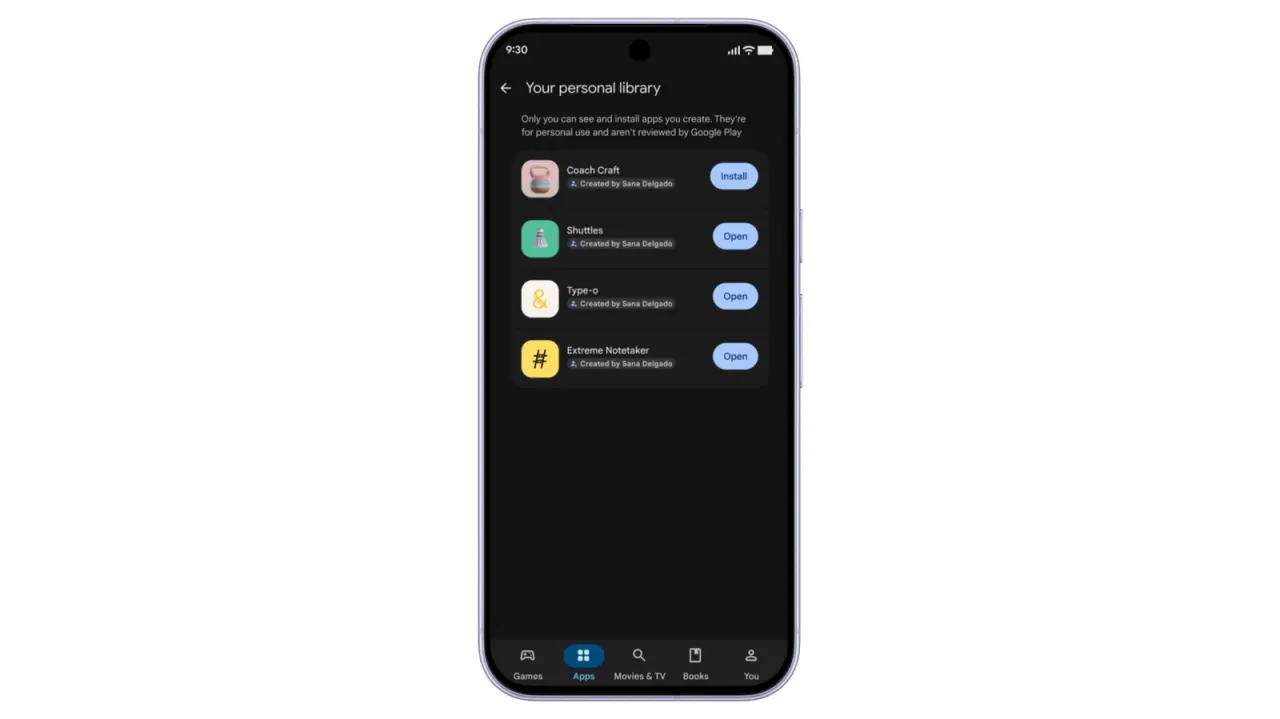
Google will let adults in the US and selected markets publish apps made with Google AI Studio using only a Google account, without paying for a developer account. Initially, each app will appear only in its creator’s personal Play Store library on their devices, making it easier to use AI-generated apps while limiting their reach.
Google says creators will later be able to share apps with friends and family, and can move to a professional developer account to submit apps for standard safety reviews and wider distribution. Other Play Store updates include Gemini linking to apps, broader football coverage in sports pages, tailored game recommendations based on a Gamer DNA profile, and new gaming features such as 48-hour challenges and gameplay clips.
- AI Studio apps can be published without a paid developer account.
- Apps start in the creator’s personal Play Store library.
- Google is also adding app discovery and gaming features.
New here? Start with this
Google Play is Google’s app shop for Android phones and tablets. To publish apps there, developers have usually needed a paid developer account; Google AI Studio is a Google tool that helps people make apps using artificial intelligence, including from written instructions.
The change is aimed at adults in the US and some other markets who want to try apps they have made. At first, each app will be available only in its creator’s own Play Store library and on their devices. Google says creators will be able to share apps with friends and family later, or apply for a professional account to submit apps for safety checks and wider release.
Both sides, in good faith
The strongest fair case each way — we don't pick a winner.
The case for
Allowing people to publish AI-made apps with a Google account could lower the cost and technical barriers to experimentation, letting more users build tools that suit their own needs. Keeping apps initially within the creator’s personal library offers a cautious first step, while later sharing and standard review pathways could let successful projects reach others.
The case against
Even limited distribution may make it easier for people with little development experience to create apps that mishandle data, behave unpredictably or give users a false sense of safety. Critics could argue that Google should establish clearer safeguards and accountability before enabling publication, and that moving to wider distribution should not be the point at which basic protections begin.