Technology news and discussion on TalkFuse.
ULA says Vulcan lacked the oomph to get Amazon satellites to orbit
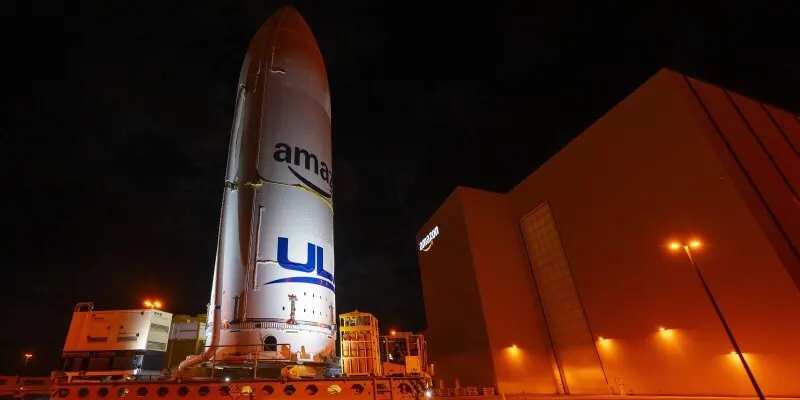
United Launch Alliance says a Vulcan rocket’s first-stage underperformance appears to have caused Sunday’s mission failure, leaving an Amazon Leo satellite payload short of orbit. The loss comes on Vulcan’s return to flight and raises questions about the rocket’s reliability as ULA investigates.
ULA’s early assessment says the rocket separated stages at too low an altitude and lacked the speed needed to reach orbit; the Centaur upper stage and its RL10 engines appeared to work as intended. The solid boosters also performed nominally after nozzle changes, directing attention to the liquid-fuel core stage, powered by two Blue Origin BE-4 engines, though no fault has been confirmed. ULA and the FAA are investigating, after the agency established debris response areas; the failure also contrasts with the Atlas V’s record of every payload reaching orbit.
In short
- Vulcan’s first stage appears to have underperformed.
- An Amazon Leo satellite payload failed to reach orbit.
- ULA and the FAA are investigating the cause.
Explained simply
United Launch Alliance (ULA) is a US rocket company that launches satellites and spacecraft. Vulcan is its newer rocket, designed to carry payloads into space using a liquid-fuel core stage and an upper stage; solid boosters can provide extra thrust at launch.
Amazon Leo is Amazon’s planned network of satellites in low Earth orbit, intended to provide internet access. A satellite must reach the right altitude and speed to stay in orbit, where it can travel around Earth rather than fall back towards it.
Rocket launches involve several stages that ignite and separate in sequence. The Federal Aviation Administration oversees commercial launches in the United States, while ULA investigates how its rockets perform; Vulcan’s reliability matters to organisations choosing how to send valuable satellites into space.