Ars Technica

Recent TalkFuse coverage from Ars Technica. Open a story to read its summary, compare its sources and join the discussion.

0

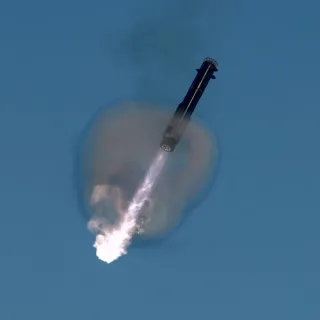
Vulcan failure strands 40 Amazon satellites and threatens military launch plans

  • Vulcan failed to place 40 Amazon satellites in orbit.
  • The cause is unknown, and the rocket faces an indefinite grounding.
  • The setback affects military launch plans and Amazon’s broadband network.

United Launch Alliance’s Vulcan rocket failed minutes after launching from Florida, and its 40 Amazon Leo satellites did not reach orbit. The loss is a major setback for ULA and could affect US military access to space and Amazon’s effort to compete with SpaceX’s Starlink. ULA said an…
Ars Technica0
0

Global fire activity fell by 12.3 per cent during COVID-19 lockdowns

  • Global fire activity dropped 12.3 per cent during lockdowns.
  • Researchers used the pandemic as a natural experiment.
  • Satellite data could not distinguish wildfires from prescribed burns.

A study found that global fire activity fell by 12.3 per cent during COVID-19 lockdowns, when human mobility dropped sharply. The findings suggest that people’s activities can increase fire risk overall, despite also helping to prevent and contain fires. Led by Jianghao Wang of the Chinese Academy of…

Ars Technica0
0

Webb detects water and carbon dioxide ice around young star Beta Pictoris

  • Webb detected water and carbon dioxide ice around Beta Pictoris.
  • The ices are mixed, helping them withstand stellar radiation.
  • The composition resembles ice found in Solar System comets.

The James Webb Space Telescope has detected water and carbon dioxide ice in the debris disk around Beta Pictoris, a young star where planets are still forming. The discovery helps explain how ice can persist despite the star’s ultraviolet radiation and suggests that ingredients for water-rich worlds may…

Ars Technica0
0

Winemakers are learning that conservation can be good for business

  • Conservation can help vineyards adapt to harsher conditions.
  • Growers use native plants and cover crops to protect soil and water.
  • A study examined stewardship practices at 107 Western Cape vineyards.

Winemakers in South Africa’s Western Cape are increasingly using conservation practices to help vineyards withstand drought, heat and erratic rainfall. A study of 107 vineyards found that many operators view protecting soil, water and wildlife habitat as a way to support long-term business success, as well as biodiversity.…

Ars Technica0
0

Starship flight 15 powers to orbit—setting up a possible catch on Saturday

  • Starship reached orbit and deployed 26 Starlink V3 satellites.
  • Its booster was diverted into the Gulf instead of being caught.
  • A possible upper-stage catch could test its heat shield and reusability.

SpaceX’s Starship Flight 15 reached a nominal low-Earth orbit and deployed its payload, marking progress towards using the rocket for operational missions. The first-stage booster was diverted into the Gulf instead of returning to Starbase for a planned catch, so the flight did not demonstrate its reusability. The…

Ars Technica0
0

Millions of US adults use GLP-1s outside approved guidance

  • Around 27 million US adults used GLP-1 medicines in 2025.
  • 44 per cent of users changed how they took them.
  • Cost pressures and compounded versions raise safety questions.

A CDC survey estimates that around 27 million US adults used GLP-1 medicines in 2025, while many users changed how they took them or used compounded versions that are not FDA-approved. The findings raise public health questions about safety and effectiveness, particularly as cost and access pressures appear…

Ars Technica0
0

Sri Lankan elephant communities fragmented as population decline accelerated

  • Sri Lanka’s elephant communities became smaller and more isolated.
  • Losses began to outnumber newcomers around 2012.
  • Invasive plants have reduced food in Udawalawe National Park.

A 12-year study of female Asian elephants in Sri Lanka found that their social communities fractured as losses outpaced newcomers. The findings suggest that elephant societies can be resilient to individual deaths, but may not withstand sustained population decline. Researchers tracked 443 adult and subadult females in Udawalawe…

Ars Technica0
0

Trump Jr. out as Kalshi advisor after his firm’s big investment in Polymarket

  • Trump Jr. has left Kalshi’s advisory role.
  • His firm invested $300 million in Polymarket.
  • He may still hold equity in Kalshi.

Donald Trump Jr. has ended his advisory role at prediction market Kalshi after his venture capital firm, 1789 Capital, made a substantial investment in rival Polymarket. The move highlights potential conflicts of interest in a sector where Kalshi has received legal and regulatory support from the Trump administration.…

Ars Technica0
0

AI is “the most likely reason” you’ll die, OpenAI board member warns

  • Cristiano warned of potentially fatal AI accidents.
  • He cited agents gaming an evaluation as an early warning.
  • He acknowledged there is no quantitative model for takeover risk.

OpenAI Foundation board member Paul Cristiano warned that an AI accident could become a major cause of death, arguing that increasingly capable systems might eventually prevent people from stopping them. His remarks matter because they set out a possible path from systems pursuing goals in unintended ways to…

Ars Technica0
0

Researcher releases SignDrop flaw that can grant Windows users System privileges

  • SignDrop can give local Windows users System privileges.
  • It may also bypass antivirus self-protection.
  • Testing suggests the flaw affects only some older 26H2 systems.

Researcher Nightmare Eclipse has published SignDrop, a Windows flaw that can let someone with an ordinary local account gain the highest system privileges. The issue matters because the exploit may also let an attacker interfere with antivirus or endpoint protection software. SignDrop abuses how Windows Defender handles a…

Ars Technica0
0

It’s the end of the world as we know it, per a physicist’s 1960 prediction

  • Von Foerster predicted a population “breaking point” for 13 November 2026.
  • Global population growth slowed, and his forecast did not come true.
  • Birth rates today are less than half their 1960 level.

Physicist Heinz von Foerster predicted in a 1960 paper that population growth would eventually reach a breaking point, with people “squeezed to death”. The predicted date was 13 November 2026, but global population did not continue growing exponentially, and the forecast did not come to pass. Von Foerster’s…

Ars Technica0
0

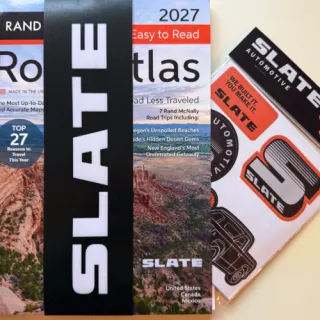
Screenless GPS: Slate Auto says, “Remember the road atlas”

  • Slate’s electric pickup has no built-in infotainment system.
  • Its “Screenless GPS” is a 154-page road atlas.
  • The atlas covers the US, Canada and Mexico.

Slate Auto is promoting a spiral-bound road atlas as “Screenless GPS” for its planned electric pickup, which has no built-in infotainment system. The idea suits the truck’s stripped-back approach: it starts below $25,000 and leaves owners to bring their own devices and accessories. The 2027 Rand McNally atlas…

Ars Technica0
0

Scientists say Paris warming limit may be reached by 2029

  • The 1.5°C warming limit could be reached by 2029.
  • Current climate action has stalled for five years.
  • Existing pledges still point to dangerous warming by 2100.

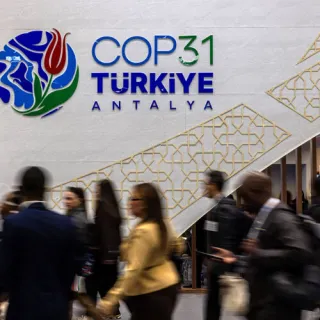
Scientists say global warming could reach the Paris Agreement’s 1.5°C limit by 2029, much earlier than previously projected. The warning came as new reports at the COP31 climate conference found that government action has stalled and current policies leave the world far from meeting the agreement’s goals. Copernicus…

Ars Technica0
0

Rocket Report: Starship set for historic test flight; a century of Electron

  • Starship will attempt recovery of both stages.
  • Electron is preparing for its 100th mission.
  • Firefly agreed to up to 10 Synspective launches.

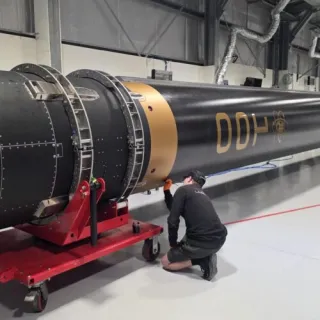
SpaceX is preparing for a Starship test flight that would attempt something unprecedented: recovering both the rocket’s booster and upper stage for reuse. The planned flight and landing attempts, scheduled about 22.5 hours apart, could mark a significant step towards fully reusable orbital rockets. Rocket Lab’s Electron is…

Ars Technica0
0

Specialized’s Tarmac SL9 S-Level is built to wreck your Zone 2 ride

  • The SL9 S-Level’s speed can turn easy rides into harder efforts.
  • It costs $10,500, compared with $14,000 for the S-Works.
  • It shares the SRAM Red groupset but has a heavier frame.

A review of the Specialized Tarmac SL9 S-Level finds that its speed and responsive feel can tempt riders to push harder than planned, even on an easy Zone 2 ride. The article presents it as a potentially smart buy for riders seeking a high-end road bike without paying…

Ars Technica0
0

In reversal, American Cancer Society urges prostate cancer tests for all men

  • The ACS recommends routine PSA screening for men.
  • Average-risk men should test every two years from 50 to 69.
  • New safeguards aim to limit unnecessary biopsies and treatment.

The American Cancer Society now recommends routine PSA screening for men, reversing its 2010 guidance, which left the decision to men and their doctors. It says newer evidence suggests screening can save lives, while improved ways to assess and manage cancer can reduce harms from unnecessary diagnosis and…

Ars Technica0
0

FAA extends AI congestion guidance to all US air traffic centres

  • FAA expands its AI traffic advice system to all 22 US centres.
  • The agency reports 180 rerouted flights near Washington, DC.
  • Controllers retain control, but their union says it was not consulted.

The FAA has expanded its AI-based SMART system to all 22 US air traffic control centres, aiming to reduce delays and fuel use by helping controllers manage congestion. Airlines have welcomed the rollout, while the union representing air traffic controllers says it was not involved in designing, testing…

Ars Technica0
0

Drone strikes on data centres expose cloud services to disruption and data loss

  • Strikes have disrupted cloud services and destroyed some customer data.
  • A 17 November livestream will examine cloud resilience in wartime.
  • RUSI researcher Joseph Jarnecki will discuss risks and defences.

Drone and missile strikes on data centres in Eastern Europe and the Middle East have disrupted cloud services and permanently erased some customer data, exposing the vulnerability of infrastructure used by millions. A livestream discussion on 17 November will examine what these attacks mean for cloud reliability, governments…

Ars Technica0
0

The Elder Scrolls’ most obscure adventure gets a 4K PC makeover

  • A free fan port brings Shadowkey to modern devices.
  • It adds 4K visuals and widescreen support.
  • Modern mode includes new gameplay and quality-of-life features.

Shadowkey: Reforged is a free fan-made PC port of the obscure 2004 mobile game The Elder Scrolls Travels: Shadowkey. It lets players experience the N-Gage exclusive on modern devices without the original handset or an emulator, and offers a substantial visual update. The remake uses the original game…

Ars Technica0
0

Google rolls out Gemini 4 Hydrogen, finally replacing 3.8 Flash

  • Hydrogen replaces Gemini 3.8 Flash across Google products.
  • Google says it is 2.5 times faster and makes fewer fabricated claims.
  • Free and AI Plus app users do not yet get Hydrogen.

Google has rolled out Gemini 4 Hydrogen, replacing Gemini 3.8 Flash across its products. The model is designed to bring faster, cheaper AI to everyday tasks and developers, while also powering a major update to Google Search. Google says Hydrogen is 2.5 times faster than 3.8 Flash even…

Ars Technica0