15,000 years of solar wind in four hours? A Seattle company gives it a go.
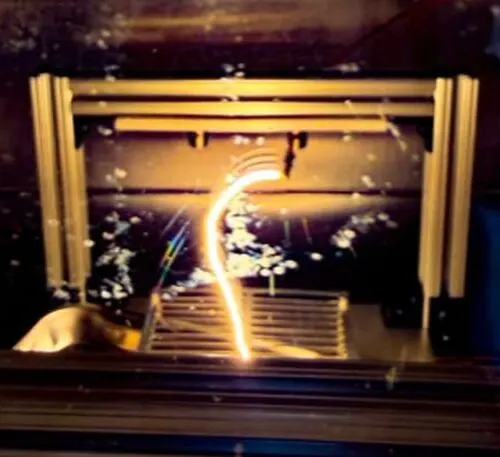
The Seattle-based startup Interlune has developed a lab technique to simulate lunar regolith exposed to billions of years of solar wind, tackling a key obstacle in its plan to mine helium-3 from the Moon. Helium-3, a rare isotope embedded in lunar soil by the solar wind, has long-term promise for fusion energy and nearer-term uses in cryogenics, medical research and neutron detection, making it one of the few lunar resources that could plausibly be profitably returned to Earth. Since genuine lunar samples are scarce and existing simulants replicate the Moon's geology but not its precise chemistry, Interlune needed another way to test its extraction hardware before committing to a costly mission.
In a vacuum chamber, the company's scientists fired accelerated ionised helium into regolith, compressing roughly 15,000 years' worth of solar wind exposure into about four hours. Heating the material afterwards, they found the implanted helium was released at the same temperatures observed in real Apollo-era rock samples, confirming the simulant's accuracy. Interlune, led by chief executive Rob Meyerson and scientist Elizabeth Frank, intends to use the material to test its own extraction and processing equipment and to sell it to other lunar mining firms, ahead of a planned prototype mission on a lunar lander later this decade.
- Interlune simulated 15,000 years of solar wind exposure in four hours.
- The technique creates realistic lunar regolith for testing helium-3 mining hardware.
- Real lunar samples are scarce, so the company built its own simulant.
New here? Start with this
The Moon’s surface is covered by fine dust and broken rock called regolith. Over billions of years, particles streaming from the Sun, known as the solar wind, have implanted small amounts of helium-3 into that soil. Samples brought back by Apollo missions are limited, so companies developing lunar mining equipment rely on made-to-order soil substitutes.
Interlune is a Seattle startup led by chief executive Rob Meyerson and scientist Elizabeth Frank. It is developing a way to prepare lunar soil substitutes with helium implanted in them, so it can test equipment designed to heat the soil and release the gas. Helium-3 has possible uses in research, medical work and detecting neutrons; its potential role in future fusion energy is also of interest, though that use remains a prospect.