World news and discussion on TalkFuse.
Basil Spence’s legacy resurfaces as Edinburgh office becomes a hotel
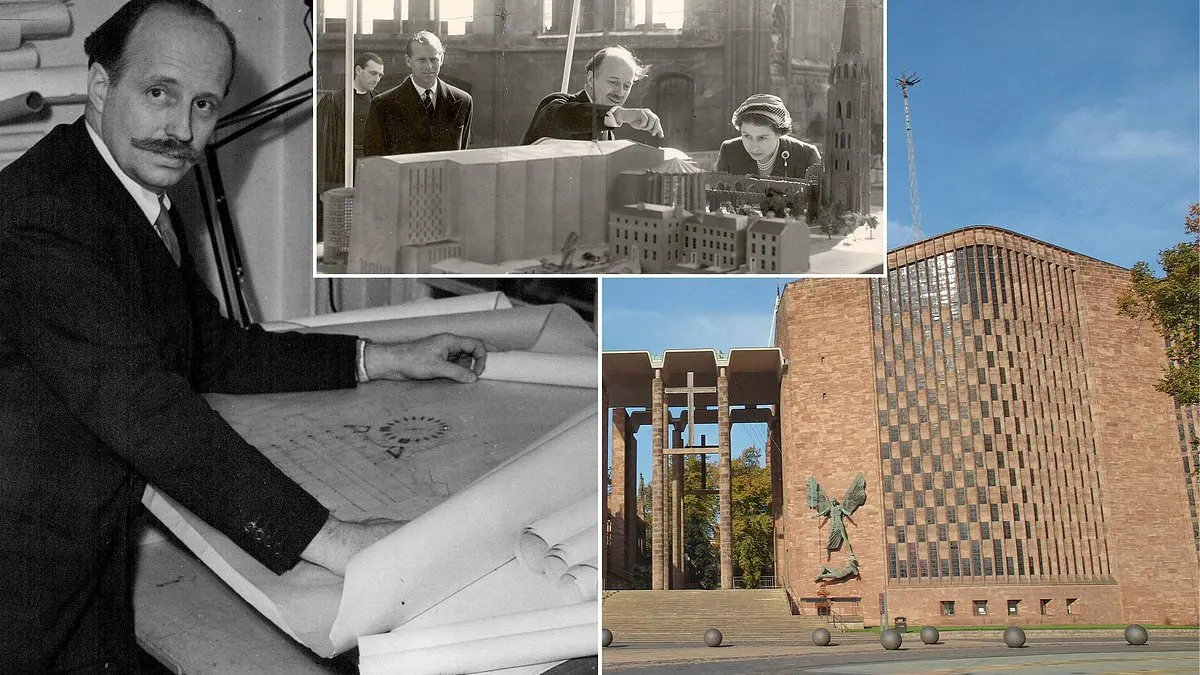
Sir Basil Spence’s legacy remains contested 50 years after his death: celebrated for Coventry Cathedral and major projects at home and abroad, he was also criticised for buildings that became unpopular or were demolished. The planned conversion of his former Scottish Widows headquarters in Edinburgh into a 385-room hotel has renewed debate over whether his modernist work should be preserved and adapted.
Spence trained as an architect before the Second World War and served as an officer in Normandy, where he said he wanted to build a cathedral after seeing churches destroyed. His design for Coventry Cathedral brought him acclaim and a knighthood, followed by commissions including university buildings, the British Embassy in Rome and New Zealand’s parliament. In Glasgow, however, his 1960s Hutchesontown C tower block became notorious for damp, poor maintenance and social isolation, and was demolished in 1993.
In short
- Coventry Cathedral made Spence famous.
- His modernist buildings still divide opinion.
- Edinburgh’s former Scottish Widows HQ is set to become a hotel.
Steelman: both sides, in good faith
The strongest fair case each way — we don't pick a winner.
The case for
Adapting Spence’s former Scottish Widows headquarters could give a substantial modernist building a viable new use, bringing investment and visitors while keeping its architecture in public view. Preservation through adaptation can honour the design without requiring the building to remain an office, and may be more sustainable than demolition and replacement.
The case against
Turning the headquarters into a hotel risks treating an architecturally significant building chiefly as a commercial asset, potentially changing features that give it historical value. Critics may argue that prominent modernist works deserve stronger protection and uses that preserve their character, especially given Spence’s contested legacy and the lasting consequences of some post-war redevelopment.
Explained simply
Basil Spence was a Scottish architect whose work helped shape post-war Britain. His best-known project, Coventry Cathedral, was built after the Second World War to replace the city’s bomb-damaged cathedral; he also designed public buildings in Britain and overseas.
Spence’s reputation is mixed. Some buildings are recognised as important examples of modernist architecture, while others became unpopular or were demolished. His Hutchesontown C tower block in Glasgow, for example, was associated with damp, poor upkeep and social isolation before it was demolished in 1993.
The debate over Spence’s work reflects a wider question about what to do with older modernist buildings: preserve them, adapt them for new uses or replace them. His former Scottish Widows headquarters in Edinburgh is part of that discussion.
Read the full article at the source →
Originally published by Daily Mail as “An architectural visionary… or vandal? Why the arguments STILL rage over the legacy of Sir Basil Spence”.