Balaclava-wearing youths gather with flares in hand to mark lives of dead ‘joyriders’… while across the city silent prayers are held for PCs killed in A66 horror
Developed over time first seen 2 months ago
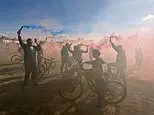
A vigil for five young men who died after driving the wrong way down the A66 and colliding head-on with a police car descended into chaos on Monday afternoon, as balaclava-clad attendees set off flares and fireworks in a field in South Bank, near Middlesbrough. The scene contrasted sharply with a solemn church service held nearby to remember PC Tom Clough and PC Matthew Blades, the two officers killed in the same crash, highlighting the deep divisions within the community over how the tragedy should be commemorated.
What began as a balloon release for Jakub Matusiak, 23, turned into a noisy gathering of around 20 masked youths on motorbikes and quad bikes, filling the field with flares and smoke, while a separate balloon release was held elsewhere in Middlesbrough for 17-year-old Cole Worthy. In total, seven people died in Saturday's collision, including PCs Blades and Clough, alongside Matusiak, Worthy, Theo Rae (17), Makai Saddington (18) and Michael Robert Cahill (23). Meanwhile, Redcar MP Anna Turley joined mourners for a quiet prayer vigil at St John The Evangelist Church, and Cleveland Police maintained a low-key presence near the joyriders' gathering, as some local residents criticised the tone of that event as disrespectful to the officers.
- Vigil for A66 crash "joyriders" erupted into flares and fireworks in Middlesbrough
- Separate silent church vigil held for the two police officers killed
- Crash killed seven people total, including PCs Blades and Clough
New here? Start with this
Balaclava-wearing youths gather with flares in hand to mark lives of dead ‘joyriders’… while across the city silent prayers are held for PCs killed in A66 horror
The story centres on a fatal crash on the A66, a major road near Middlesbrough, in which a car being driven the wrong way collided head-on with a police vehicle. Seven people died, including two police officers, PC Tom Clough and PC Matthew Blades, and five young men and teenagers who had been in the other car.
In the days after the crash, separate gatherings were held to remember those who died. Family and friends of the young men held balloon releases and informal vigils, while a church service and prayer vigil, attended by local MP Anna Turley, honoured the two police officers. The tone of these events differed sharply, exposing tension in the community over how to mourn people involved in the same tragedy but seen very differently by different groups.
Both sides, in good faith
The strongest fair case each way — we don't pick a winner.
The case for
Those defending the young people's vigil would argue that grief does not follow a script, and that a community reeling from the sudden loss of five friends, some barely out of childhood, should be allowed to mourn in the way that feels authentic to them, with flares, engines and noise reflecting the culture they shared with the deceased rather than disrespect for anyone else. They would note that these were still someone's sons and friends, that no inquest had yet apportioned blame, and that condemning their send-off risks compounding a grieving community's pain by implying their dead are less worthy of remembrance than others. Insisting on solemn, church-style mourning as the only acceptable form, they might add, imposes one community's norms on another at the rawest possible moment.
The case against
Those uncomfortable with the tenor of the gathering would argue that two police officers doing their duty were killed in the same crash, and that a raucous display involving masked riders, flares and the very vehicles associated with reckless driving risked appearing to glorify the conduct that led to the tragedy rather than simply mourning its victims. They would emphasise that public commemorations carry weight beyond private grief, shaping how a community processes shared trauma, and that holding a subdued prayer service for the officers just streets away from a fireworks-and-flares gathering created a jarring contrast many residents found hard to reconcile. For them, the concern is not that the young men's lives should go unmourned, but that the manner of the tribute overshadowed the loss suffered by the officers' families and colleagues.
Full account
A gathering was held in South Bank, Middlesbrough, on Monday for Jakub Matusiak, 23, one of five people who died in a collision on the A66. Reports said the event took place in a field close to the crash site and began with a balloon release. It later involved flares, fireworks and people riding motorbikes and quad bikes, some wearing balaclavas.
The collision on Saturday killed seven people, including Cleveland Police officers PC Tom Clough and PC Matthew Blades. The reports describe the vehicle carrying the five other victims as travelling in the wrong direction on the dual carriageway before the crash, although the precise circumstances remain under police investigation.
At the same time, a quieter prayer vigil for the two officers was held at St John the Evangelist Church. Local residents attended, as did Redcar Labour MP Anna Turley, who said the community had been deeply affected by the loss of life and particularly by the deaths of officers serving the public.
Cleveland Police attended the South Bank gathering with what was described as a restrained presence. Police were also continuing inquiries into events preceding the collision. One report said 12 people had been arrested in connection with alleged offences including firearms and drugs matters, and that officers were examining reports involving another vehicle and possible links to earlier incidents in Middlesbrough.
Where outlets differ
Both reports contrast the noisy gathering for Matusiak with the church vigil for the officers. Source 1 gives greater space to a mourner who said the five people who died were loved and should not be dismissed, and notes that many nearby residents did not attend. Source 2 foregrounds criticism of the gathering, including social-media reactions, and adds details of arrests, inquiries into a second vehicle and environmental objections to the balloon release.