Elon Musk, Sam Altman, and the Misreading of Science Fiction
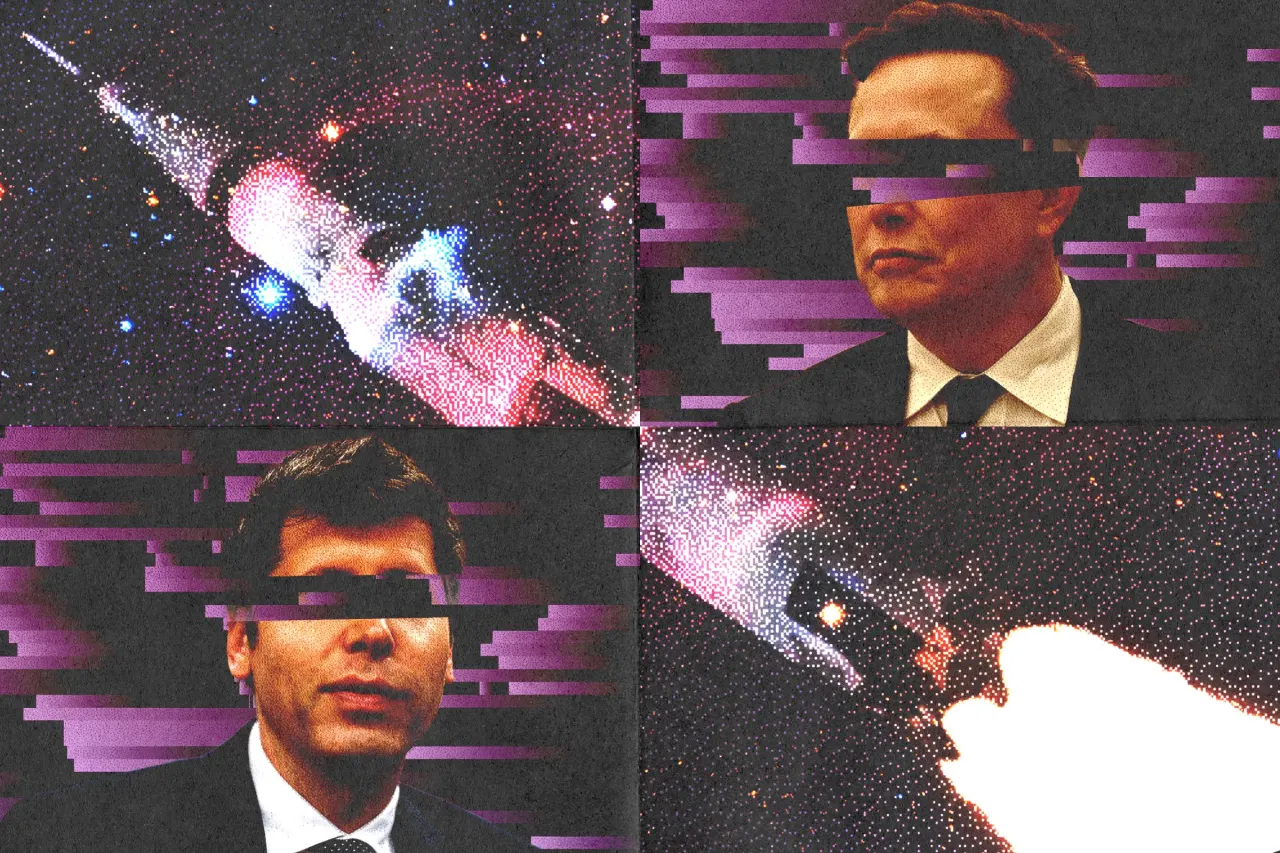
In this extract from her new book, historian Jill Lepore argues that Elon Musk, Sam Altman and other Silicon Valley billionaires are building what she calls the "Artificial State" – a vision of society freed from democratic government and national borders, drawn largely from science fiction they read as boys but, in her view, fundamentally misunderstood. She contends these tech leaders treat cautionary sci-fi tales as blueprints rather than warnings, using dramatic predictions of AI-driven existential risk to justify accelerating development and attracting investment, while abandoning earlier promises of democratic oversight or global governance structures for the technology.
Lepore highlights specific examples: Musk's plan to use AI to generate a "historically accurate" version of Homer's Odyssey even as AI firms destroy books to harvest data, and Altman's 2025 remark that data centres might eventually cover most of the Earth's surface, or even be moved into space. She notes Altman's fondness for the novel "We Are Legion (We Are Bob)", in which human consciousness is uploaded to serve an AI-run government, and that he – like Peter Thiel and Marvin Minsky before him – has arranged to have his body frozen after death in hopes of future revival, which Lepore frames as a literal, uncritical reading of speculative fiction as an instruction manual.
In short
- Historian Jill Lepore critiques Silicon Valley's AI-driven "Artificial State" vision
- Musk and Altman accused of misreading sci-fi as literal blueprints
- Altman has arranged cryonic freezing hoping for future consciousness upload
Steelman: both sides, in good faith
The strongest fair case each way — we don't pick a winner.
The case for
Lepore identifies a concerning pattern: tech billionaires invoke existential AI risks to justify accelerating development whilst abandoning earlier commitments to democratic oversight and global governance. There is substantive concern that leaders treat science fiction's warnings about unchecked technological power—AI governments, planetary infrastructure, consciousness uploading—not as cautionary tales but as operational blueprints. When urgent existential rhetoric becomes rationale for concentrating control over transformative technology in private hands, the parallel to sci-fi's core warnings about technological overreach becomes inescapable.
The case against
Defenders of tech leaders argue Lepore mistakes visionary inspiration for literal instruction and mischaracterises how innovation progresses. Rapid technological development necessarily requires ambitious vision and cannot await perfect democratic consensus; genuine concerns about existential AI risk justify urgent research and development rather than regulatory caution that risks ceding advancement to less scrupulous actors. Those who best understand the technology are best positioned to guide it safely, and market forces plus adaptive regulation will manage power concentrations more effectively than technological stasis.
Explained simply
Artificial intelligence is software designed to carry out tasks that usually require human judgement, and its rapid development has prompted debate about who should control it and how its risks should be managed. Elon Musk and Sam Altman are prominent technology entrepreneurs whose companies develop AI systems; Peter Thiel is an investor, while Marvin Minsky was an earlier researcher in artificial intelligence.
Historian Jill Lepore’s argument draws on science fiction, which has long imagined societies shaped by advanced machines, new technologies and altered human lives. She says some technology leaders have taken ideas from these stories as plans for the future, even when the stories were intended as warnings.
The debate matters because AI development can affect public institutions, access to information and how societies make decisions. Questions about democratic oversight and international rules have become part of wider discussion about who benefits from the technology and how its risks are addressed.