Entertainment news and discussion on TalkFuse.
Fund Indonesian Films as Portfolios, Not One by One, Former Trade Minister Tom Lembong Tells JAFF Market
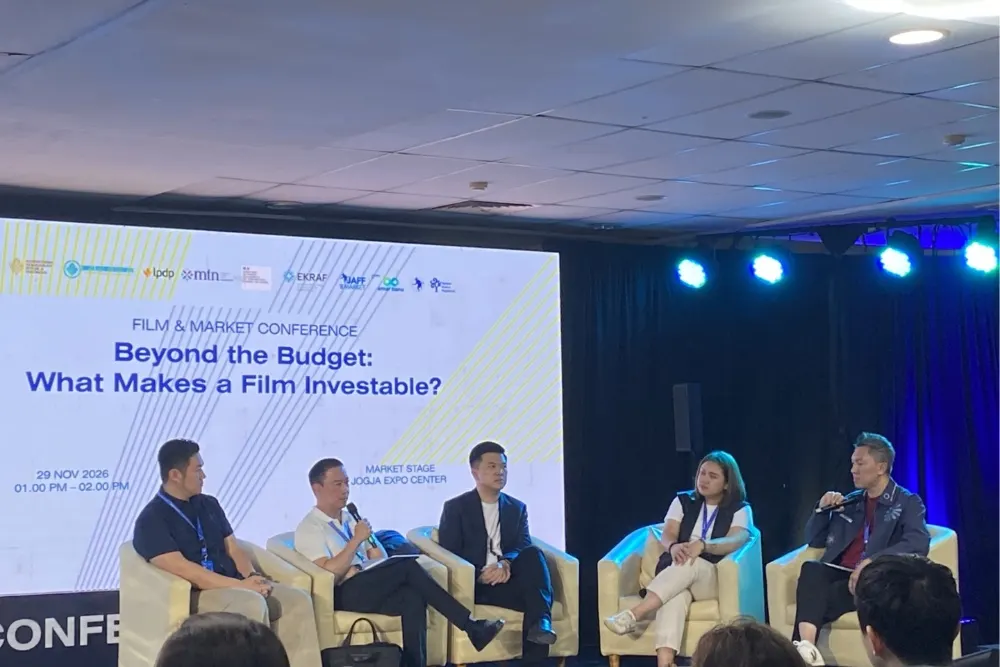
Former trade minister Tom Lembong told a JAFF Market panel in Yogyakarta that Indonesian films should be financed as portfolios rather than one project at a time. He argued that the country's top 10 production houses have yet to reach economic scale, citing limited access to capital and the time filmmakers spend fundraising instead of making films.
Lembong said film contributes just 0.3% of Indonesia's GDP, which makes access to capital crucial, and that Indonesia is not widely seen as a key player in the global AI market, a disadvantage when attracting overseas investment. Panellists FX Iwan of Jagartha Group, Linasari Santioso of Ideosource Entertainment and Aoura Lovenson Chandra of Base Entertainment pointed to screen numbers, storytelling quality and Gen Z tastes as factors for investors to weigh. JAFF Market runs from 28 to 30 November at the Jogja Expo Center, alongside the Jogja-Netpac Asian Film Festival, which continues until 5 December.
In short
- Lembong urges Indonesian films be funded as portfolios, not individually.
- Film contributes just 0.3% of Indonesia's GDP.
- Limited capital and constant fundraising hold back top production houses.
- Panellists point to screen numbers, storytelling and Gen Z tastes.
Steelman: both sides, in good faith
The strongest fair case each way — we don't pick a winner.
The case for
Advocates of portfolio financing argue that individual films are inherently risky, with returns concentrated in a few successes, so pooling many projects spreads that risk and makes investment viable for cautious institutional capital. They also contend that the time and money spent raising funds for each film would be better spent on development and production, and that a steady slate of projects gives production houses the continuity needed to reach economic scale. Their underlying value is building a durable industry rather than relying on isolated hits.
The case against
Sceptics argue that project-by-project financing keeps capital tied to the merits of each script, director and market case, so money flows to the stories most likely to succeed. They warn that bundling projects into portfolios can blur those judgements, potentially favouring established houses with track records and carrying weaker projects on the strength of the group. Their emphasis is on transparency and accountability, and on the view that a healthy film market rests on demonstrated audience demand rather than on the structure of the investment itself.
Explained simply
Indonesia's film industry is largely financed one project at a time. Each film must raise its own money, which can take filmmakers months and leave less time for actual production. The sector is also small in economic terms, contributing about 0.3 per cent of the country's GDP.
Tom Lembong is a former trade minister whose work has focused on economic policy in Indonesia. Financing films as a portfolio means backing several projects together, so that investors spread their risk across a group of films rather than staking everything on one.
JAFF Market is the industry arm of the Jogja-NETPAC Asian Film Festival, held in Yogyakarta on the island of Java. It brings together producers, investors and filmmakers to discuss funding and distribution, and it is one of the places where the country's film business meets potential backers.
Entertainment Film Government Politics