GoPro Mission 1 Pro introduces Micro Four Thirds lens mount
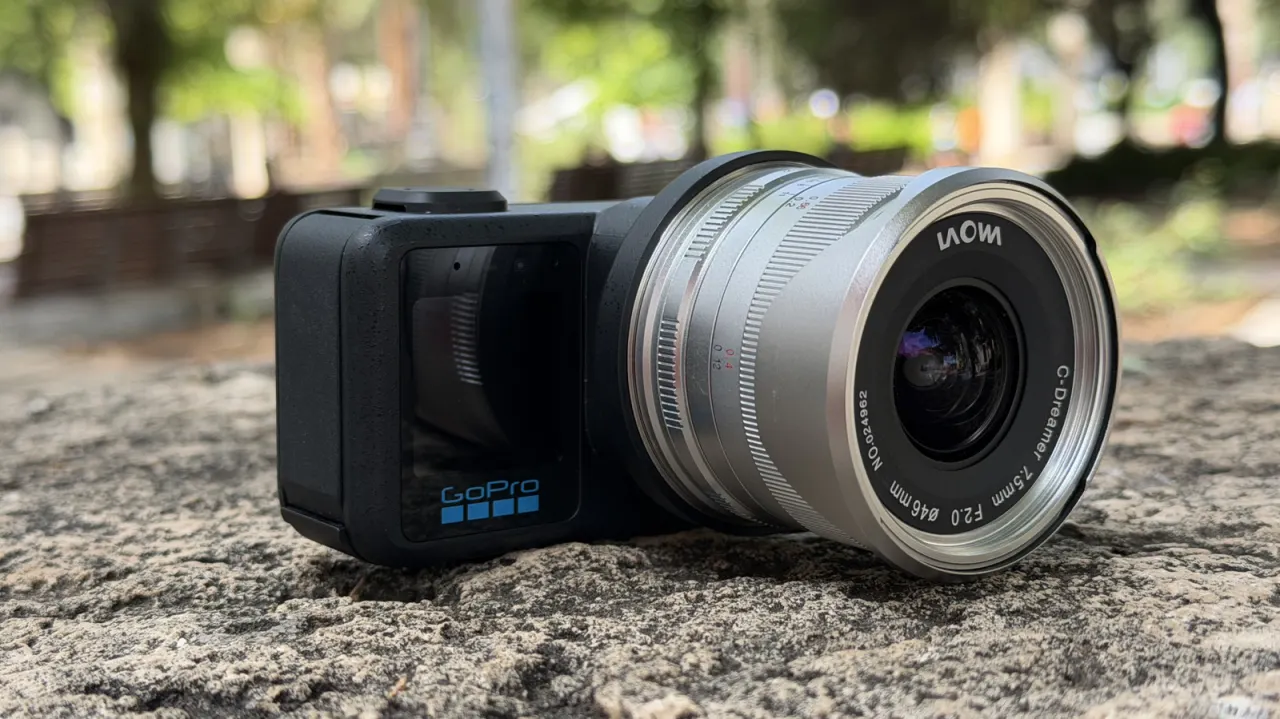
GoPro has stepped away from its familiar Hero-line formula with the Mission 1 Pro ILS ($699), its first action camera to support interchangeable lenses. Rather than using a proprietary system, it accepts Micro Four Thirds (MFT) lenses, opening it up to over 300 compatible options and giving users far greater creative control over focus, aperture and exposure than a typical GoPro. This marks a notable shift for a brand built around point-and-shoot simplicity, and early reaction has been broadly positive, though critics note it lacks autofocus, isn't waterproof and carries a substantial 2.7x crop factor.
Aside from the lens mount, the ILS shares its core specs with the standard Mission 1 Pro, including 8K/60 video, a 1-inch sensor, full open-gate recording and a 960fps burst mode, alongside the same screen and battery. Because it has no electronic lens connections, only manual lenses work reliably, meaning users must handle focus themselves using tools like Focus Peaking, digital zoom or GoPro's companion Quik and Mission Monitor apps. The reviewer tested it with a Laowa 7.5mm and a 7artisans 25mm lens, finding the setup portable but noting a steeper learning curve, including remembering to manually register each new lens in the camera's menu.
- GoPro's first interchangeable-lens camera, the Mission 1 Pro ILS, costs $699
- Supports 300+ Micro Four Thirds lenses but lacks autofocus and waterproofing
- Shares 8K/60 video and specs with the standard Mission 1 Pro
New here? Start with this
GoPro is best known for the Hero range: small action cameras with fixed lenses designed to be easy to point and shoot. Micro Four Thirds is a lens mount used by cameras from several makers, with a wide choice of lenses for different kinds of shots.
An interchangeable lens can give the person filming more control over framing and exposure, but it also means choosing and changing lenses. The Mission 1 Pro ILS uses manual lenses, so the operator has to set focus themselves and register each lens in the camera.
The change matters because it brings a more hands-on style of filming to a camera line built around simplicity. Its small size and video features may appeal to people who want flexibility, while manual focus, limited water protection and the crop factor affect how it can be used.
Both sides, in good faith
The strongest fair case each way — we don't pick a winner.
The case for
This represents a smart strategic expansion that serves underserved market segments whilst preserving GoPro's core identity. By adopting the open Micro Four Thirds standard with over 300 compatible lenses rather than creating proprietary options, GoPro opens its technology to serious creators seeking creative control, whilst the Hero line continues to serve casual users, giving customers meaningful choice between simplicity and versatility.
The case against
This move fundamentally misaligns with GoPro's core competitive advantage in rugged, intuitive action cameras designed for extreme conditions. By eliminating waterproofing, mandating manual focus, and accepting a significant crop factor, it abandons the defining strengths that differentiate GoPro from established mirrorless systems. At $699, the ILS competes in a crowded professional segment where GoPro lacks genuine advantage, potentially diluting brand identity and diverting resources.
Read the full article at the source →
Originally published by Engadget as “GoPro Mission 1 Pro ILS review: Interchangeable lenses make this a GoPro like no other”.