IBM’s new Granite 4.2 models ride the wave of interest in local LLMs
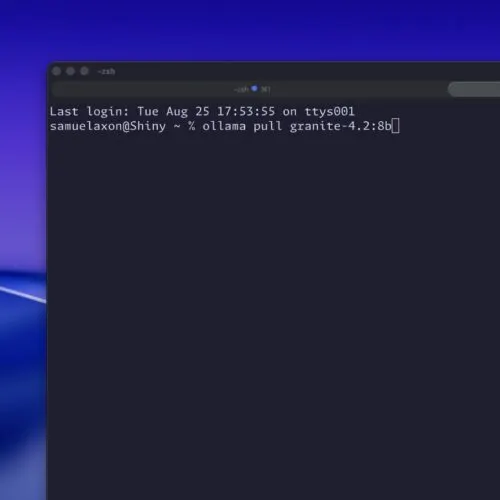
IBM has released Granite 4.2, the latest generation of its open-weight large language models designed to be downloaded and run locally rather than accessed via the cloud. The launch taps into growing demand for self-hosted AI, as developers and enterprises look for cheaper alternatives to costly frontier models from the likes of OpenAI and Anthropic, and it reflects IBM's continued focus on dependable, predictable deployments rather than chasing headline-grabbing performance.
The new family comes in 3B, 8B and 30B parameter sizes, all using a decoder-only architecture with a native 128,000-token context window. The 8B and 30B models have undergone additional agentic reinforcement learning, equipping them to use terminals, search the web and call external tools, while the smaller 3B model supports tools but lacks this specialised training. IBM describes Granite 4.2 as its "reasoning-focused" release, meaning the models are built to work through problems step by step via chain-of-thought techniques, improving accuracy in some cases at the cost of slower responses and higher compute demands.
- IBM launches Granite 4.2, open-weight LLMs for local self-hosting
- Comes in 3B, 8B and 30B sizes with 128k-token context
- Larger models trained for agentic tasks like tool use and web search
New here? Start with this
Large language models (LLMs) are AI systems that generate text and help with tasks such as answering questions or writing code. Many are accessed through a company’s cloud service, while open-weight models can be downloaded and run on a user’s own computers or servers.
IBM is a technology company that develops AI models as well as business software and services. Granite is its family of open-weight models, offered in different sizes; larger models generally need more computing power, while running a model locally can give organisations more control over where their data is processed.
Interest in local models has grown as businesses and developers weigh the cost and data-handling trade-offs of cloud-based AI. IBM’s emphasis on dependable use reflects one approach to competing in a field where some providers focus on the strongest general-purpose performance.