‘It’s very challenging’: how the Duke of Westminster’s farm is taking on the climate crisis
Grosvenor Farms, the dairy business on the Duke of Westminster's Eaton Estate near Chester, illustrates the mounting pressures on British agriculture from climate change and economic strain, even as it remains one of the sector's better-performing operations. Heatwaves, fertiliser shortages linked to the Iran war, disease and post-Brexit labour shortages have combined to make farming increasingly difficult, with the estate's managing director describing conditions as "very, very challenging" despite the farm's relative resilience through investment in circular farming and biomethane.
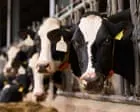
Lea Manor Farm, part of the 349-year-old Grosvenor empire, employs 77 staff and milks 2,600 Holstein Friesian cows, producing more than 34m litres of milk annually across 4,685 hectares. Oversupply has driven UK milk prices down by up to 50% this year, while the June heatwave, which pushed temperatures to 36C, cut each cow's daily yield by up to six litres, with some other farms reporting losses of up to 10 litres per cow. With half of England and Wales officially in drought, wheat at half its normal height and broccoli yields down 50%, the UK is increasingly reliant on food imports from countries such as Spain as global prices climb.
- Duke of Westminster's dairy farm battles heatwaves, price crashes and labour shortages
- Milk prices down up to 50%; heatwaves cut cow yields significantly
- Drought across England and Wales is forcing greater UK food imports
New here? Start with this
British farms face a combination of pressures from changing weather and rising costs. Hotter, drier conditions can reduce crop yields and the amount of milk cows produce, while shortages of farm workers and supplies can make it harder to keep businesses running.
Grosvenor Farms is a large dairy business on the Eaton Estate near Chester, part of the estate owned by the Duke of Westminster. It keeps thousands of cows and grows crops across its land, and has invested in reusing farm waste and producing biomethane, a fuel made from organic material.
The pressures matter beyond individual farms because they can affect food prices and how much the UK can produce at home. When British harvests fall, the country may need to rely more on imported food, whose supply and cost can also be affected by conditions abroad.