Politics news and discussion on TalkFuse.
Johnson’s strategy to bypass Democrats’ SAVE Act blockade survives key vote, handing GOP big win
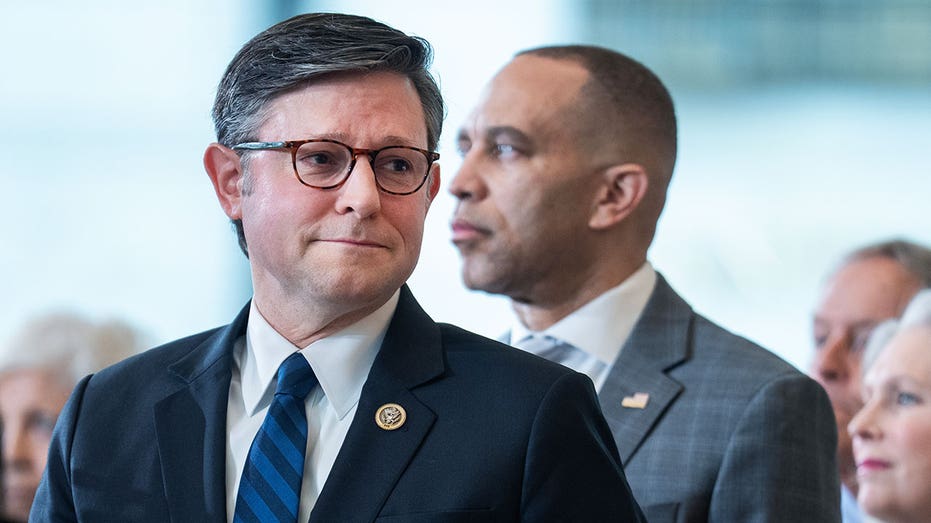
Speaker Mike Johnson has secured a procedural win in the House that allows Republicans to press ahead with the SAVE Act, a bill imposing new voter ID and citizenship-verification requirements, without needing Democratic cooperation. The manoeuvre, which survived a key vote, is being framed by the GOP as a major victory in its long-running push to tighten election security rules, a priority President Trump has publicly urged Congress to act on.
Democrats had sought to block the legislation, but Johnson's procedural strategy effectively sidesteps their opposition in the House. The bill's path forward remains uncertain in the Senate, where some Republican senators have voiced scepticism about aspects of its implementation and potential effects on election integrity, meaning further negotiation is likely before any final vote.
In short
- Johnson's procedural move to advance the SAVE Act passed a key House vote
- Manoeuvre bypasses Democratic blockade, seen as a GOP win
- Some GOP senators remain wary, so Senate passage isn't assured
Steelman: both sides, in good faith
The strongest fair case each way — we don't pick a winner.
The case for
Republicans and SAVE Act supporters contend that voter identification and citizenship verification represent reasonable, standard safeguards to protect election integrity. They argue that such measures exist in many democracies and function to prevent ineligible individuals from voting, thereby enhancing public confidence in election outcomes. From their perspective, securing the electoral process is a fundamental responsibility of government, and implementing sensible verification procedures reflects legitimate concern for the legitimacy of democratic processes.
The case against
Democrats and voting rights advocates counter that voter ID requirements and citizenship verification impose unnecessary burdens that disproportionately affect eligible voters—including elderly citizens, racial minorities, and those experiencing homelessness—who may lack the required documentation. They emphasise that documented voter fraud in the United States remains vanishingly rare, and argue that resources would be better directed toward ensuring every eligible citizen can vote. They contend that the SAVE Act prioritises restricting access over expanding participation, running counter to democratic principles of broad enfranchisement.
Explained simply
The SAVE Act is proposed legislation that would require voters to provide proof of citizenship and identification when voting. Republicans argue this is needed to improve election security, whilst Democrats contend it could make voting more difficult for eligible citizens.
The measure has become a priority for President Trump, who has publicly called for stronger voter verification rules. Republicans, who control the House, have been pushing to advance it despite Democratic opposition.
The Senate represents the next significant hurdle, as some Republican senators have expressed concerns about how the legislation would work in practice and its effects on voting access. This indicates further negotiation is likely before any final vote.