Lindsay Clancy jury wraps day 6 with bombshell one-juror standoff, deliberations to resume Friday
Developed over time first seen 2 months ago
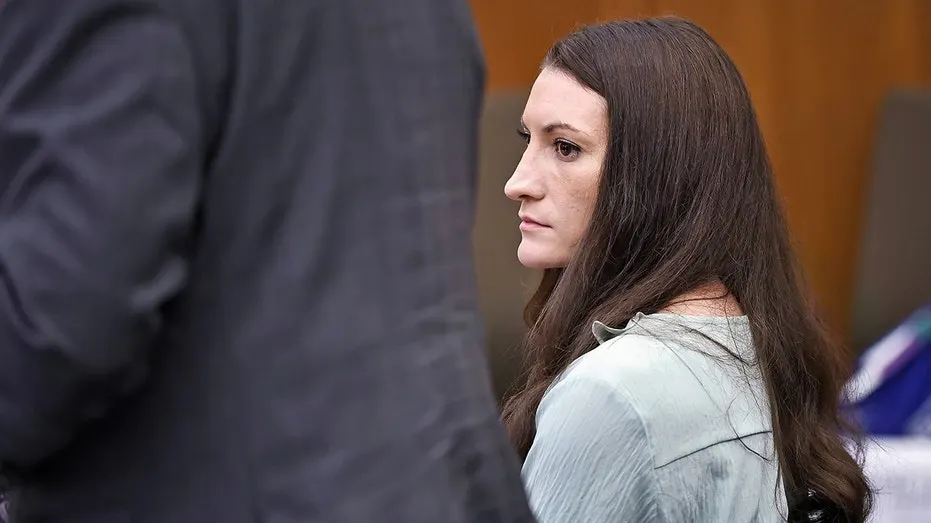
Deliberations in the murder trial of Lindsay Clancy ended without a verdict after a sixth day marked by a standoff involving a holdout juror, with the panel twice reporting deadlock. Defence attorney Kevin Reddington's attempt to have the juror removed, after the foreperson said the person was refusing to follow instructions on reasonable doubt, was rejected by Judge William Sullivan, who called such a removal "a sensitive undertaking" the court could not undertake without appearing to take sides; prosecutors likewise opposed removal. Reddington later disclosed a jury note suggesting an 11-to-1 split, prompting Sullivan to schedule a further inquiry, with a renewed deadlock raising the prospect of a mistrial.
Clancy, 36, is charged with three counts of first-degree murder over the deaths of her children Cora, Dawson and Callan, all under six, found strangled at the family's Duxbury, Massachusetts home in January 2023. She does not dispute killing them, so jurors must weigh her criminal responsibility: prosecutors say she understood her actions, while the defence argues postpartum psychosis left her unable to grasp their wrongfulness. Reddington said he was ready for a retrial with witnesses including Dr Resnick on standby, while deferring to Plymouth County District Attorney Timothy Cruz on any possible plea deal; no final verdict or resolution had been reported at the time of the last update.
- Clancy jury deadlocked after sixth day, one juror allegedly holding out
- Judge rejected defence bid to remove that juror
- Mistrial possible; defence says it's ready for a retrial
New here? Start with this
Lindsay Clancy, a former labour and delivery nurse from Duxbury, Massachusetts, is on trial accused of strangling her three young children, Cora, Dawson and Callan, all under six, at the family home in January 2023. She does not dispute that the children died, so the trial centres on her state of mind: prosecutors argue she understood what she was doing, while her defence says she was suffering postpartum psychosis and should be found not guilty by reason of insanity.
The 12-person jury has been deliberating for six days, far longer than expected, and has twice reported being deadlocked. A dispute has emerged over one juror allegedly refusing to follow the judge's instructions, though the judge has declined defence requests to remove them, saying such a decision must not appear to favour either side.
The case matters because a jury unable to reach a unanimous verdict would result in a mistrial, leaving the question of Clancy's guilt or innocence unresolved and potentially forcing prosecutors to decide whether to hold a costly and emotionally difficult retrial.
Both sides, in good faith
The strongest fair case each way — we don't pick a winner.
The case for
Those who supported the defence's push to remove the holdout juror argue that a juror who will not apply the reasonable doubt standard as instructed by the court is not fulfilling their basic legal duty, regardless of which way their doubts lean. On this view, allowing one person to depart from the judge's instructions risks producing an unsound verdict, prolongs an already gruelling process for the victims' family, and could force a lengthy and costly retrial that serves no one's interest in timely justice. Advocates of intervention would say courts have both the authority and the responsibility to ensure jurors follow the law as given, and that failing to act when there is credible evidence of non-compliance undermines confidence in the trial's fairness.
The case against
Those who supported the judge's refusal to remove the juror would argue that the secrecy and independence of jury deliberations are foundational to a fair trial, and that a judge intervening on the say-so of the majority risks pressuring or effectively overriding a dissenting voice, which strikes at the heart of the unanimity requirement in serious criminal cases. They would point out that what one side characterises as a juror ignoring instructions might, from another vantage point, simply be a juror holding a genuine, reasoned doubt that the majority disagrees with, and that courts have historically been extremely cautious about second-guessing deliberations precisely to avoid coercing verdicts. On this view, protecting the sanctity of the process, even at the cost of delay or a possible mistrial, better serves the defendant's right to a fair and untainted verdict than expediency would.
Full account
A jury weighing murder charges against Lindsay Clancy finished a sixth day of deliberations in Plymouth, Massachusetts, on Thursday without reaching a verdict, after a dispute emerged over a single juror who was reportedly resisting the court's guidance on reasonable doubt. The panel, made up of nine women and three men, has now told the judge twice that it was unable to agree unanimously, and jurors are due to return on Friday, when Judge William Sullivan is expected to address the standoff directly. Clancy, 36, a former labour and delivery nurse, faces three counts of first-degree murder over the deaths of her children — five-year-old Cora, three-year-old Dawson and eight-month-old Callan — who were strangled at the family's home in January 2023. She does not dispute killing them but says she was in the grip of severe postpartum psychosis at the time and unable to tell right from wrong; she was left paralysed from the waist down after jumping from a second-floor window afterwards.
Thursday's session grew tense after the jury forewoman sent the judge a note alleging that one member of the panel was declining to apply the reasonable-doubt standard as instructed. Defence lawyer Kevin Reddington asked Sullivan to remove the juror, warning that the trial risked collapsing because of someone who had disregarded the court's directions, but prosecutor Jennifer Sprague opposed the move, arguing there was no proper way to judge who was in the right without intruding on the confidentiality of the jury's discussions. Sullivan sided with the prosecution, describing the dismissal of a deliberating juror as a delicate step he was not prepared to take, and stressing that the court could not appear to favour one side of the deliberations over another. He then spoke with each juror individually and repeated his instructions on the requirement for unanimous agreement beyond reasonable doubt before sending them back to continue their discussions.
Following the hearing, Reddington said a further note from the jury appeared to indicate an eleven-to-one split, though it gave no clue as to which verdict the majority favoured or which way the lone dissenting juror was leaning. He said Sullivan intends to hold a further inquiry into the impasse at 9am on Friday, and that if the jury again reports itself unable to agree, the case could end in a mistrial. Reddington said he expected any further argument over the juror dispute to take place in open court rather than in private conference. Asked about the prospect of a retrial, he said he was ready to proceed without delay, naming an expert witness as being prepared to testify again, and suggested prosecutors might prefer to wait several months before going back to trial. He declined to discuss any possibility of a plea deal, saying that would be a matter for the Plymouth County District Attorney.
The jury has now spent in the region of 35 hours deliberating since the six-week trial concluded, and Thursday marked the first visible sign of friction within the panel. Coverage of the day's proceedings diverged in focus: American reporting centred on the legal mechanics of the dispute, including comparisons to the recent Harvey Weinstein retrial deadlock and questions over how a hung jury might affect any future prosecution, while British coverage placed greater emphasis on the atmosphere inside the courtroom — describing gasps among reporters when the removal request was made, Clancy being wheeled forward in her wheelchair to confer with her lawyer, and jurors' varied reactions as they were questioned individually by the judge. No verdict had been reached by the close of Thursday's session, with the outcome now resting on what emerges when the jury resumes its discussions on Friday morning.
Where outlets differ
Source 1 (Fox News) foregrounds the legal and procedural angle — quoting Reddington's argument that the juror had 'spurned the instructions' of the court, detailing the prosecution's objection, and drawing parallels to the Harvey Weinstein mistrial and the 'Tuey-Rodriguez' jury instruction; it also carries extended quotes from Reddington about being ready for a retrial and deferring plea questions to the district attorney.
Source 2 (BBC) emphasises courtroom atmosphere and human detail — describing audible gasps, exasperated gestures between counsel, Clancy being wheeled to confer with her lawyer, and jurors' body language as they were questioned individually — and gives more background on Clancy's paralysis and the postpartum psychosis defence, framing the case as one that has 'gripped America.'
Only Source 1 reports the specific claim of an 11-1 jury split, attributed to Reddington after the hearing; Source 2 does not mention this detail.
Source 2 explicitly notes a content warning for distressing details and describes the case background (dates, children's ages, nurse background) more fully, while Source 1 assumes more prior familiarity with the case.
More coverage
- BBC World — Tensions flare as judge declines to remove juror in Lindsay Clancy trial
- Daily Mail — Lindsay Clancy trial's most dramatic day yet ends with ANOTHER deadlock after one juror is called out for 'not following the law'
- Fox News — Lindsay Clancy jury enters Day 7 after bombshell one-juror standoff and more top headlines
- Daily Mail — Lindsay Clancy judge explodes at her lawyer in furious clash over holdout juror: 'What do you want me to do!': Live updates