Missouri high court blocks GOP-backed congressional maps ahead of midterms; Trump blasts ‘ridiculous’ ruling
Developed over time first seen 2 months ago
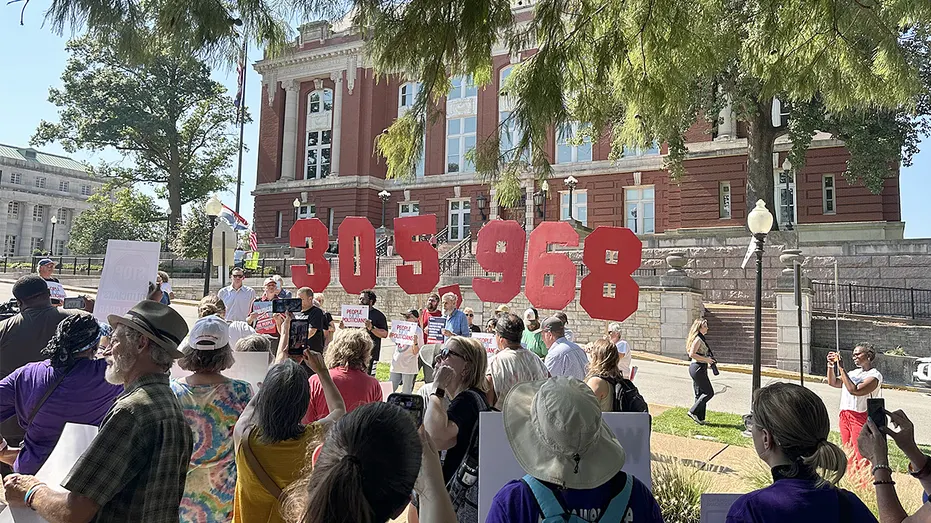
Missouri's Supreme Court has unanimously blocked the state's newly enacted Republican-drawn congressional map from being used in November's midterms, ruling that voters must first approve it in a statewide referendum. The decision, which leaves the previous 2020-census-era map in place for the general election, is a rare setback for Republicans in a nationwide redistricting battle and complicates GOP efforts to secure an additional House seat and protect their slim majority. Attorney General Catherine Hanaway said she would immediately appeal to the US Supreme Court, calling the ruling unprecedented and unconstitutional, while President Trump condemned it as "ridiculous" and warned there may not be enough time to redraw the map before the election. Governor Mike Kehoe also criticised the decision, accusing "unelected judges" of disregarding the legislative process, though he said the state would continue defending the map through the courts.
The court found that a referendum petition, filed in December after more than 300,000 signatures were gathered, meant the new map could not take effect without voter approval, overturning Secretary of State Denny Hoskins's rejection of that petition and a lower court ruling that had sided with him. The disputed map, signed into law by Kehoe last September, had already been used in last month's primaries and was designed to make Democratic Rep. Emanuel Cleaver's Kansas City-area seat more Republican-leaning by shifting it eastward. Five of the seven sitting justices were appointed by Republican governors, underscoring the significance of the unanimous ruling. With the case now headed to the US Supreme Court, the outcome remains contested, but as things stand the pre-2026 congressional map will be used for November's election.
- Missouri's top court blocked the GOP's new congressional map for 2026
- Voters must approve it via referendum before it can take effect
- Trump and state Republicans vow to appeal to the US Supreme Court
New here? Start with this
Missouri's congressional map determines the boundaries of the districts that elect the state's members of the US House of Representatives. Like most states, Missouri redraws these boundaries periodically, and the party in control of the state legislature can shape them to favour its own candidates, a practice often called gerrymandering. Republicans control Missouri's state government and had pushed through a new map last year intended to make it harder for Democrats to win one of the state's seats.
Under Missouri law, citizens can force a proposed law or map to a public vote if enough signatures are collected on a petition, rather than letting it take effect immediately. Opponents of the new map gathered signatures for such a petition, setting up a dispute over whether the map could still be used before voters had their say. That dispute ended up before the Missouri Supreme Court, the state's highest court, which has now ruled on the matter.
This case matters beyond Missouri because control of the US House of Representatives in the 2026 midterm elections could hinge on a small number of seats nationally, making individual states' district maps politically significant. It also touches on a broader argument, playing out in several states, about how far legislatures can go in redrawing maps for partisan advantage, and what role courts and voters should have in checking that power.
Both sides, in good faith
The strongest fair case each way — we don't pick a winner.
The case for
Supporters of the ruling argue that Missouri law is clear: once a valid referendum petition qualifies, the challenged law cannot take effect until voters have their say, and this principle of direct democracy should not be overridden simply because the map's supporters are in a hurry ahead of an election. They contend that the Secretary of State's rejection of a petition backed by over 300,000 signatures looked like an attempt to sidestep this safeguard, and that the court, acting unanimously, was simply enforcing a constitutional check on legislative power rather than making a partisan judgement about the map's fairness. On this view, upholding the referendum process protects voters' rights regardless of which party benefits from the outcome.
The case against
Opponents of the ruling argue that the Missouri legislature followed established procedure to redraw districts, as it is constitutionally empowered to do, and that a court blocking a duly enacted map so close to an election undermines the legitimacy of that process and creates damaging uncertainty for candidates and voters alike. They contend it is troubling for unelected judges to override elected lawmakers on a matter of districting, particularly when time constraints may make it impossible to hold a referendum and still finalise maps before November. They further argue that even though most justices were Republican-appointed, the practical effect of the ruling is to hand Democrats a more favourable map, fuelling suspicion that procedural technicalities are being used to reach a politically consequential result.