Netanyahu and Eisenkot face difficult paths to power as neither set to win majority
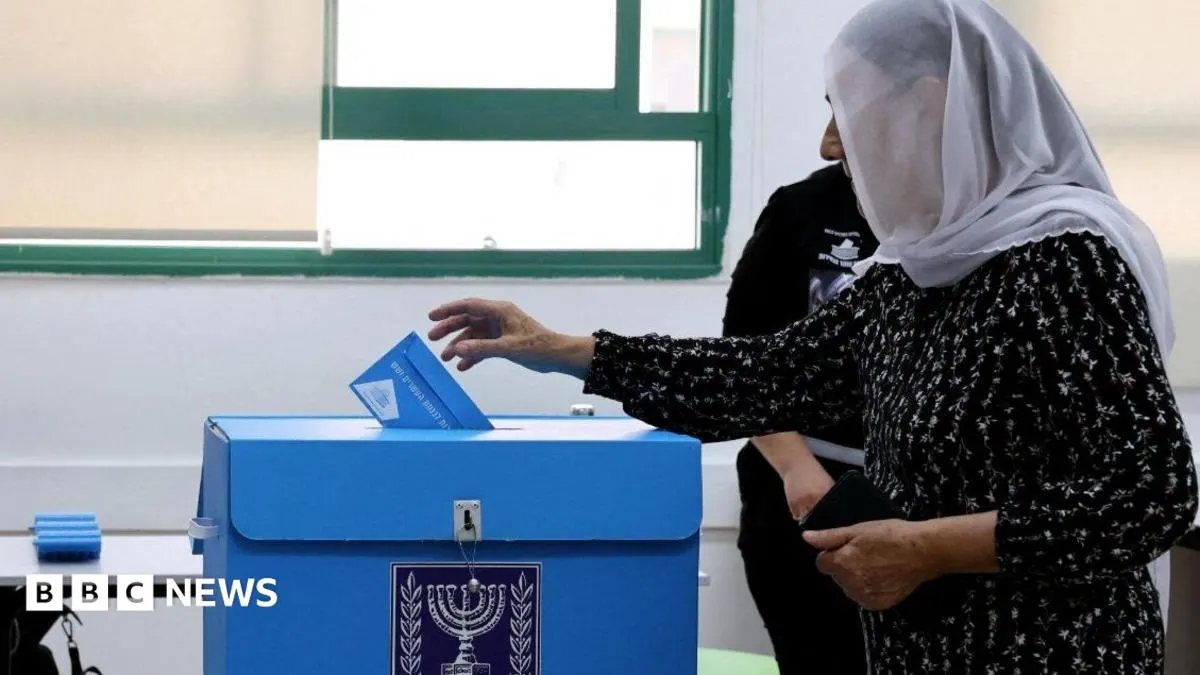
Partial results suggest Benjamin Netanyahu’s Likud is the largest single party, but neither his bloc nor rival Gadi Eisenkot’s camp appears set to win a majority in Israel’s 120-seat parliament. The outcome matters because Arab-led parties could hold the balance of power, despite opposition parties’ stated reluctance to work with them.
Netanyahu’s bloc is just short of the 61 seats needed to govern, while Eisenkot may also struggle to assemble a majority without Arab-led parties. Turnout exceeded 77%, and Arab Israeli parties appear to have matched or improved on their previous record; however, many absentee ballots, mostly from soldiers, remain uncounted, so the picture may change over the next day or two. The election has also reflected deep divisions over Netanyahu’s leadership and Israel’s religious and nationalist direction.
In short
- Netanyahu’s bloc appears just short of a parliamentary majority.
- Arab-led parties could decide who forms the next government.
- Uncounted absentee ballots mean results may still shift.
Steelman: both sides, in good faith
The strongest fair case each way — we don't pick a winner.
The case for
Netanyahu’s supporters could argue that Likud’s lead makes him the clearest choice to form a government, and that his experience and security-focused leadership offer continuity at a time of regional uncertainty. They may also see a coalition with religious and nationalist parties as a legitimate expression of voters’ preferences and a way to secure a workable governing majority.
The case against
Eisenkot’s supporters could argue that Netanyahu’s difficulty reaching a majority reflects a divided electorate and that Israel needs a change in leadership and direction. They may favour a broader coalition that protects the country’s democratic institutions and offers an alternative to religious and nationalist parties, while accepting that cooperation with Arab-led parties may be necessary to represent voters and form a government.
Explained simply
Israel’s parliament, the Knesset, has 120 seats, and a government needs support from at least 61 members. Parties often join together in blocs to form a government, so the largest party does not automatically get to govern.
Benjamin Netanyahu leads Likud and has served several terms as prime minister. Gadi Eisenkot is a former army chief who leads the rival camp; Arab-led parties represent Arab citizens of Israel and can affect whether either side has enough parliamentary support.
The result matters because neither camp appears to have a clear route to a majority, while Israel is divided over Netanyahu’s leadership and the country’s religious and nationalist direction. How the parties approach possible partners will shape the formation of the next government.
Art Culture Government Politics World