Pete Hegseth tops humiliating list of senior Trump officials Americans want gone
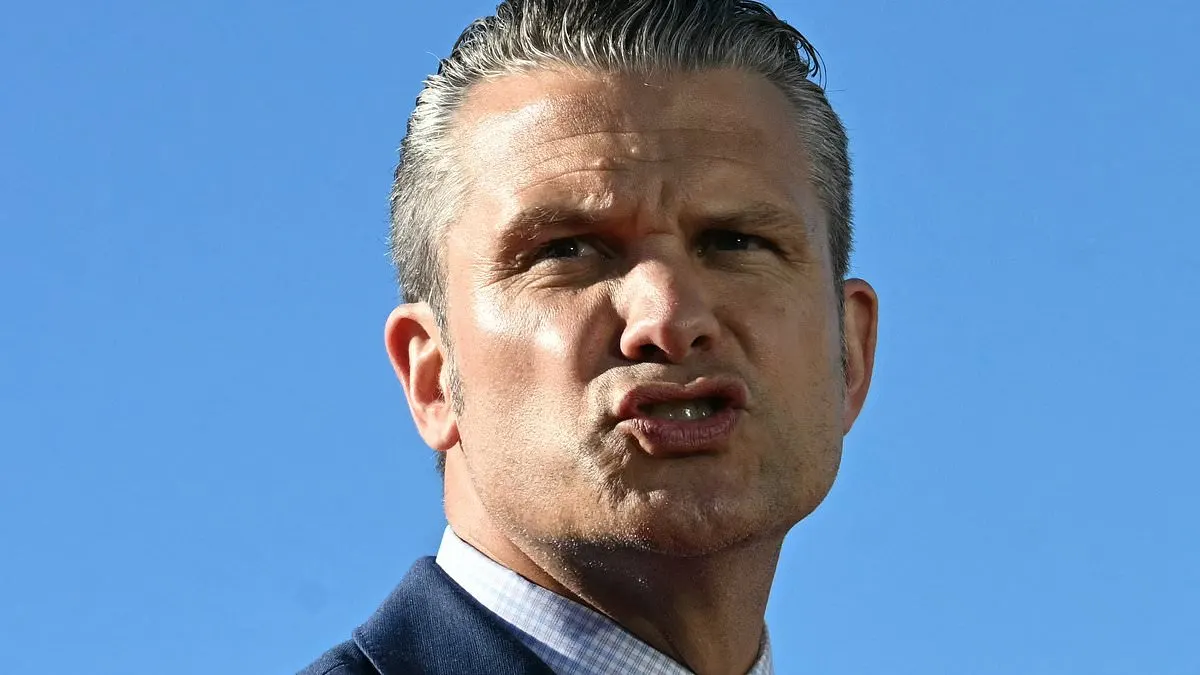
A new poll suggests Pete Hegseth, the US Secretary of Defence, is the Cabinet member Americans most want to see depart from Donald Trump's administration. The Daily Mail and YouGov survey found that 11 per cent of respondents believe Hegseth will be the next to leave, ahead of FBI Director Kash Patel and Health Secretary Robert Kennedy Jr. His apparent vulnerability reflects mounting pressure following seven months of an unpopular war in Iran and a string of controversial policies within the Pentagon.
Hegseth's approval ratings have collapsed, with recent polling from Marquette University and Quinnipiac showing only 25 to 32 per cent of Americans view him favourably, whilst roughly half or more disapprove. The Secretary has faced criticism from both parties over policies including stricter fitness and grooming standards, a ban on transgender military service members, and the removal of senior officers. The Pentagon's involvement in accidentally leaking military strike plans—dubbed "Signalgate"—and the resignation of the Ex-Secretary of the Army following disputes with Hegseth have further damaged his standing, though 51 per cent of those polled remained unsure who would leave next.
- 11 per cent of Americans believe Hegseth will be the next Trump official to leave.
- His approval rating has dropped to 25-32 per cent following the Iran war.
- Both parties criticise him over controversial military policy changes.
New here? Start with this
Pete Hegseth is the US Secretary of Defence, responsible for leading the Pentagon and America's military under President Donald Trump. He is a former military officer and television presenter who took office as one of the administration's most prominent figures.
Hegseth's approval has collapsed since taking office, falling to between 25 and 32 per cent. His unpopularity stems from controversial Pentagon policies under his watch, including stricter fitness and grooming standards, a ban on transgender service members, and the removal of senior officers, which have drawn criticism from both parties.
His standing has suffered further from an accidental leak of sensitive military strike plans and the resignation of the Army Secretary over disputes with Hegseth. These controversies, combined with the broader unpopularity of an ongoing military conflict in Iran, have significantly weakened his public support.
Both sides, in good faith
The strongest fair case each way — we don't pick a winner.
The case for
Defence policy should be determined by strategic necessity rather than public opinion polling, and implementing necessary military reforms often requires decisions that are initially unpopular. The disapproval facing this Cabinet official may reflect institutional resistance to change—a predictable response to any serious reform effort—rather than evidence that the reforms themselves are flawed. Removing him in response to polling data would establish the problematic principle that temporary unpopularity should override professional judgement about security needs.
The case against
The breadth of disapproval—across the public, between parties, and within military institutions—suggests this represents genuine dysfunction rather than mere resistance to reasonable reform. When a Cabinet official simultaneously faces sustained low approval ratings, cross-party criticism, and institutional problems including resignations, their continued tenure itself becomes a problem, making a leadership change necessary for military stability and morale regardless of the theoretical merit of specific policies.