Science news and discussion on TalkFuse.
Pioneering fossil hunter recognised with blue plaque
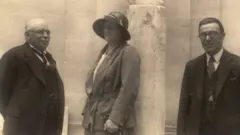
Dorothea Bate, a pioneering fossil hunter and one of the first women employed by the Natural History Museum, has been honoured with a national blue plaque by Historic England. The plaque, unveiled at the Natural History Museum in Tring, Hertfordshire, recognises her groundbreaking contributions to palaeontology and her role in paving the way for women in science, despite working for most of her career without a permanent paid position.
Born in Carmarthen, Wales, in 1878, Bate had little formal education but taught herself and joined the Natural History Museum in 1900, beginning a 50-year association that saw her become Officer-in-Charge from 1948. She undertook solo expeditions across the Mediterranean, discovering a dwarf elephant species in Cyprus and the extinct goat-like myotragus in the Balearics in 1909, and published more than 80 scientific papers before her death in 1951 aged 72.
In short
- Fossil hunter Dorothea Bate honoured with national blue plaque at Tring museum
- One of first women employed by Natural History Museum, from 1900
- Discovered dwarf elephant and extinct myotragus goat species abroad
Explained simply
Palaeontology is the study of ancient life through fossils, the preserved remains or traces of plants and animals. Dorothea Bate was a Welsh palaeontologist who joined London’s Natural History Museum in 1900, when few women worked in science.
Bate travelled alone to islands around the Mediterranean to look for fossils. Her finds included an extinct dwarf elephant in Cyprus and a goat-like mammal in the Balearic Islands, helping scientists understand how animals evolved in isolation. Her career also spanned decades when she had no permanent paid post, making her an important figure in the history of women in science.