Researchers use AI to design proteins that cut up other proteins
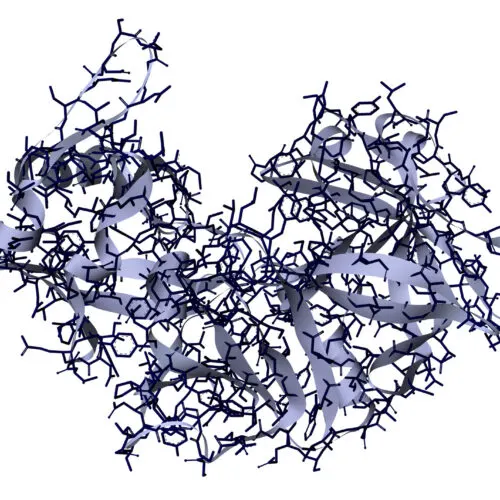
Researchers have used AI protein design tools to create enzymes that cut other proteins, adapting the catalytic cores of two existing proteases while replacing the rest of each protein. The work could help scientists target particular proteins, and the team showed the designed enzymes could cut proteins linked to neurological diseases.
Peptide bonds are highly stable and can last hundreds of years in water without enzymes to break them. The researchers, led mainly by David Baker’s lab at the University of Washington, used zinc-based and cysteine-based catalytic mechanisms; both depend on a precise arrangement of amino acids. The designs aim to combine those catalytic centres with the ability to target specific proteins.
- AI-designed enzymes can cut selected proteins.
- The designs adapt two existing protease mechanisms.
- Researchers demonstrated cuts in proteins linked to neurological diseases.
New here? Start with this
Proteases are enzymes that break proteins into smaller pieces by cutting the bonds between their amino acids. Those bonds are very stable in water, so cutting them efficiently usually depends on a protease’s carefully arranged active site, the part where the reaction happens.
The researchers, led mainly by David Baker’s lab at the University of Washington, used AI tools to design new proteins around the catalytic centres of two existing proteases. One centre uses zinc and the other relies on cysteine, an amino acid; the rest of each designed protein was replaced.
The aim is to pair these cutting mechanisms with the ability to recognise chosen proteins. The team tested the designs on proteins linked to neurological diseases, pointing to a possible way to study or target particular proteins, though this work does not by itself show a treatment is available.