The Tesla Roadster 2 Is Here—and It Flies
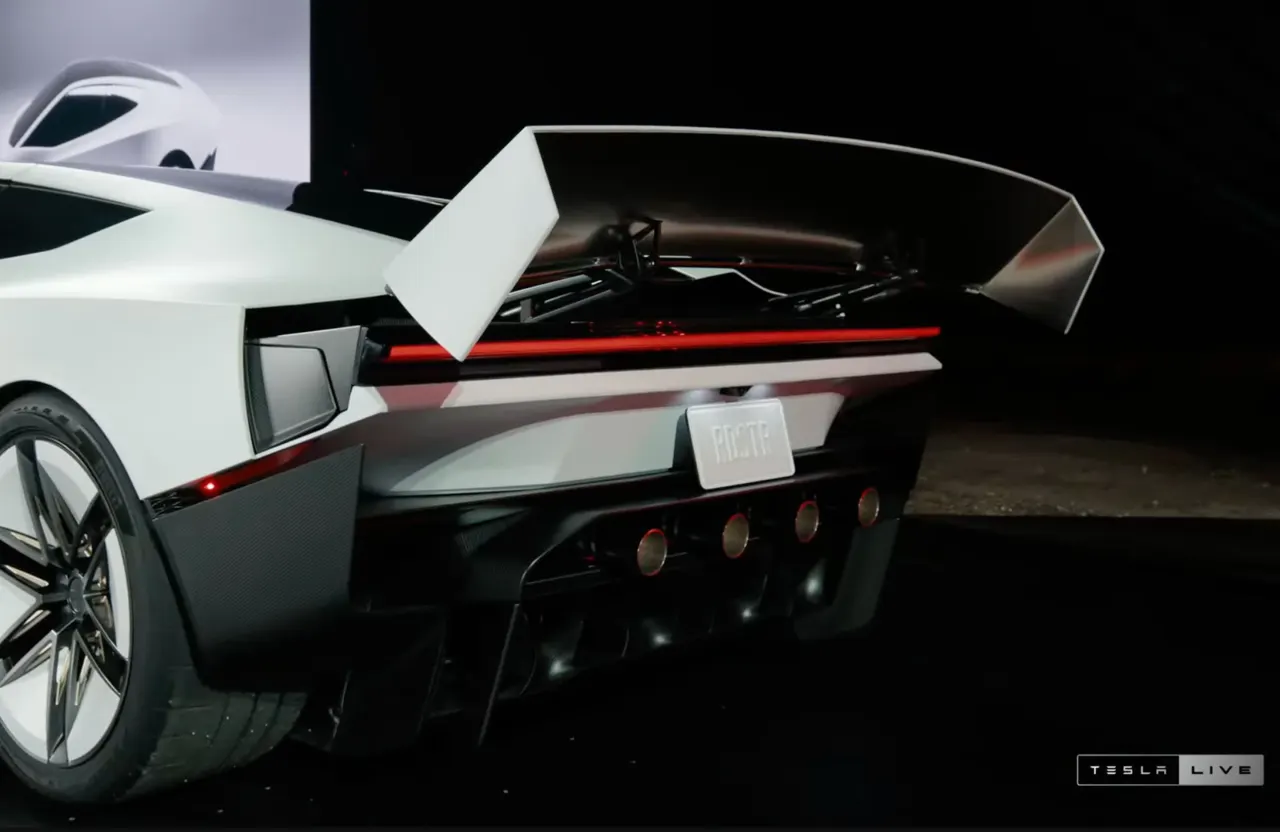
Tesla has demonstrated the long-delayed Roadster 2 at SpaceX’s Texas facility, showing it rise into the air on bursts of steam. The unveiling revives a project first announced in 2017 and highlights Tesla’s ambitions for an extreme electric sports car, though its performance and safety claims remain unproven.
Tesla says the car could reach 60 mph from a standstill in one second and enter production in 2028; it gave no new price. Four compressed-gas thrusters are intended to lift the car and provide downforce, with Tesla’s engineering head suggesting a top speed of 230 mph and Elon Musk hoping for about 385 mph. The original target was delivery in 2020, and buyers were asked for $50,000 deposits against a planned $200,000 price.
- Tesla showed the Roadster 2 briefly flying on compressed-gas thrusters.
- Production is now planned for 2028, after an original 2020 target.
- Tesla claims one-second acceleration to 60 mph, but gave no updated price.
New here? Start with this
Tesla is an electric-car company led by Elon Musk. Its first Roadster, launched in 2008, was a sports car built around an electric motor; a more powerful successor was announced in 2017 but has been delayed several times.
The new model is planned to use compressed-gas thrusters as well as electric motors, with Tesla saying they could help lift the car and improve its grip at speed. The project matters because it tests how far electric cars can be pushed, while claims about speed, flight and safety will need to be demonstrated before buyers can judge what the car can do.
Both sides, in good faith
The strongest fair case each way — we don't pick a winner.
The case for
The demonstration suggests Tesla is still pursuing an unusually ambitious electric sports car, and the thrusters could offer performance beyond conventional road cars if they work as described. Supporters may see the project as a chance to push engineering forward and make high-performance electric vehicles more compelling, while recognising that the claims still need to be verified.
The case against
The spectacle and performance promises do not establish that the car can be built, operated safely or delivered on schedule; the project has already missed its original 2020 target. Critics can reasonably argue that claims such as a one-second 0–60 mph time and flight-like lift warrant independent testing, especially given the deposits buyers paid against a planned price and the lack of a new price or confirmed production details.