There Are 2 Eclipses This August. Here’s How to See Them
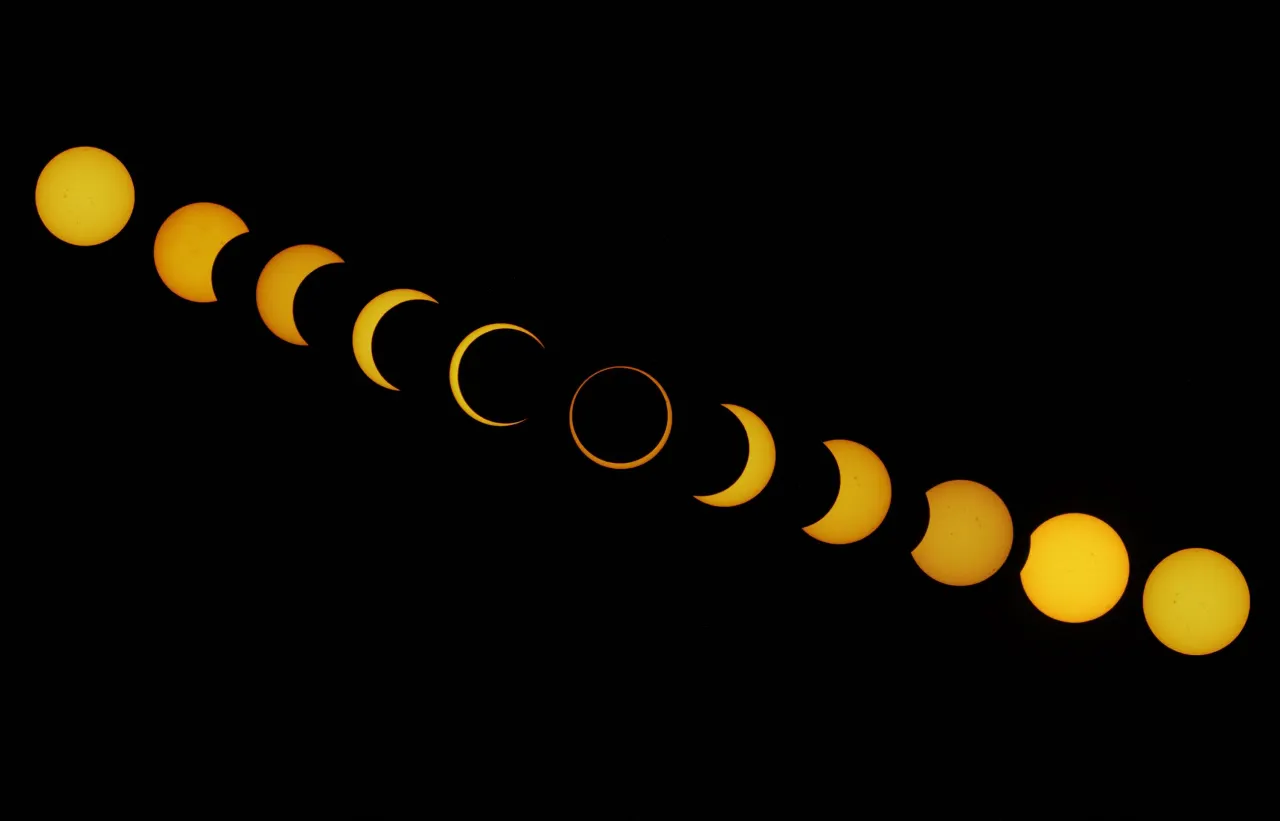
August 2026 presents two significant celestial events for observers across much of the globe. On August 12, a total solar eclipse will traverse the northern hemisphere, with the moon's shadow travelling from the Arctic eastward across parts of Alaska, Canada, Iceland, Greenland, and the Iberian Peninsula. Whilst many locations will experience only a partial eclipse, complete totality will be visible from sparsely populated eastern Greenland, western Iceland, and Spain—marking the first total solar eclipse across Spain in more than a century. The event will reach its dramatic peak during late afternoon or early evening, lasting roughly two minutes at totality, and observers in the path must use certified eclipse glasses to view it safely.
On August 27-28, a partial lunar eclipse will follow, occurring when Earth positions itself between the sun and moon, casting its shadow across the lunar surface. Unlike the solar eclipse's narrow path, this lunar eclipse will be visible simultaneously from a vast region of Earth, with the Americas offering the most optimal viewing conditions. Up to 96 percent of the moon's disk will be obscured by Earth's shadow, creating a visually striking event that requires only clear skies and minimal light pollution to observe—no special equipment or protective gear necessary.
In short
- Two eclipses in August 2026: a total solar eclipse on the 12th and a partial lunar eclipse on the 27-28
- Solar eclipse visible across the northern hemisphere with totality in Greenland, Iceland, and Spain—the Iberian Peninsula's first in over a century
- Lunar eclipse viewable primarily from the Americas with nearly full moon coverage; no special equipment needed
Explained simply
Solar and lunar eclipses happen when the Sun, Earth and Moon line up. In a solar eclipse, the Moon passes between Earth and the Sun; in a lunar eclipse, Earth comes between the Sun and the Moon and its shadow falls on the Moon.
A total solar eclipse can be seen only from a narrow strip of Earth, while people much farther away may see a partial eclipse. A partial lunar eclipse is visible from a much wider area wherever the Moon is above the horizon, and it can be watched without special eye protection.
These events matter to observers because they offer different views of the same celestial alignment. Looking directly at the Sun during any partial solar eclipse can damage eyesight, so certified eclipse glasses are needed; viewing a lunar eclipse is safe with the naked eye.