Politics news and discussion on TalkFuse.
Trump focused on ‘what’s important to him’: ‘Tone-deaf for a normally shrewd populist operator’
Developed over time first seen 6 hours ago
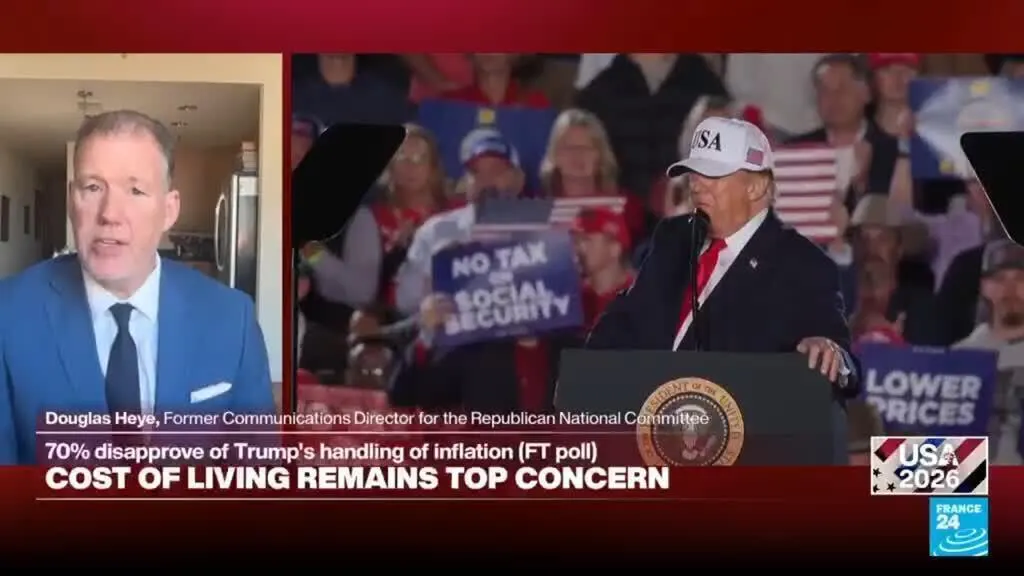
As Americans voted in the 3 November midterm elections, Republican strategist Doug Heye told France 24 that Donald Trump appeared focused on issues important to him while voters were concerned about the cost of living. Heye, a former communications director for the Republican National Committee, described that gap as “tone-deaf for a normally shrewd populist operator”. His remarks were an assessment of Trump’s campaign message, not a finding about how voters had cast their ballots.
The elections will determine control of Congress for the final two years of Trump’s term. Rising prices have been a prominent concern in pre-election polling, while Trump has defended his economic record. The question for Republicans is whether voters judge their candidates on that record and whether Trump’s message addresses the pressures households say they face. The result remained undecided as voting continued.
In short
- A Republican strategist questioned Trump’s focus on election day.
- Living costs were a leading concern for voters.
- Control of Congress was still at stake as polls remained open.
How this story developed
- 2 hours ago As Americans voted in the 3 November midterm elections, Republican strategist Doug Heye told France 24 that Donald Trump appeared focused on issues important to him while voters were concerned about the cost of living.
Steelman: both sides, in good faith
The strongest fair case each way — we don't pick a winner.
The case for
Trump’s focus on issues he considers important may reflect a judgement that elections should also be about his broader priorities, rather than being reduced to immediate household costs. Supporters could argue that defending his economic record and setting out a wider political agenda gives voters a basis to assess the direction of his presidency, even while prices remain a serious concern.
The case against
A campaign message that does not speak directly to the cost of living risks appearing out of touch with voters facing pressure on household budgets. Critics could argue that a normally effective populist should address those immediate concerns and explain how his record or policies will ease them, or risk weakening support for Republican candidates.
Explained simply
Midterm elections take place halfway through a US president’s four-year term. Voters choose members of Congress, which makes federal laws and can investigate the president; the balance of power there affects how much of a president’s agenda can pass.
Donald Trump is a Republican, and the Republican Party’s strategist Doug Heye previously served as the party’s communications director. Heye’s comment concerned the difference between Trump’s campaign message and voters’ reported concern about the cost of living; it was an assessment, not evidence of how people voted.
Prices affect household budgets, so voters’ views on the economy can shape support for candidates. The election matters because its outcome will determine which party controls Congress for the rest of Trump’s term.
More coverage
Elections Government Politics World