Two workers rescued from tunnel in Nepal nine days after devastating flood as rescuers hear more voices trapped in power plant
Developed over time first seen 2 months ago
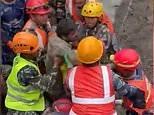
Two hydropower workers have been pulled alive from a flood-buried tunnel in Nepal, providing a rare moment of hope after ten days of largely fruitless rescue efforts following catastrophic Himalayan flooding. The men, named as 30-year-old mechanical foreman Sanjay Shah and 45-year-old mechanical supervisor Kabir Maharjan, were freed from the Trishuli 3A hydropower tunnel and taken for medical treatment, with officials and rescue experts describing their survival as a "miracle" after a week of digging through hardened debris. The flooding, triggered by a glacial and rock collapse on the China-Nepal border on 26 August, has killed at least 1,200 people and left more than 5,000 missing across the two countries, with at least 12 hydropower projects destroyed.
The breakthrough came after teams boring through 50-60 metres of debris reported hearing a faint response, "hunchha" (yes/OK), from inside the tunnel, according to Australian tunnelling expert Arnold Dix, who called it being "back in miracle country" following a "week of 24/7 heartache". Around 42 workers remained unaccounted for at the Trishuli 3A site alone, part of hundreds of hydropower staff missing since the disaster, with Nepali rescuers assisted by teams from India, China and South Korea. Some families had already begun holding symbolic funerals for missing relatives as hopes faded, while the Nepal Army confirmed search and rescue operations continued at this and other sites in the disaster zone.
- Two Nepal tunnel workers rescued alive after ten-day flood ordeal
- Rescuers heard faint "yes/OK" response before freeing the men
- Himalayan floods have killed 1,200+, left 5,000+ missing
New here? Start with this
Nepal is dealing with the aftermath of a devastating flood that struck on 26 August, when a glacier collapse sent water and debris crashing through the region. One of the worst-hit sites is the Trishuli 3A hydropower plant, where workers were trapped inside a long tunnel leading to an underground power station when the flood hit, cutting them off from rescue for over a week.
The disaster has caused enormous loss of life and left huge numbers of people unaccounted for across Nepal, with hundreds of workers still missing from hydropower projects alone. Neighbouring China has also reported deaths and missing people on its side of the border, showing the flood's reach extended beyond Nepal.
Rescue teams have been working for days to reach anyone still alive inside the collapsed tunnel network, a slow and difficult operation given the scale of destruction. The Nepalese government, led by Prime Minister Balendra Shah, has deployed large numbers of security personnel and begun shifting focus from rescue efforts towards helping survivors and rebuilding damaged infrastructure.
Full account
Two hydropower workers have been pulled out alive from a tunnel in Nepal that had been sealed by mud and rock for nine days, offering a rare moment of hope amid a rescue operation that had, until now, found no survivors among those trapped underground. Sanjay Shah, a 30-year-old mechanical foreman, and Kabir Maharjan, a 45-year-old mechanical supervisor, emerged on Friday from the Trishuli 3A hydropower tunnel to cheers from the rescue teams who had spent days boring through hardened debris to reach them. Footage released by Nepal's energy ministry showed one man helped to his feet and later carried towards a waiting helicopter, while a photograph of the second showed him caked in mud with his hands clasped in prayer as he was stretchered away. Both men are now receiving medical treatment, and the Nepal Army confirmed that search and rescue efforts are continuing at the site.
The two were among hundreds of workers who went missing after a huge glacial and rock collapse on a mountain straddling the China-Nepal border sent a wall of mud and debris crashing through the region on 26 August. The flooding has killed well over a thousand people and left thousands more missing or unaccounted for across both countries, with at least a dozen hydropower projects in the affected area damaged or destroyed. Officials had earlier suggested that more than a hundred workers might still be alive inside various tunnels, though dozens remained unaccounted for at Trishuli 3A alone even after Friday's rescue.
Australian tunnelling expert Arnold Dix, who has been advising Nepalese authorities remotely and was travelling to join the operation in person, described the rescue as the product of 'layer upon layer' of fortunate breaks. He explained that the first challenge had simply been locating the tunnel entrance, which the flood had buried so completely that his team had to cross-reference old topographic maps, satellite images, aerial footage and surface clues such as fallen power poles to work out where to dig. Once inside, rescuers faced a passage choked with mud and boulders, some as large as cars, forcing the Nepalese army to use carefully controlled explosions to clear a path without endangering anyone trapped inside or the rescuers themselves. The tunnel was also found to be full of water, which crews drained by digging a series of channels through to the nearby river before finally carving a narrow crawl-space, just wide enough for a person, through the last of the blockage using the original tunnel roof for cover.
In the early hours of Friday morning, rescuers reported hearing what they believed were voices deeper inside the tunnel; after calling out reassurances, they heard a faint reply in Nepali confirming the men were alive, shortly before Shah and Maharjan were brought out. Dix said the operation had moved 'back into miracle country' after what he called a week of relentless heartache, and he is credited with having played a similar advisory role in a previous Himalayan rescue that freed 41 Indian workers trapped by a tunnel collapse. Family members reacted with relief and disbelief; Kabir Maharjan's brother, Amir, said the news had lifted a great weight from him. With indications that further survivors may remain alive further inside the tunnel, rescuers, backed by specialists from India, China and South Korea, are continuing to dig in the hope of more rescues.
Where outlets differ
The wire/agency-style report (Source 1) focuses more on casualty and missing-person figures, official statements from Nepal's Home Minister and Energy Minister, family reaction, and the broader scale of the disaster across China and Nepal, citing death tolls of around 1,200-1,300 and over 5,000 missing.
The BBC account (Source 2), based on a direct interview with rescue adviser Arnold Dix, focuses in much greater technical detail on how the rescue was actually carried out — the difficulty of even finding the buried tunnel entrance, the use of controlled explosives, and the draining of floodwater — offering a step-by-step engineering narrative rather than a broad casualty overview.
Source 1 quotes Dix describing a faint response of 'hunchha' (yes/OK) heard earlier on Friday before the rescue, framing it as a signal that prompted hope; Source 2 places a similarly faint 'okay' response as the moment immediately preceding the two men being pulled out, suggesting slightly different sequencing or emphasis between the two accounts.
Source 1 provides more precise identifying details on the rescued men (ages, job titles, named by Nepal's Home Minister) and references CNN video footage, while Source 2 does not name the minister and instead centres its account on Dix's own testimony to the BBC.
More coverage
- BBC World — Watch: Moment workers are rescued from Nepal tunnel
- NPR — 2 trapped workers rescued from a hydropower tunnel 9 days after Nepal floods
- BBC World — 'Layer upon layer of miracles': How Nepal flood survivors were rescued from tunnel
- Fox News — Trapped Nepal workers pulled alive from tunnel 9 days after deadly flooding, raising hope for more rescues
- BBC World — 'A rare moment of joy': Nepal tunnel rescues give hope for more flood survivors