Ukraine aims to have 50,000 combat robots built this year – as Zelensky pleads for allies to provide missile shield
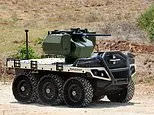
Ukraine says it plans to build 50,000 combat robots this year as it steps up efforts to automate the front line and reduce reliance on human soldiers, according to reports citing Ukrainian officials. The push forms part of a broader strategy to offset manpower shortages and battlefield casualties by deploying unmanned ground systems alongside troops, reflecting how the war has accelerated the development and battlefield use of robotics and drone technology on both sides.
Alongside the robotics announcement, President Volodymyr Zelensky has renewed his appeal to Western allies for a comprehensive missile defence shield to protect Ukrainian cities and infrastructure from ongoing Russian strikes. The two threads underline Kyiv's twin priorities: building up domestic military-industrial capacity, including ground robots intended to fight alongside or eventually replace soldiers on the front line, while continuing to press international partners for air defence support it says it cannot produce at scale itself.
In short
- Ukraine targets 50,000 combat robots built this year
- Aim is to ease frontline troop shortages
- Zelensky again urges allies for a missile defence shield
Steelman: both sides, in good faith
The strongest fair case each way — we don't pick a winner.
The case for
Advocates of the robotics push argue it is a necessary and sensible response to a chronic manpower shortage after years of attritional war: unmanned ground systems can take on the most dangerous roles, such as resupply runs, mine clearance and assaults on fortified positions, sparing soldiers whose lives cannot be replaced as easily as machines. They point to Ukraine's drone industry, which has already proven highly effective against a larger adversary, as evidence that scaling up domestic ground robotics is a logical next step that increases self-reliance and battlefield flexibility rather than depending solely on foreign troop-equivalent support.
The case against
Sceptics might reasonably question whether committing to build 50,000 combat robots this year is the most prudent use of scarce engineering talent, materials and funding, given that unmanned ground systems remain far less proven at scale than established tools such as artillery, mines and first-person-view drones. They could note the apparent tension in Kyiv's own priorities: while pouring resources into an ambitious and unproven manufacturing target, Zelensky is simultaneously telling allies that Ukraine cannot produce adequate missile defence domestically, suggesting that funding and diplomatic effort might be better concentrated on securing proven air-defence capability to protect cities from the more immediate and lethal threat of Russian missile and drone strikes.
Explained simply
Ukraine's armed forces have relied heavily on drones and other unmanned systems since Russia's full-scale invasion began in February 2022, using them to make up for shortages of trained soldiers and equipment. Combat robots, in this context, are remote-controlled or semi-autonomous ground vehicles that can carry out tasks such as reconnaissance, supply runs or attacks without putting a person directly in the line of fire. Kyiv's stated plan to build tens of thousands of them this year reflects an effort to industrialise this technology at scale.
President Volodymyr Zelensky is Ukraine's head of state and has led the country's response to the war, including regular appeals to Western governments for military support. A "missile shield" refers to air defence systems designed to intercept incoming missiles and drones before they hit populated areas or infrastructure, something Ukraine says it cannot fully provide on its own given the scale of Russian strikes.
Both issues matter because they speak to how Ukraine is trying to sustain its war effort more than four years after the invasion began: developing its own weapons industry to reduce dependence on manpower and foreign supplies, while still needing outside help to defend against missile and drone attacks. The balance between self-reliance and international support remains central to how the war may develop.