Webb links record-distant radio burst to a surprisingly small galaxy
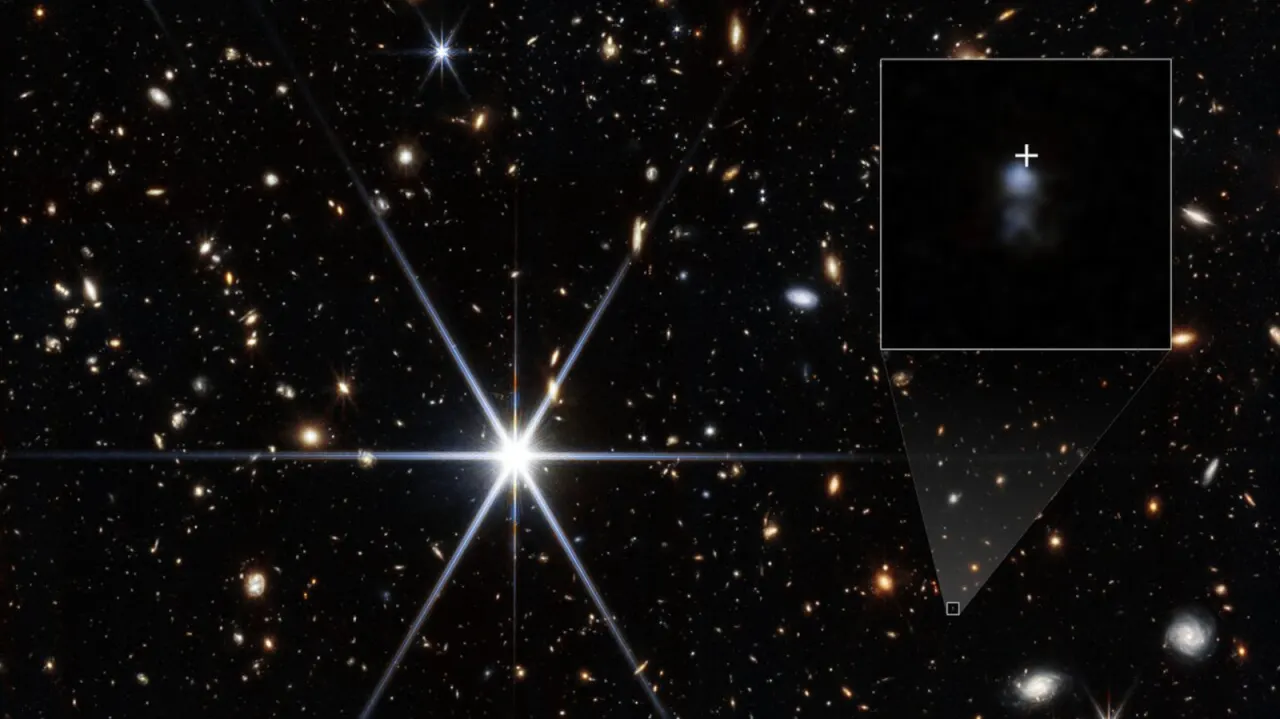
Astronomers have used the James Webb Space Telescope to identify a likely host galaxy for the farthest fast radio burst detected so far. The finding suggests that at least some bursts may come from supernova explosions, helping scientists understand the origins of these brief but powerful radio signals.
The burst was first detected by the MeerKAT telescope array in 2024, and Webb observations located a galaxy in the matching position. The light measurements indicate it occurred about 3 billion years after the Big Bang, when star formation across the universe was near its peak; its host galaxy is around 1,000 times smaller than expected. Researchers say the early timing makes a neutron-star merger unlikely, since such collisions take billions of years to occur, and favours an exploding massive star that leaves behind a magnetar.
- Webb traced the farthest known fast radio burst to a distant galaxy.
- The burst occurred about 3 billion years after the Big Bang.
- Its timing points towards a supernova origin.
New here? Start with this
Fast radio bursts are intense flashes of radio energy from distant galaxies. These signals last only milliseconds but release enormous amounts of energy, which is why scientists find them fascinating and mysterious.
The James Webb Space Telescope is the world's most powerful space observatory and was recently used to identify the galaxy that produced one of the furthest radio bursts ever detected. Pinpointing these bursts and their sources helps scientists understand what creates such powerful signals across the cosmos.
The findings suggest some radio bursts originate from massive stars that explode and become super-dense, highly magnetised objects known as neutron stars. For this particular burst, the evidence makes a collision between two neutron stars unlikely as the cause.
Read the full article at the source →
Originally published by Engadget as “Webb telescope detects galaxy origin of the farthest fast radio burst we’ve seen to date”.