Terrifying moment jets appears to skim the roof of packed sports stadium during pre-game flyover
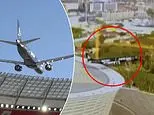
A video filmed in Cape Town, South Africa, has caused alarm online after it appeared to show two jets flying extremely close to the roof of the 55,000-seat DHL Stadium during a pre-match flyover. The clips, taken from multiple angles, showed the two Airlink Embraer E-Jets passing through pyrotechnics set off at the top of the stadium as spectators cheered, with some footage making it look as though the aircraft nearly clipped the structure. The stunt has prompted criticism from some social media users who branded it dangerous and unnecessary, though there is no indication any incident nearly occurred.
According to flight-tracking data cited in the report, the jets flew roughly 41 to 46 feet above the stadium, which stands about 164 feet tall. The flyover, involving planes registered ZS-YAE and ZS-YDE and specially painted for the occasion, took place ahead of Saturday's rugby clash between South Africa's Springboks and New Zealand's All Blacks, part of a fixture billed as "Rugby's Greatest Rivalry." Airlink, an official partner of the event, described the display as "planning, precision, performance," and organisers noted that low-level flyovers have been a feature of major South African rugby matches since the 1995 Rugby World Cup final. Reaction online was mixed, with some calling it reckless and others praising it as spectacular.
- Two jets flew strikingly low over Cape Town's DHL Stadium before a rugby match
- Footage sparked online debate over safety, though no danger was reported
- Flyovers by Airlink jets have long preceded major South African rugby fixtures
New here? Start with this
Cape Town's DHL Stadium hosted a flyover before a rugby international, a tradition where military or commercial aircraft fly low over a venue as part of the pre-match spectacle. In this case two Airlink Embraer E-Jets, specially painted for the occasion, flew close to the stadium roof through pyrotechnics as fans watched below. Footage shared online made the aircraft appear to skim the structure, unsettling some viewers.
The match itself was a fixture between South Africa's Springboks and New Zealand's All Blacks, two of the sport's most successful national rugby teams, in what has been promoted as one of rugby's biggest rivalries. Airlink, a South African airline and an official partner of the event, organised the flyover as part of the pre-match entertainment, continuing a practice used at major South African rugby occasions since the 1995 Rugby World Cup final.
The story matters because it touches on aviation safety and how such stunts are perceived by the public versus how they are actually regulated and executed. Flight-tracking data has been used to establish how high the jets actually flew relative to the stadium, offering a way to check the dramatic video footage against measurable facts.
Both sides, in good faith
The strongest fair case each way — we don't pick a winner.
The case for
Supporters of the flyover point out that it was a carefully planned, professionally executed display by an experienced operator, flown by qualified pilots under presumably sanctioned parameters, with flight-tracking data indicating a clearance of over 40 feet above a structure roughly 164 feet tall – hardly an accident waiting to happen. They value the tradition of such flyovers, which have featured at major South African rugby occasions since 1995, seeing them as a stirring, patriotic spectacle that heightens the occasion for tens of thousands of fans and honours a beloved sporting ritual without any reported mishap.
The case against
Critics argue that low-level flypasts over densely packed stadiums carry inherent risk regardless of how many times they have been performed safely before, since a single mechanical fault, bird strike or misjudgement at that altitude could have catastrophic consequences for thousands of spectators below. They value caution and proportionality, questioning whether the dramatic effect of skimming so close to a crowded venue is worth even a small probability of disaster, and suggesting that the visceral alarm the footage caused among viewers reflects a reasonable public unease about normalising such manoeuvres near large gatherings.